Inside the Met Gala Seating Chart: How the Industry’s Most Exclusive Dinner Is Strategized
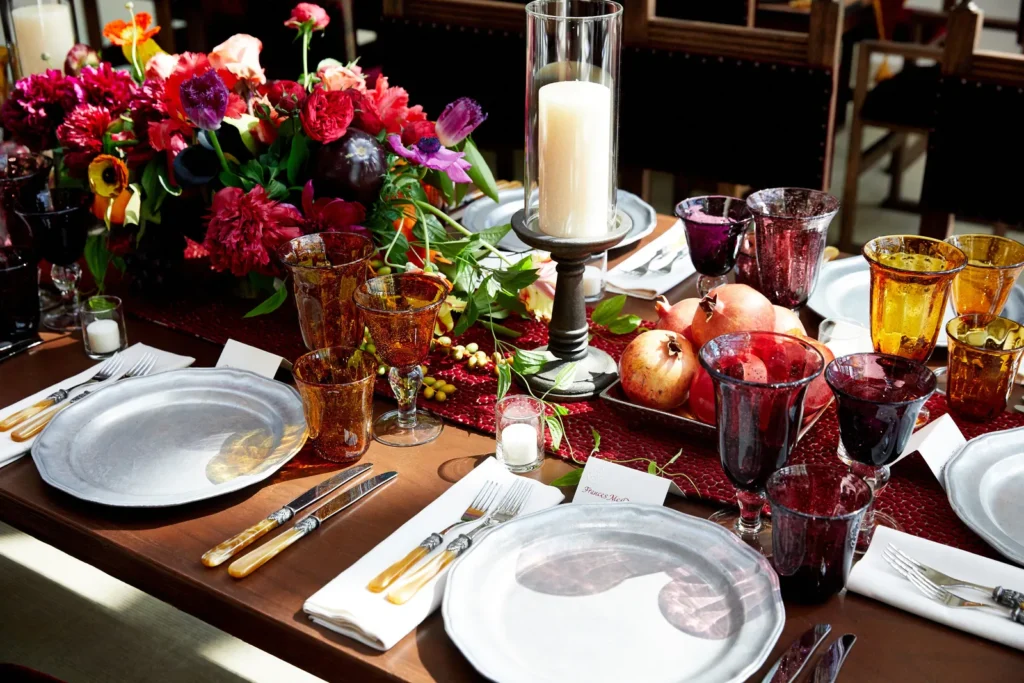
A table at the 2019 Met Gala.
Tomorrow, May 4, 2026, The Metropolitan Museum of Art will unveil its spring Costume Institute exhibition, Costume Art, setting the stage for another edition of the Met Gala. This year’s event is co-chaired by Beyoncé, Nicole Kidman, Venus Williams, and Anna Wintour—a lineup that signals both cultural influence and fashion authority.
The 2026 gala also marks Beyoncé’s long-awaited return after a decade-long absence. Her last appearance, in 2016 for the Manus x Machina exhibition, delivered one of the night’s most memorable fashion moments in custom Givenchy Haute Couture. Meanwhile, Nicole Kidman and Venus Williams have remained consistent fixtures on the Met steps, continuing their presence at last year’s gala.
Beyond the co-chairs, the evening is bolstered by a high-profile host committee led by Anthony Vaccarello and Zoë Kravitz. They are joined by a dynamic group of creatives and cultural figures including Sabrina Carpenter, Doja Cat, Gwendoline Christie, Alex Consani, Misty Copeland, Elizabeth Debicki, Lena Dunham, Paloma Elsesser, LISA, Chloe Malle, Sam Smith, Teyana Taylor, Lauren Wasser, Anna Weyant, A’ja Wilson, and Yseult.
Curated by Andrew Bolton, Costume Art will explore the relationship between clothing and the human body through a series of thematic “body types,” from the Naked Body to the Pregnant Body to the Aging Body. Drawing from the museum’s extensive archive, the exhibition will feature both historical and contemporary works from the Costume Institute. It also marks the debut of The Met’s new Condé M. Nast Galleries, a nearly 12,000-square-foot space adjacent to the Great Hall.
What makes a dinner party truly work? More often than not, it comes down to the seating.
A thoughtful host considers chemistry—who shares common ground, who can draw others into conversation, and who might be better placed at opposite ends of the table. Now scale that idea up to one of fashion’s most high-profile nights: a room filled with celebrities, designers, and cultural power players gathered inside The Metropolitan Museum of Art for the annual fundraiser. The question becomes: how is the seating chart actually created?
Planning begins months in advance. By December—nearly five months ahead of the event—a preliminary seating document is already in motion as the guest list starts to take shape. Still, the chart itself doesn’t fully materialize until about a month before the gala, once the room layout and flow of the evening are finalized.
From there, the process becomes increasingly meticulous. The events team at Vogue spends much of April refining a top-secret seating board, where guest names are arranged using movable Velcro tabs—internally dubbed “Lilah labels.” The flexibility is intentional. The chart is in constant flux, shifting alongside last-minute RSVP changes and evolving floor plans.
The result is less a static diagram and more a living puzzle—one that blends strategy with intuition. Every placement is deliberate, with the goal of sparking conversation and connection. Guests are seated next to those they might instantly click with—or perhaps those who could surprise them.
Beyond interpersonal dynamics, logistics also play a role. Sight lines, table positioning, and overall room composition are carefully considered to ensure that every attendee has a clear view of the evening’s programming—and, ideally, not an awkward line of sight to a former flame.
Over time, these seating charts have taken on a life of their own. Preserved year after year, they serve as quiet records of the industry’s evolving relationships—capturing the beginnings of collaborations, friendships, and even romances. In that sense, each chart becomes more than just a plan for the evening—it’s a snapshot of a cultural moment.
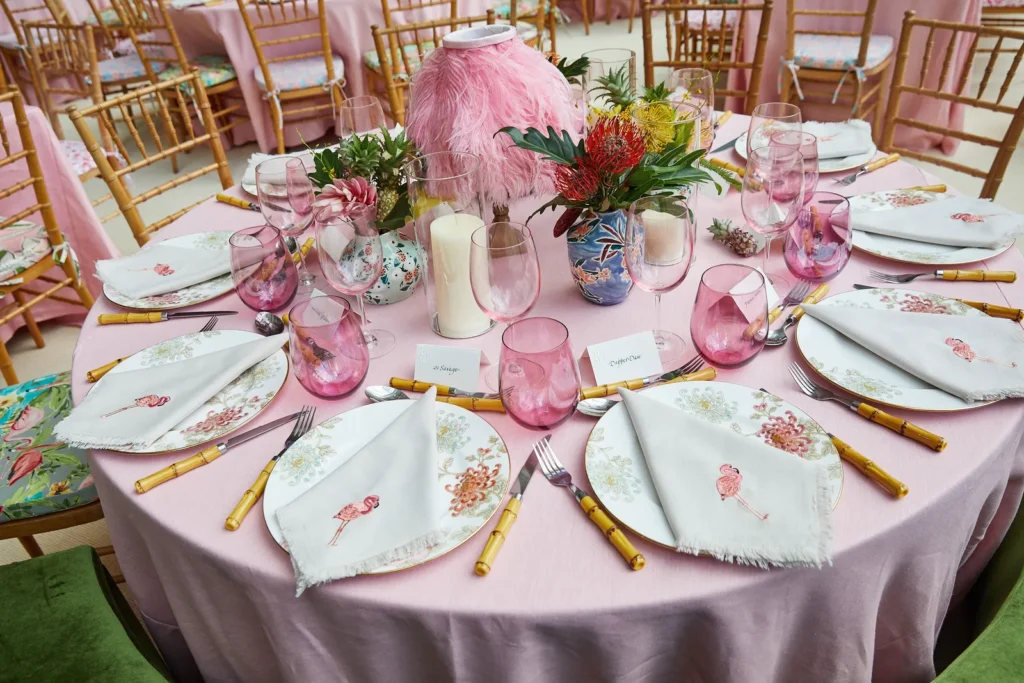
A table at the2018 Met Gala.
Photos Credit: Corey Tenold


