Paris Fashion Week: Sacai Fall/Winter 2026 Menswear By Chitose Abe
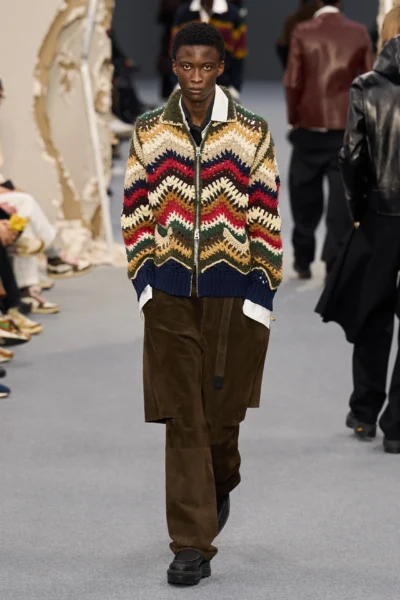
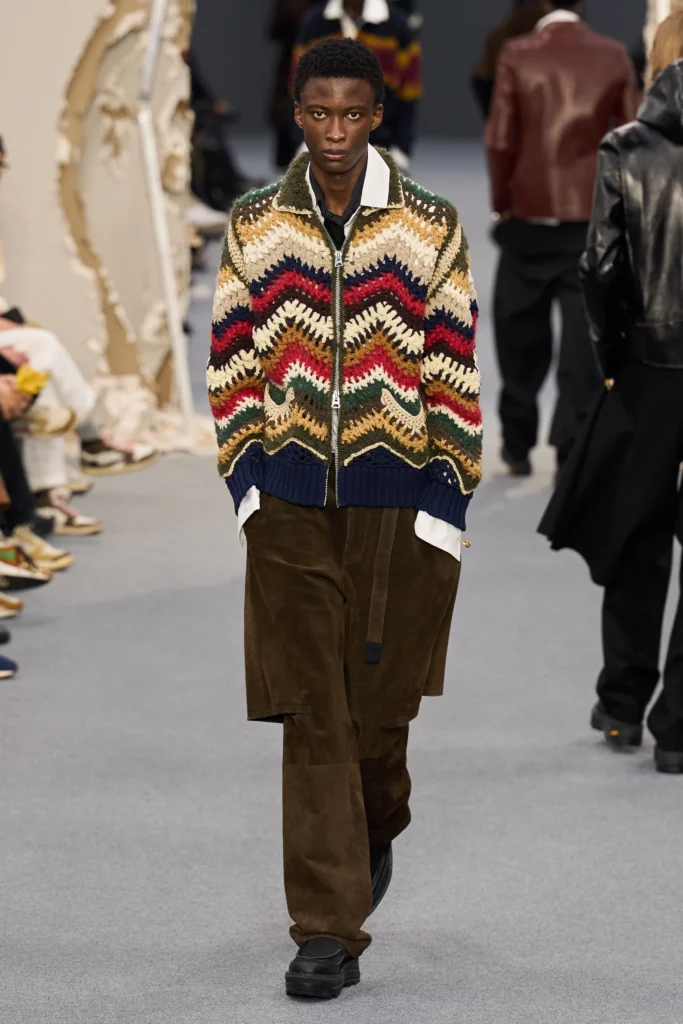
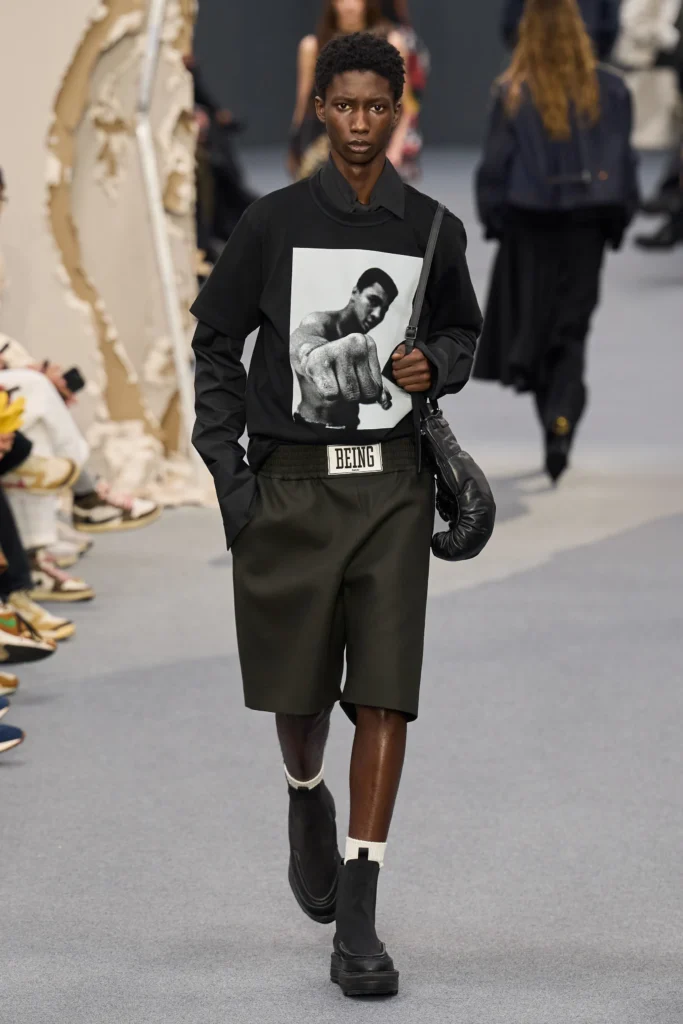
Paris – “I want to break free—yee!” Freddie Mercury’s unmistakable cry jolted Le Carreau du Temple into laughter and attention as Sacai’s Fall/Winter 2026 menswear show began. Models emerged through rubble-edged breaches seemingly punched through a wall bisecting the runway, as if fashion itself were staging an escape. Later, a T-shirt bore one of Thomas Hoepker’s iconic fist-to-lens portraits of Muhammad Ali; printed on the back, his words landed like a manifesto: “What you’re thinking is what you’re becoming.”
Backstage, Chitose Abe clarified exactly what she wants freedom from. Speaking via translator, she described resisting the commercial pressure to privilege orthodoxy over experimentation. “When we’re creating clothes, there’s an expectation that they need to be a certain way—that they have to be sellable,” she said. “But I wanted to be free from that.”
Yet for all its defiance, this was a collection that landed with unmistakable commercial force. Sacai’s signature disruption was intact, but the desire was undeniable. Everyone I spoke to afterwards wanted it.
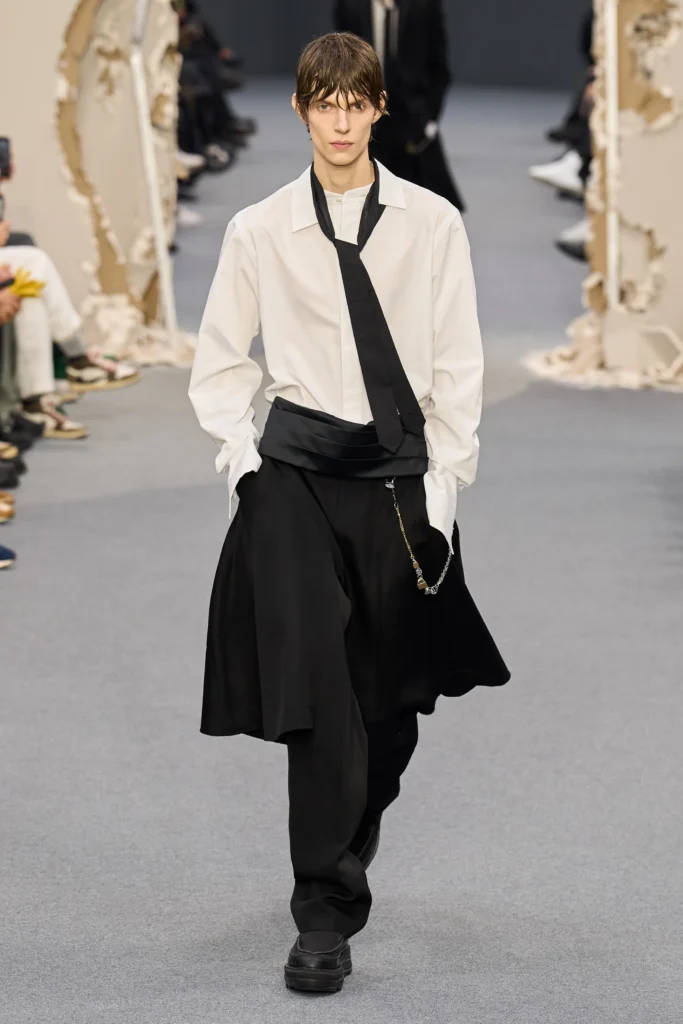
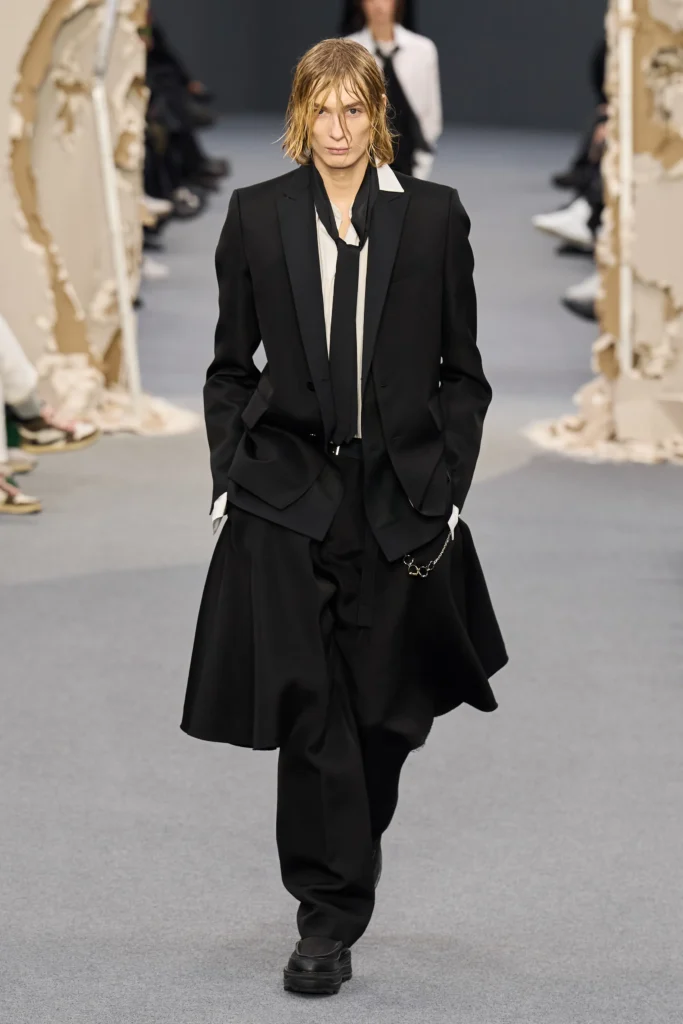
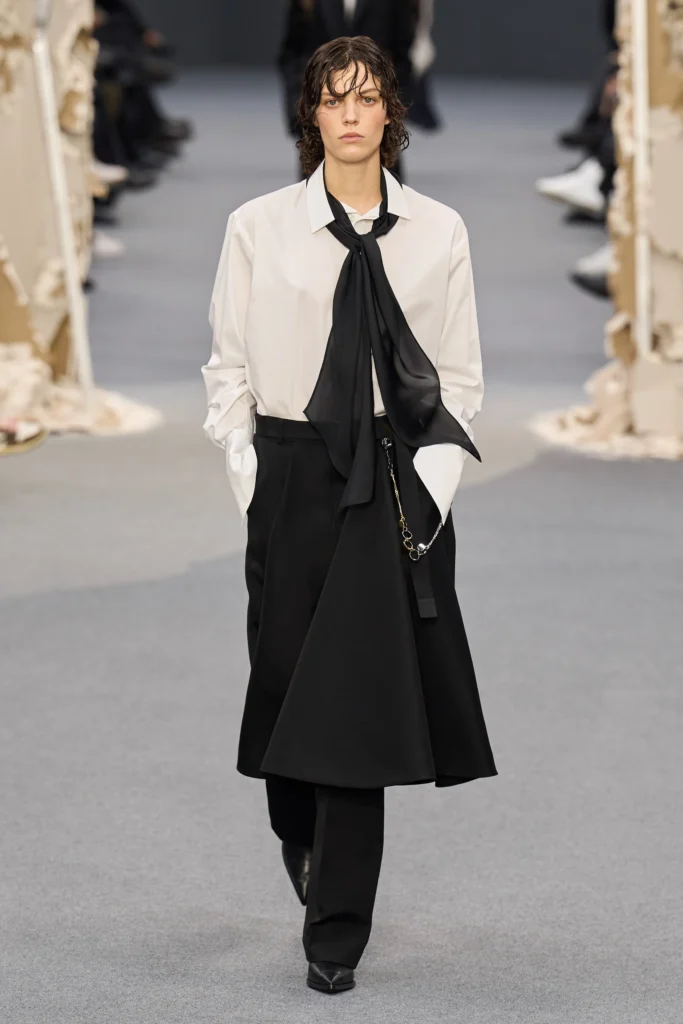
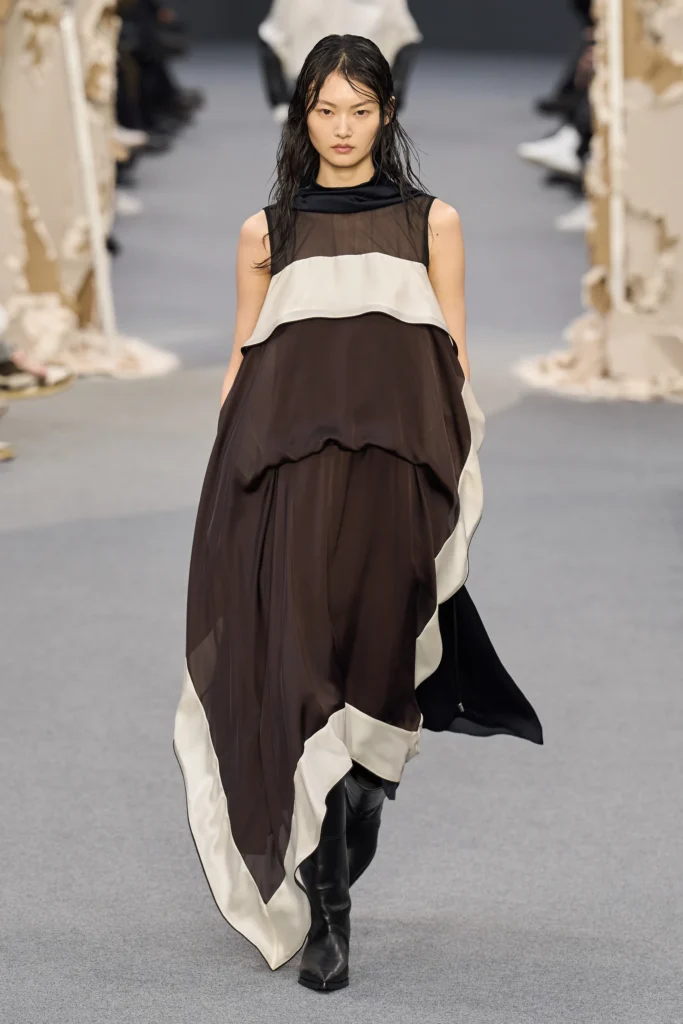
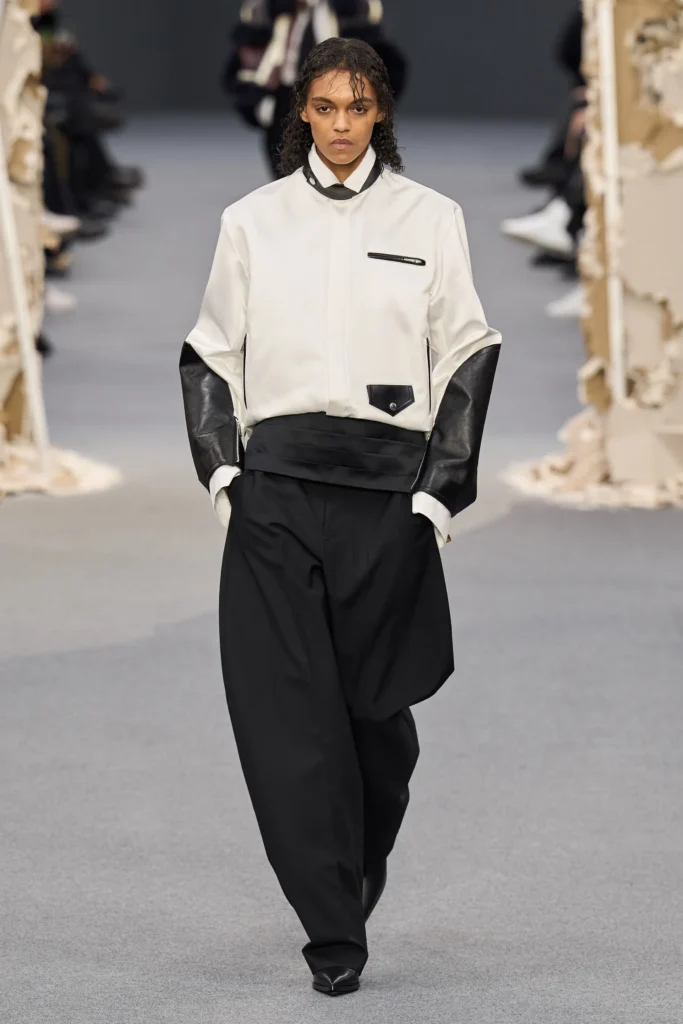
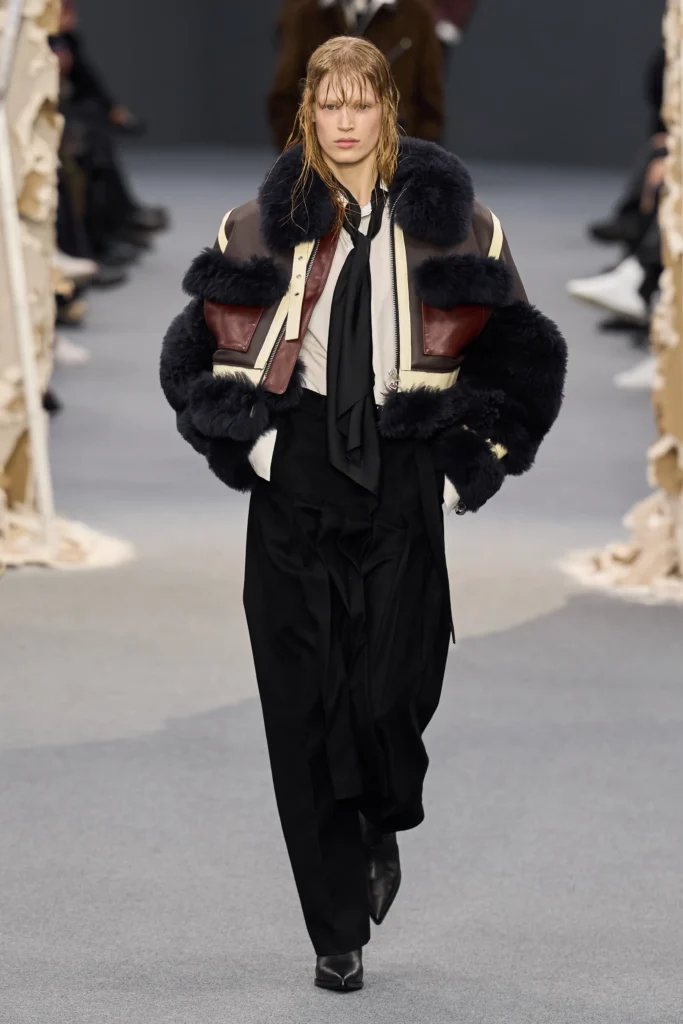
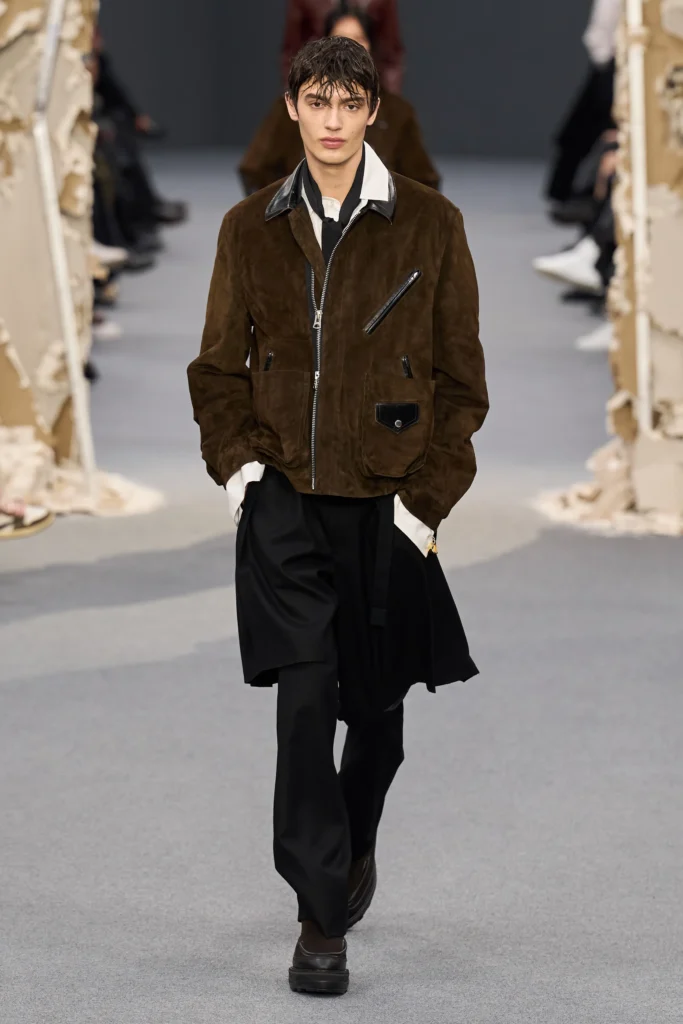
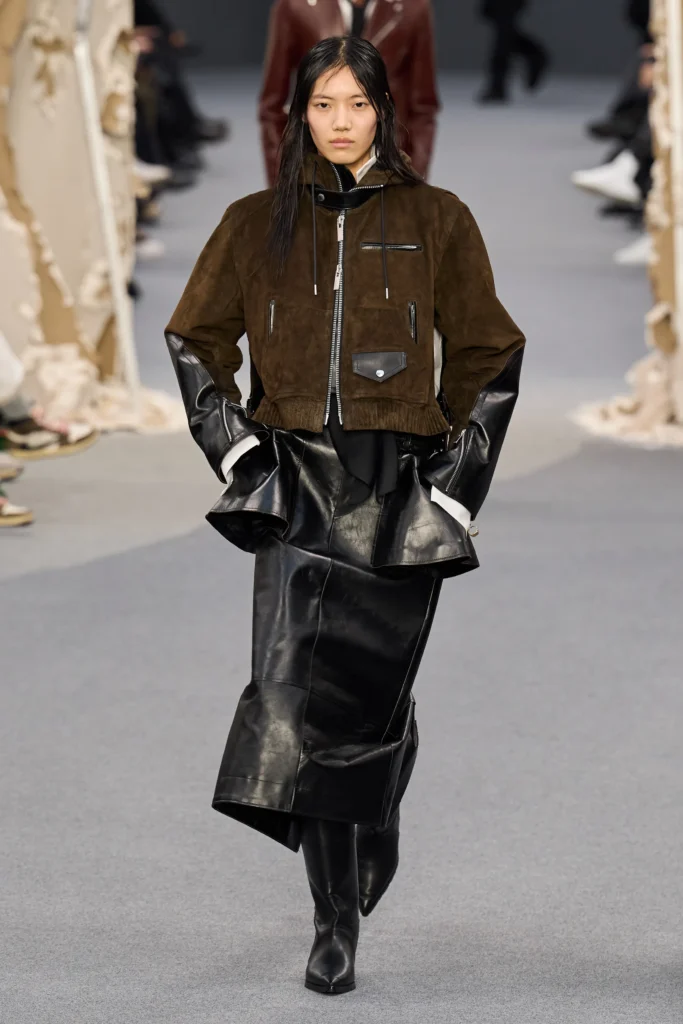
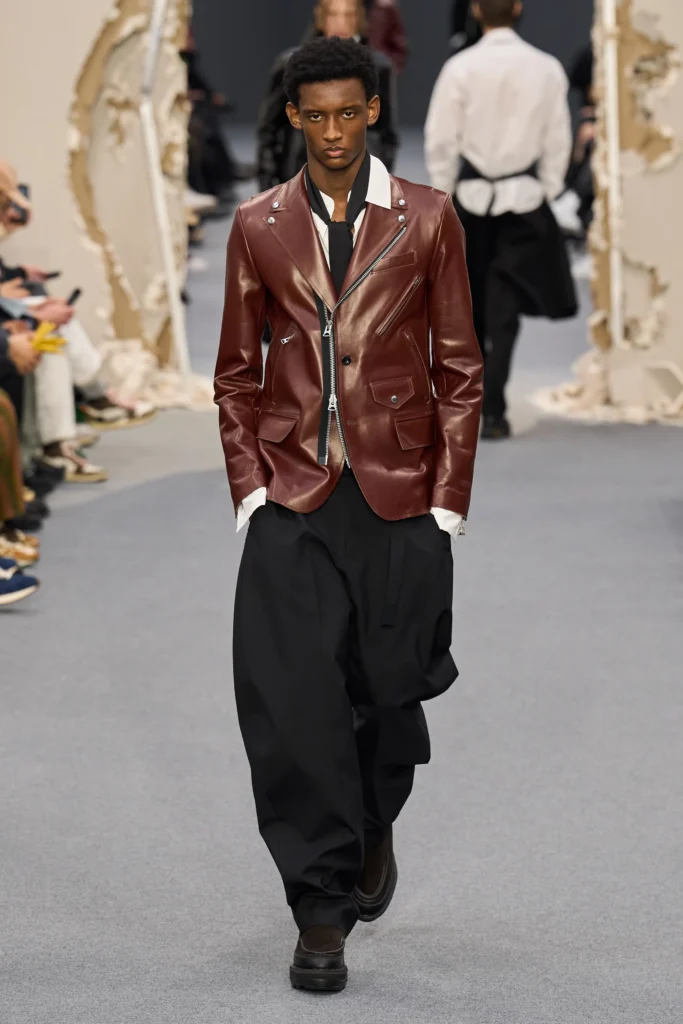
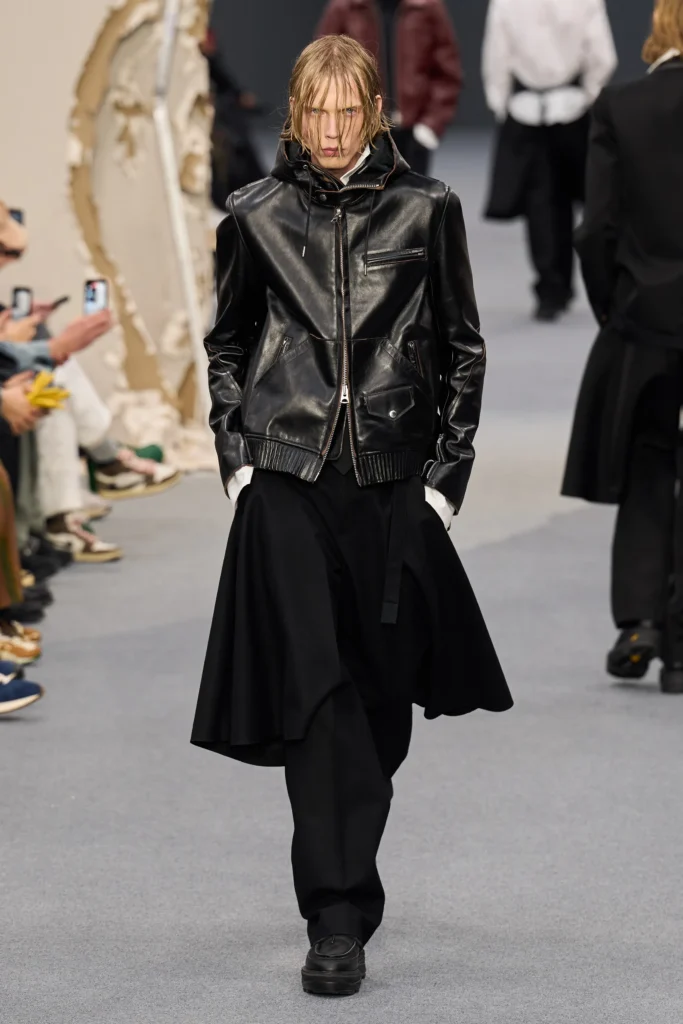
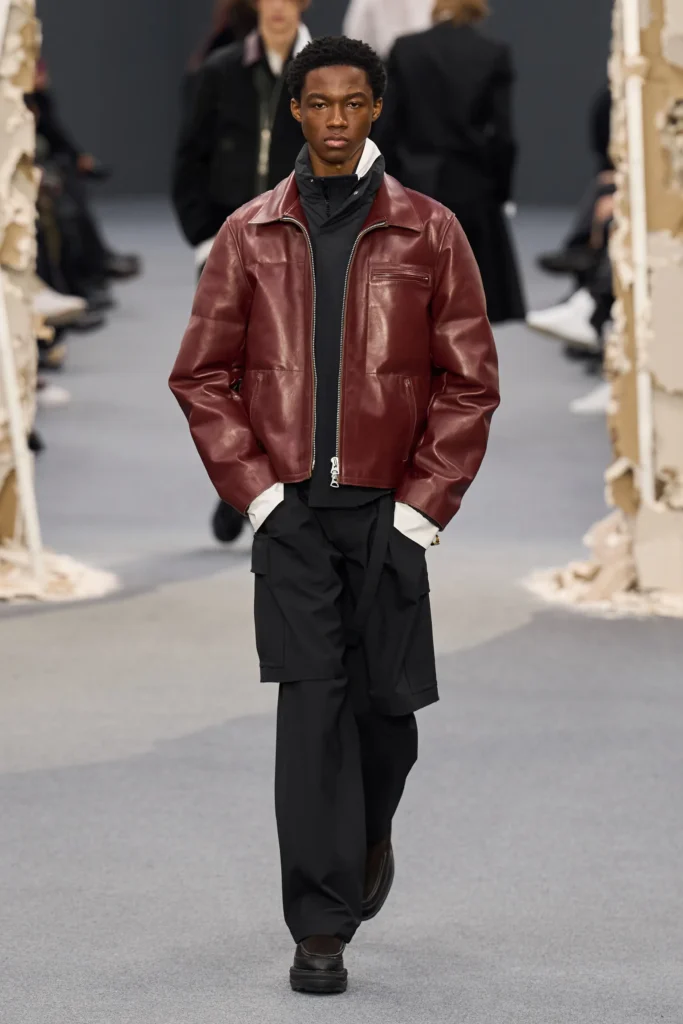
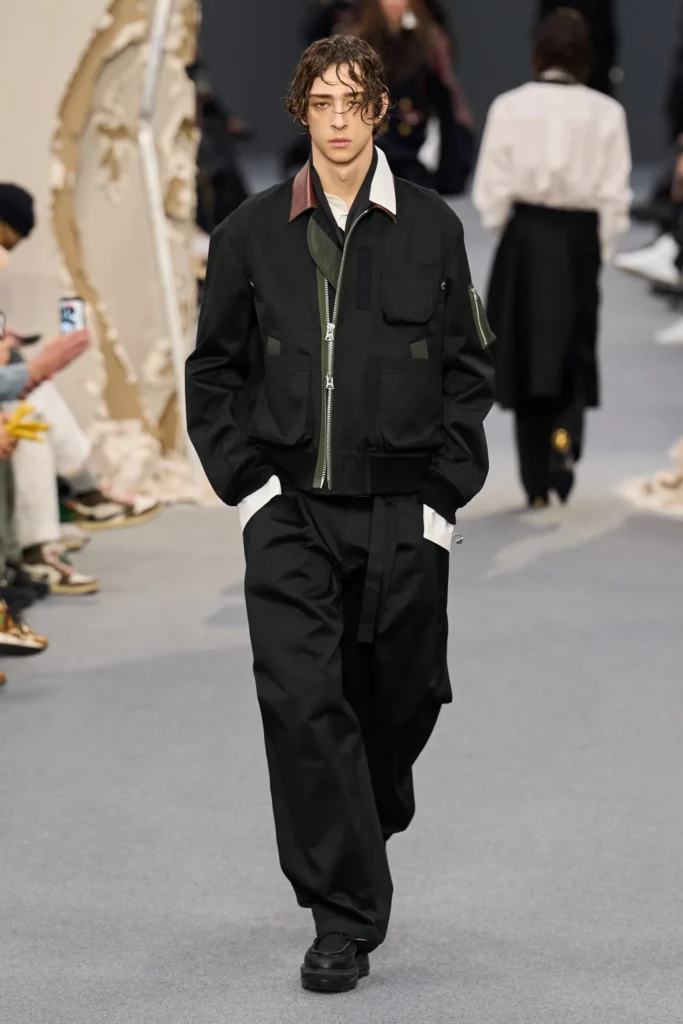
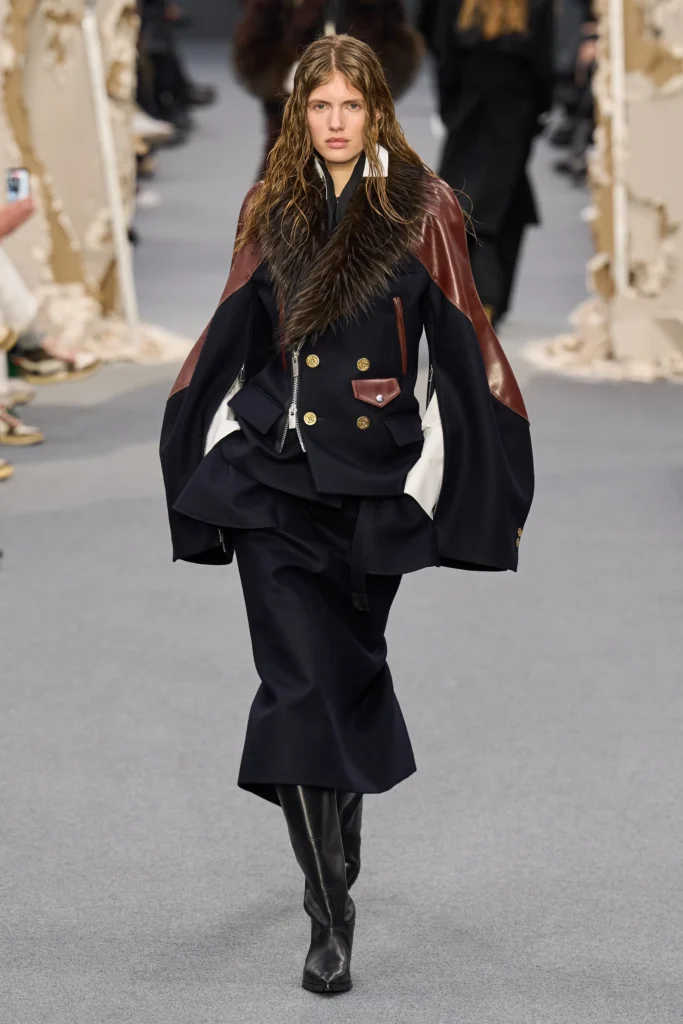
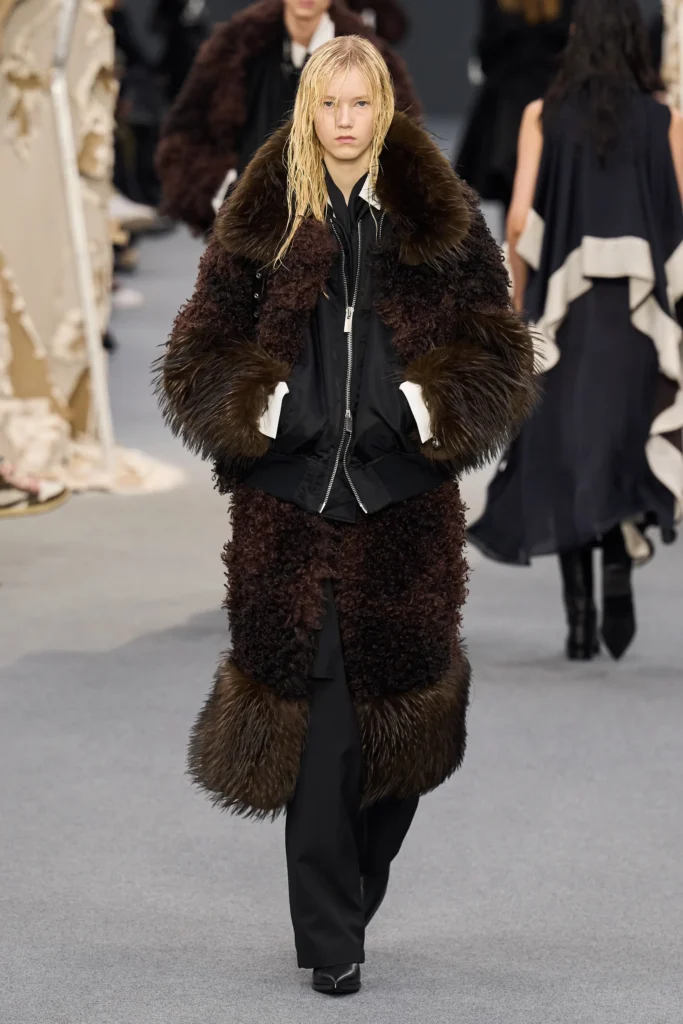
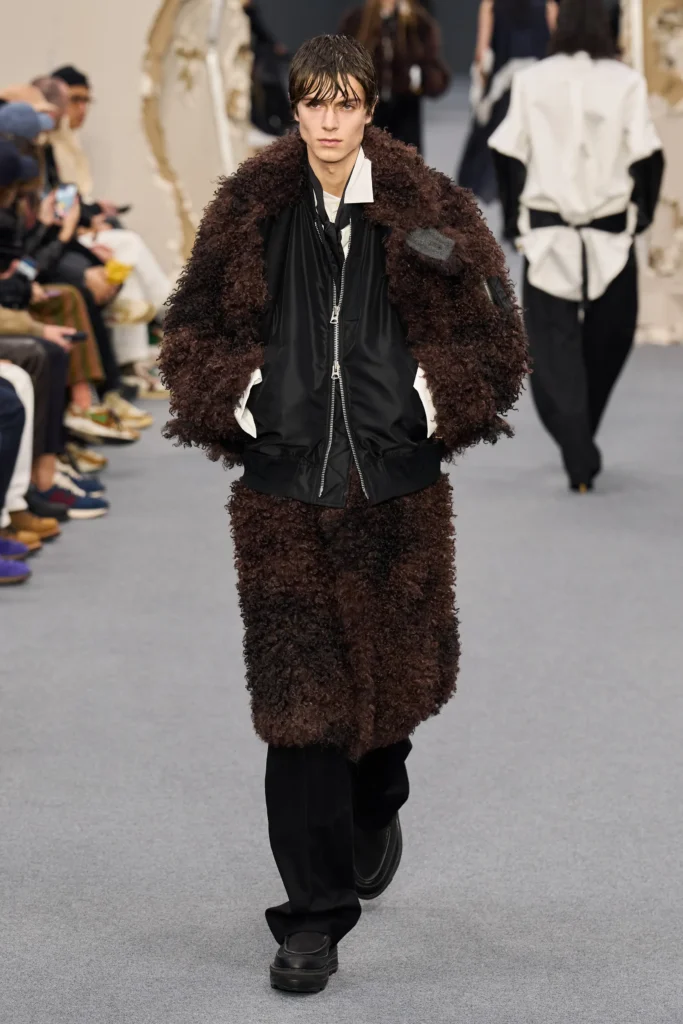
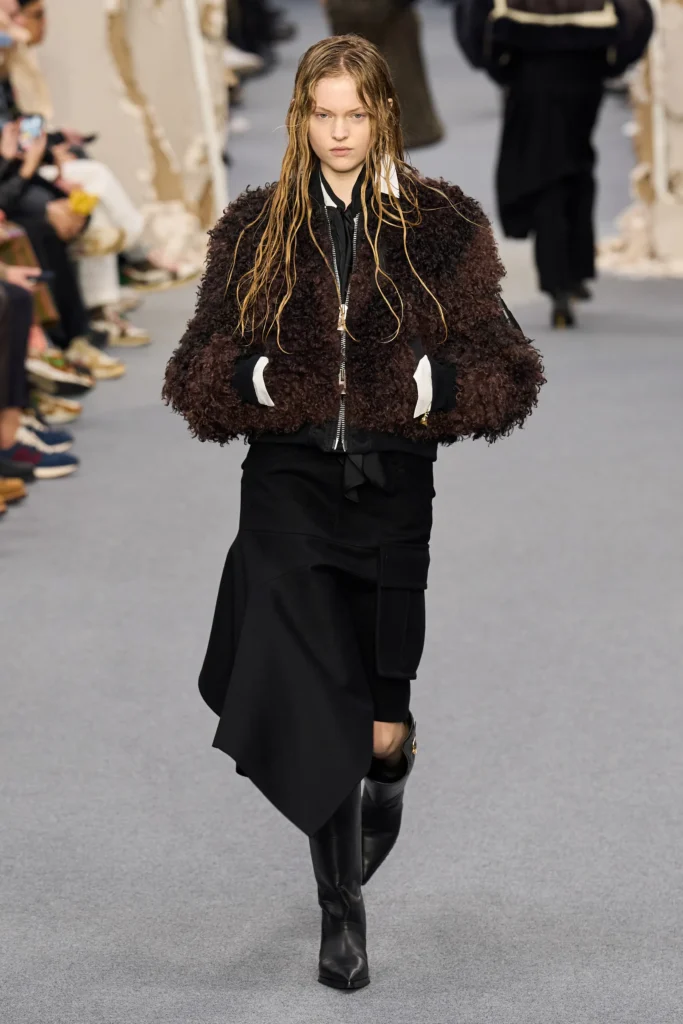
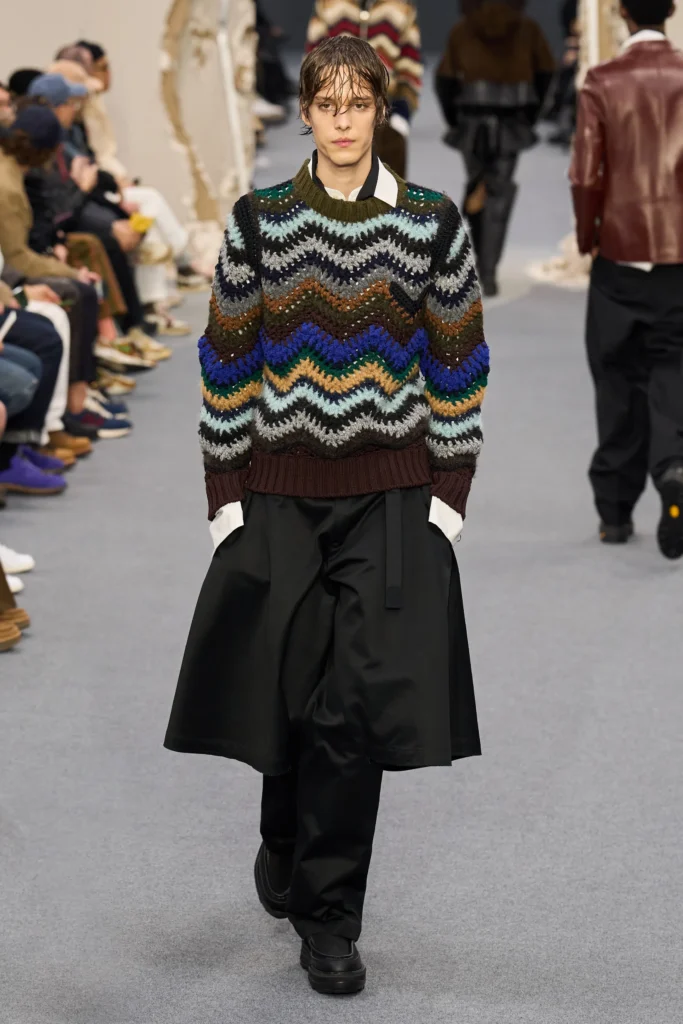
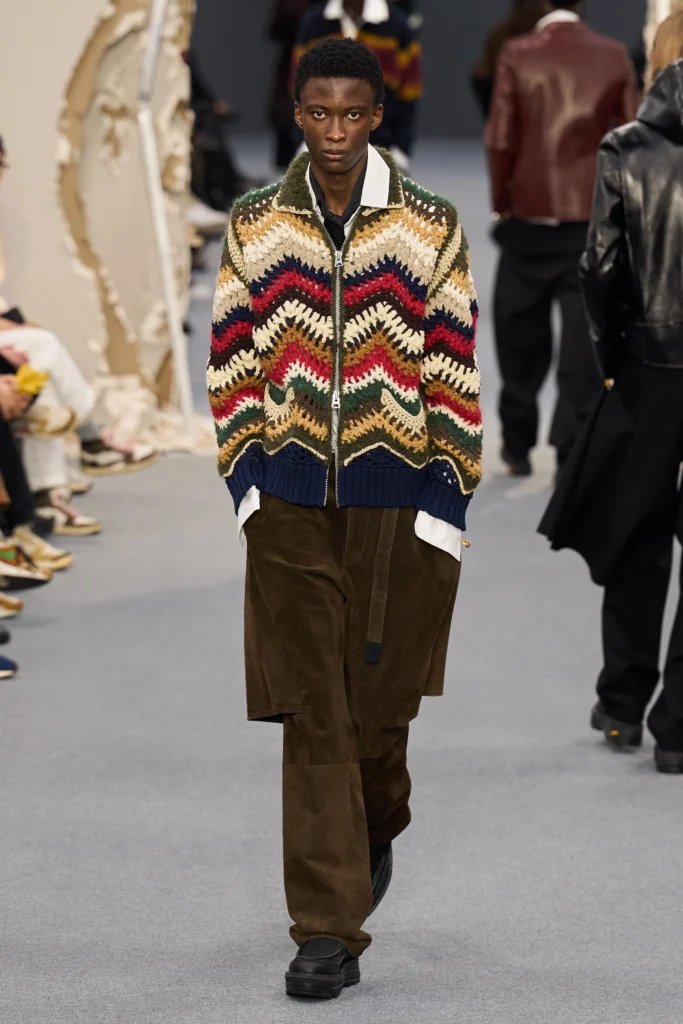
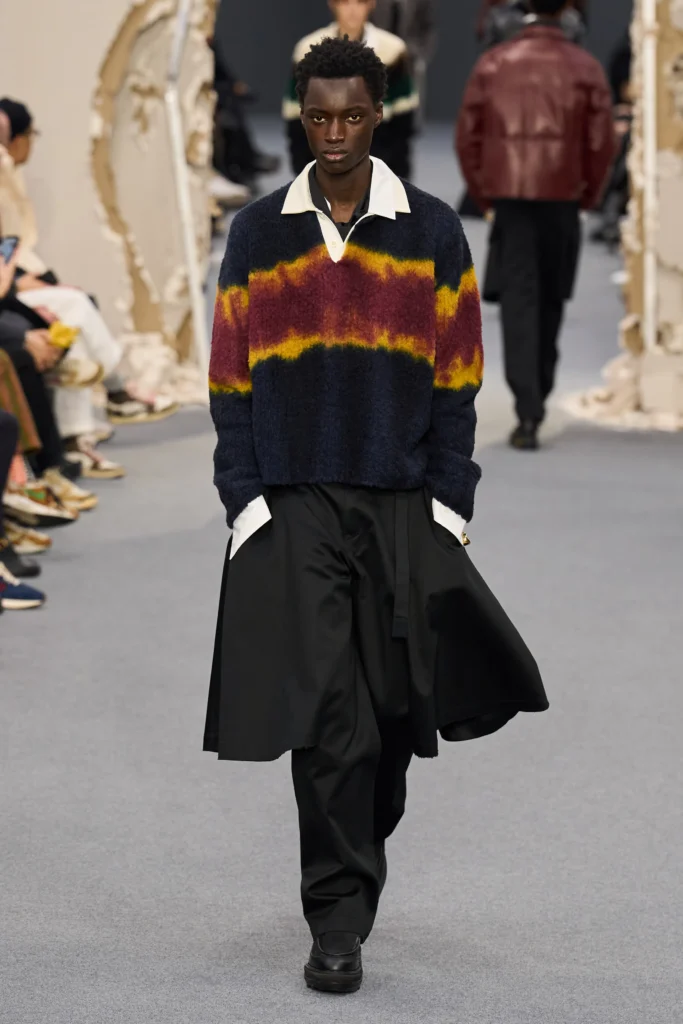
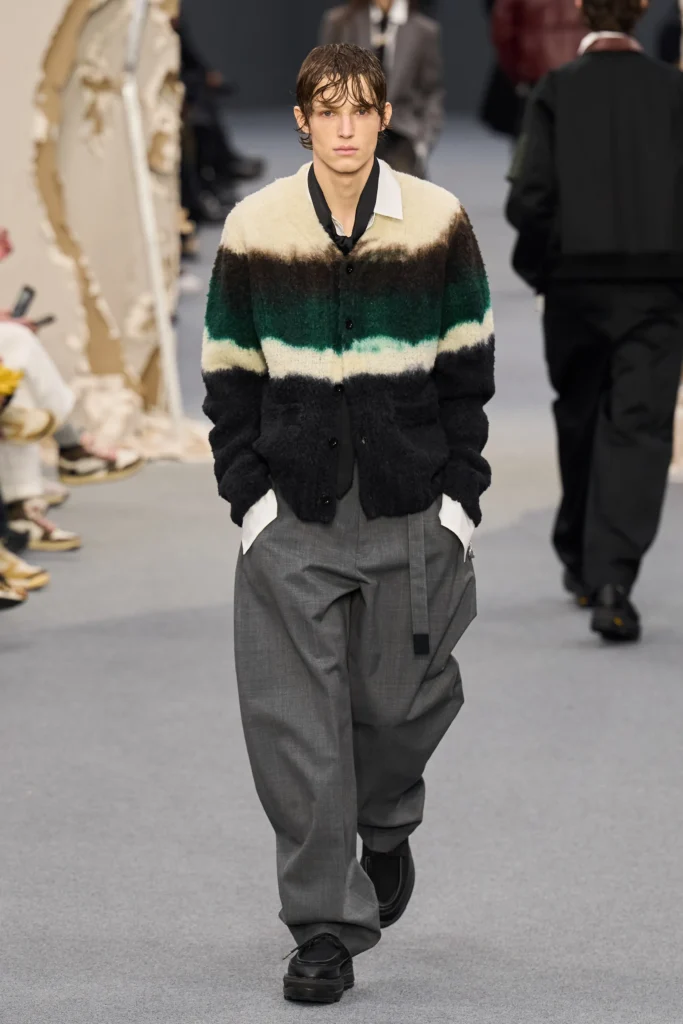
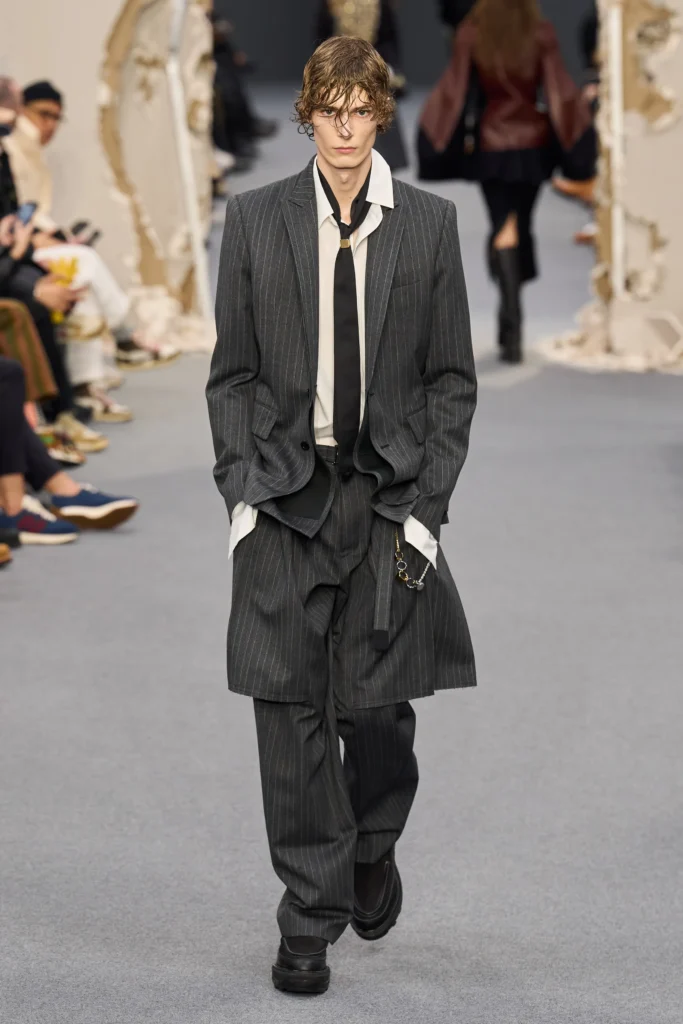
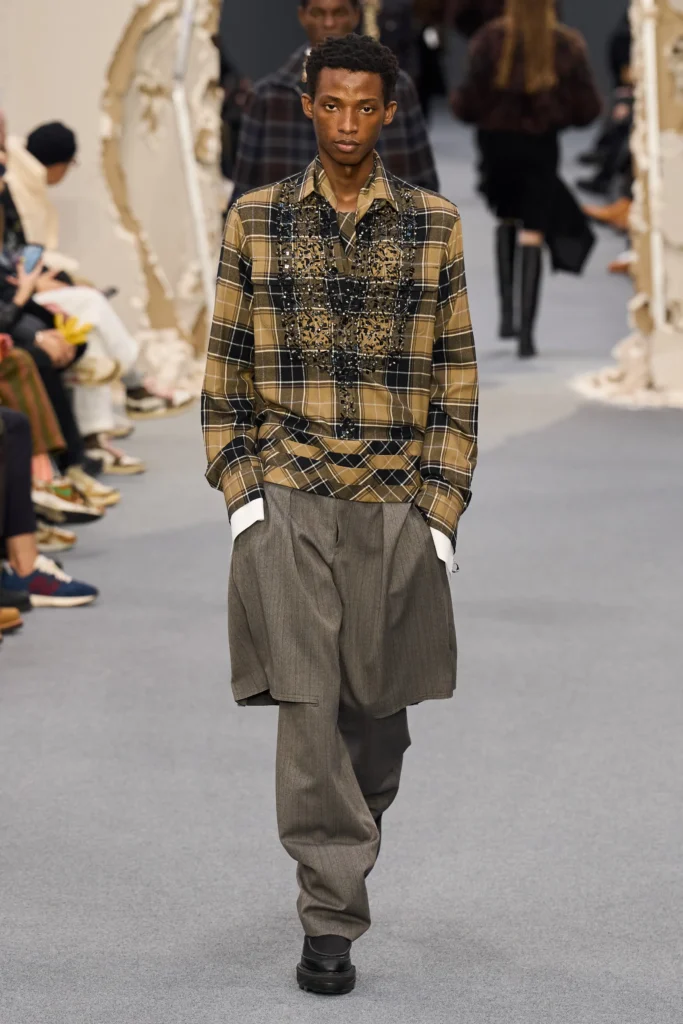
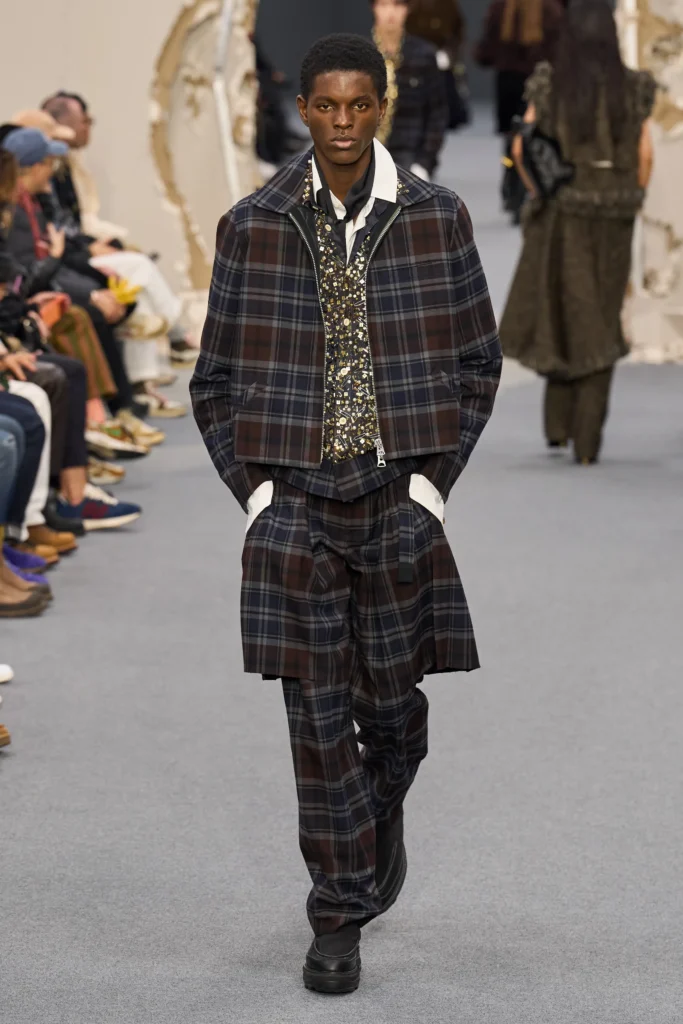
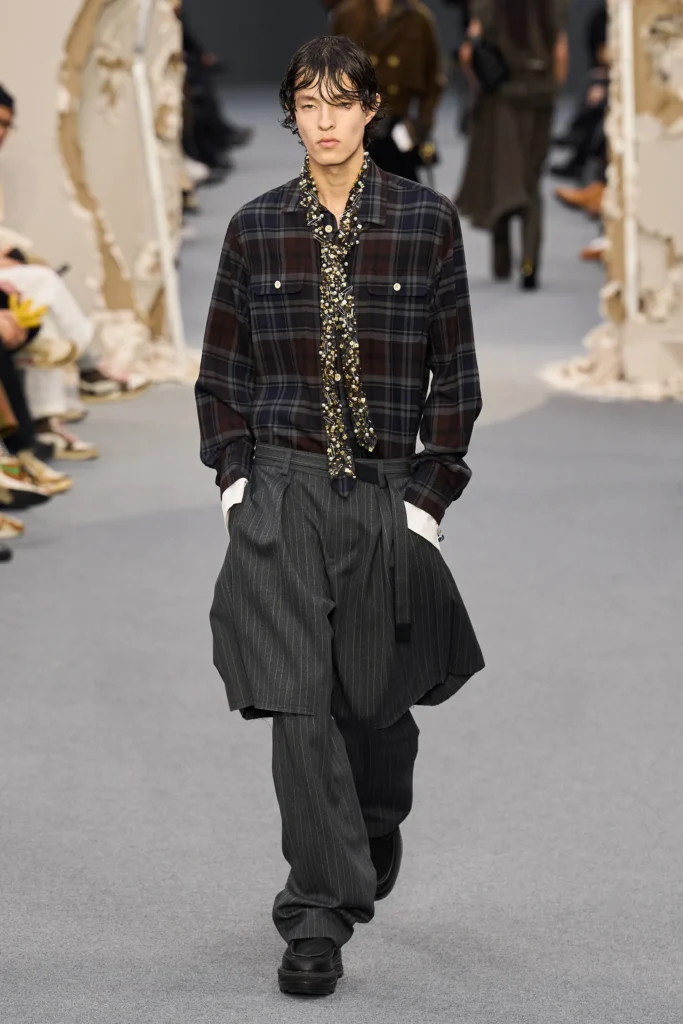
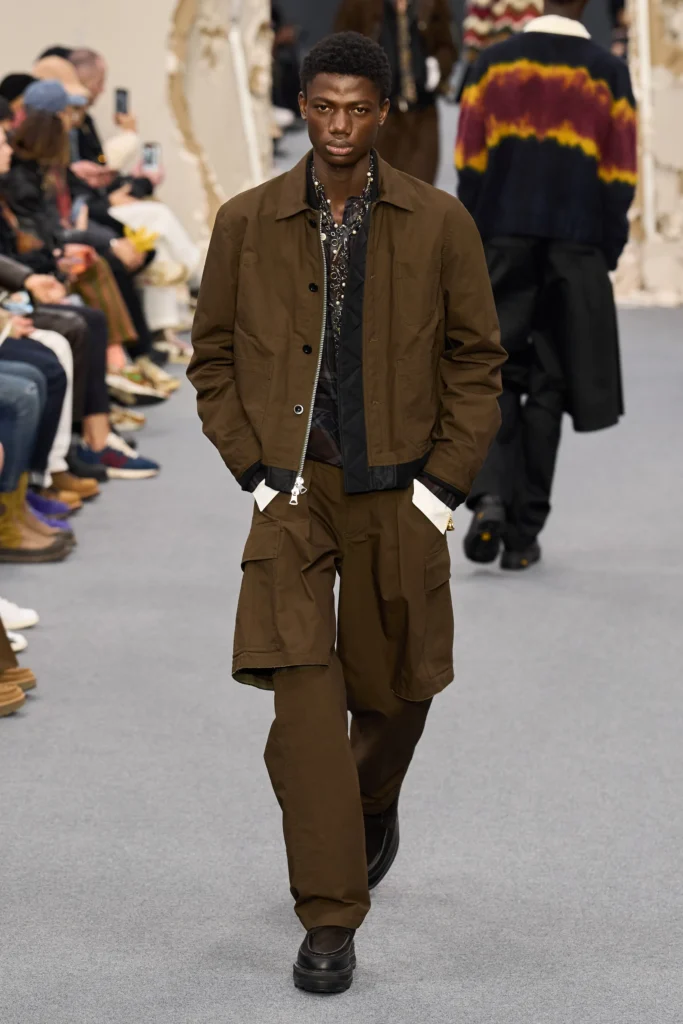
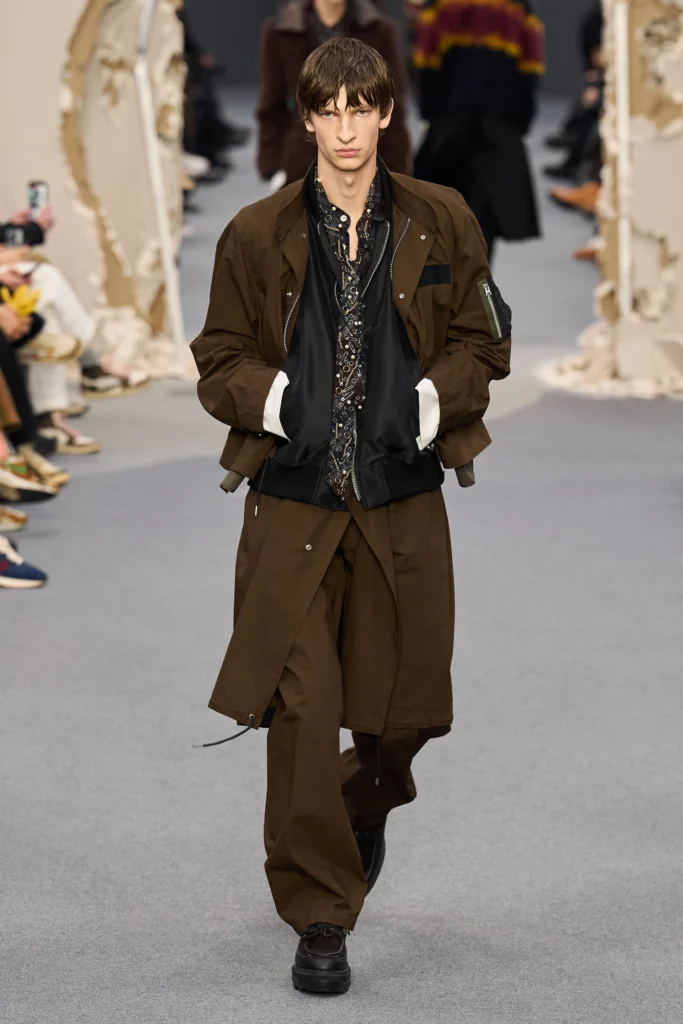
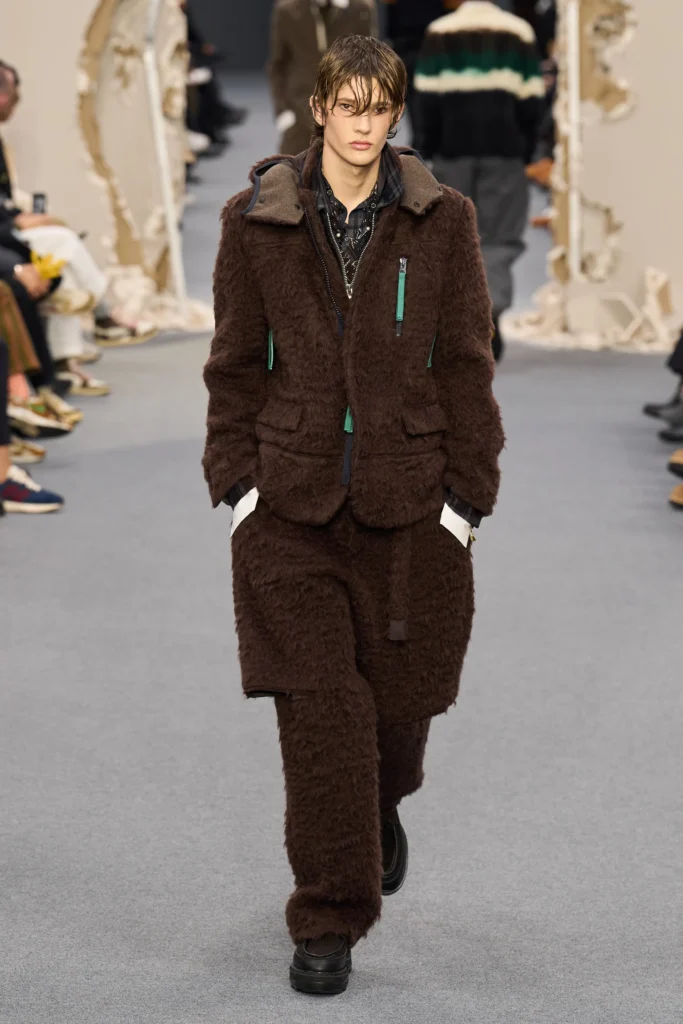
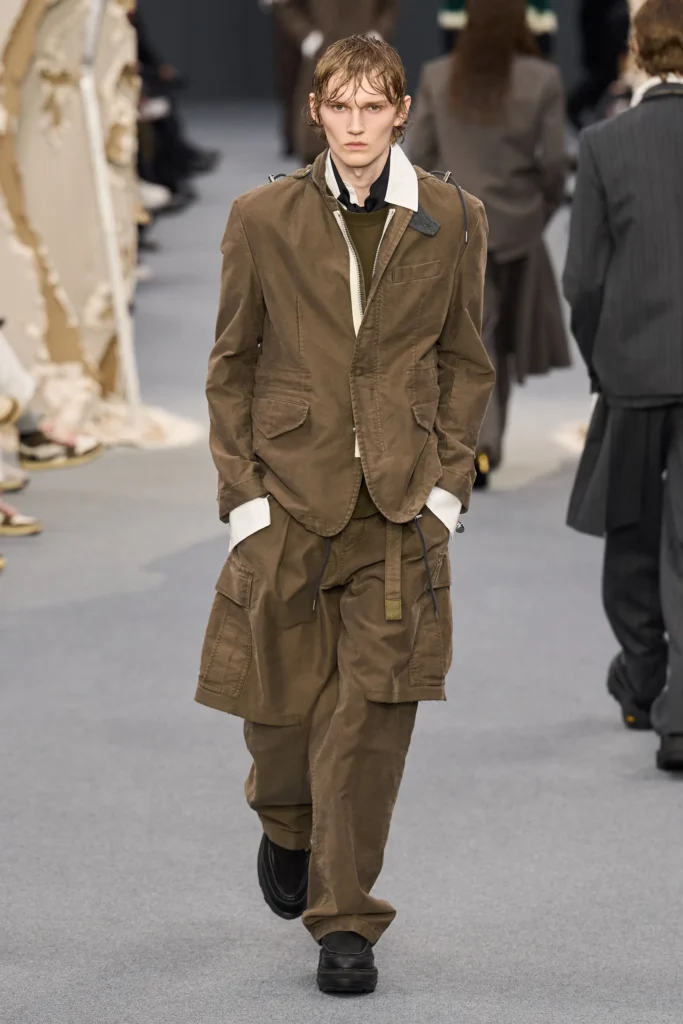
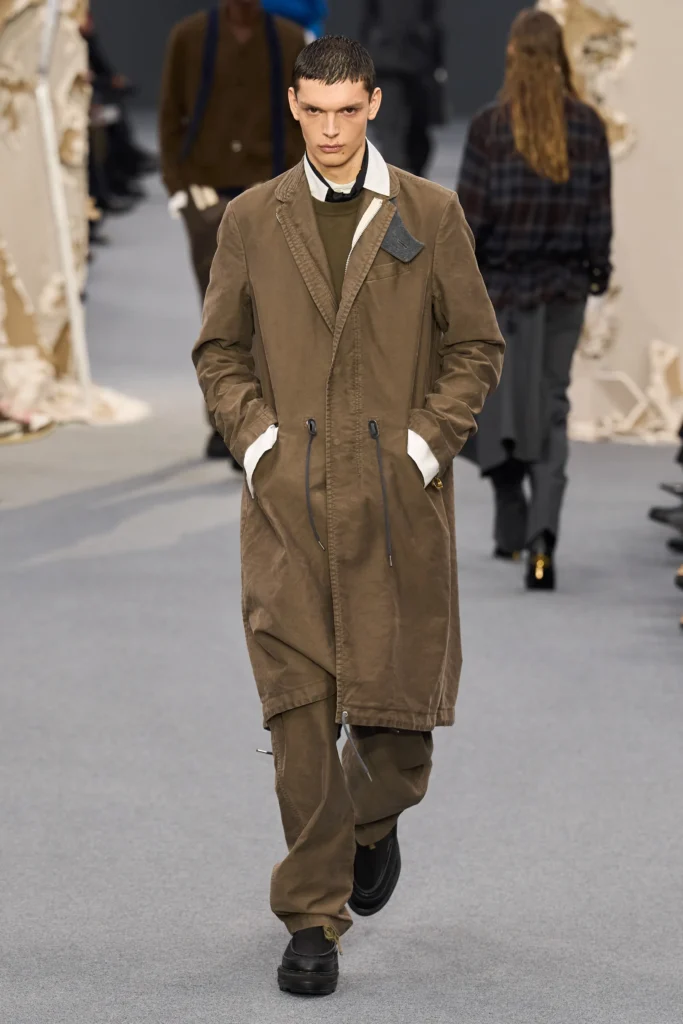
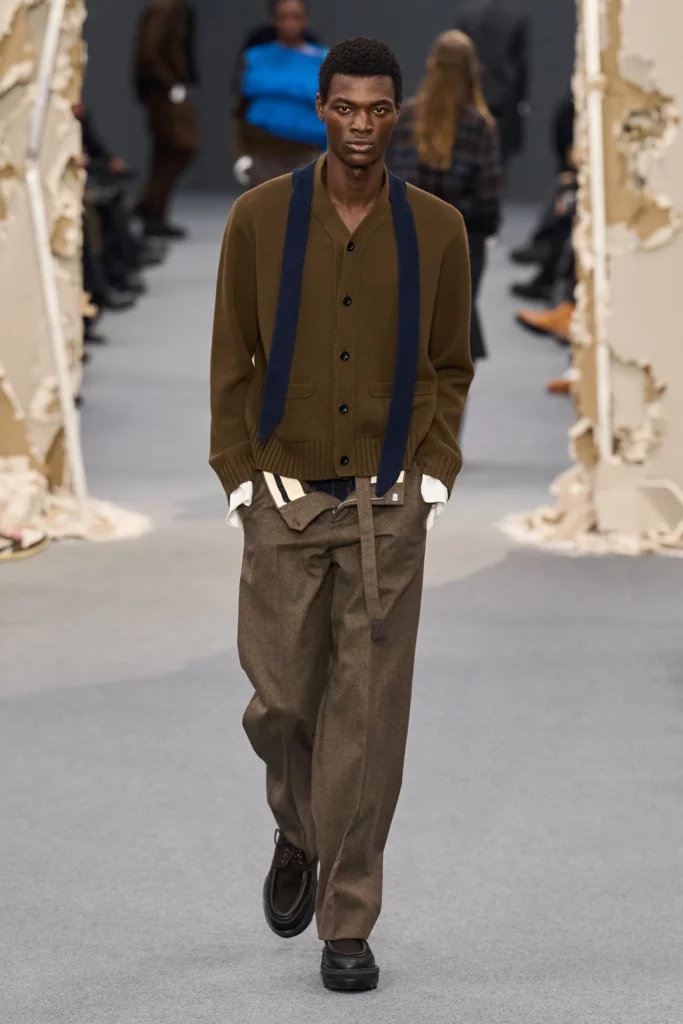
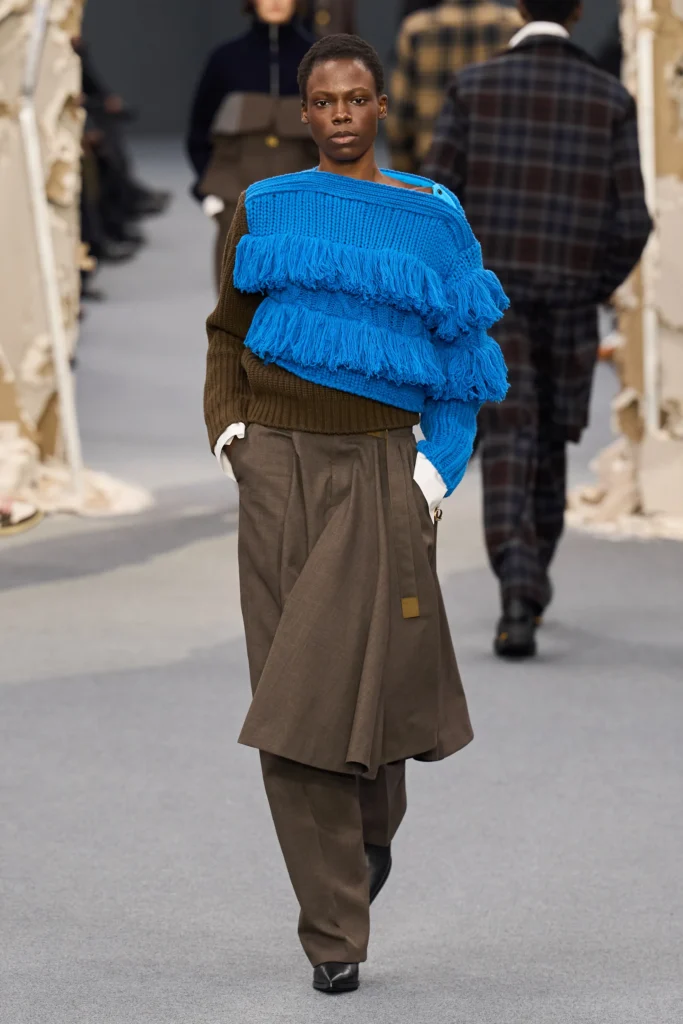
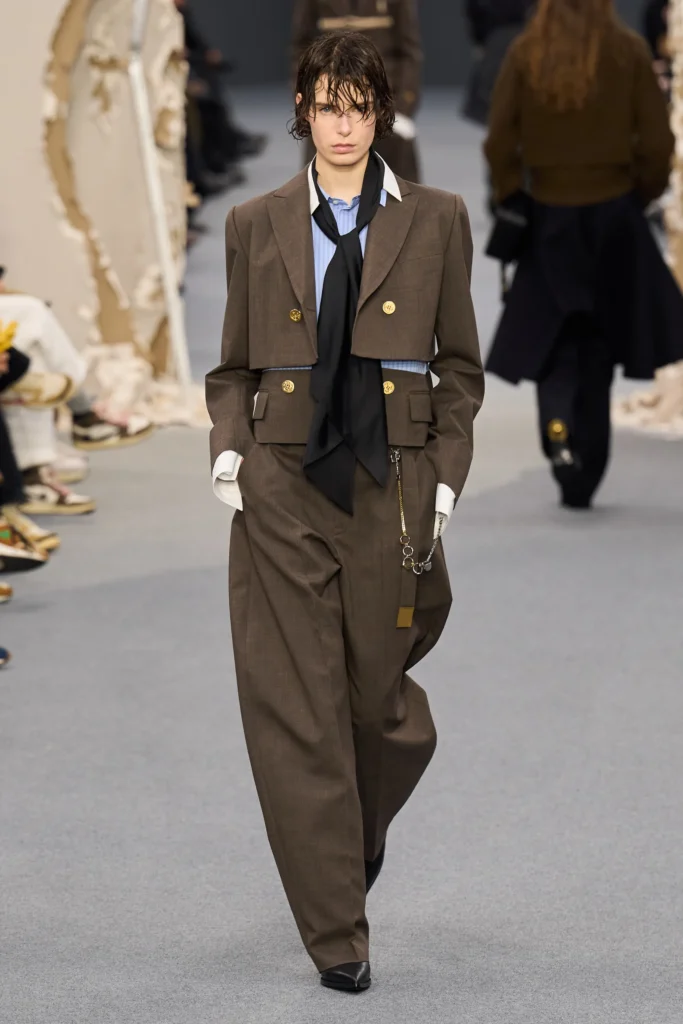
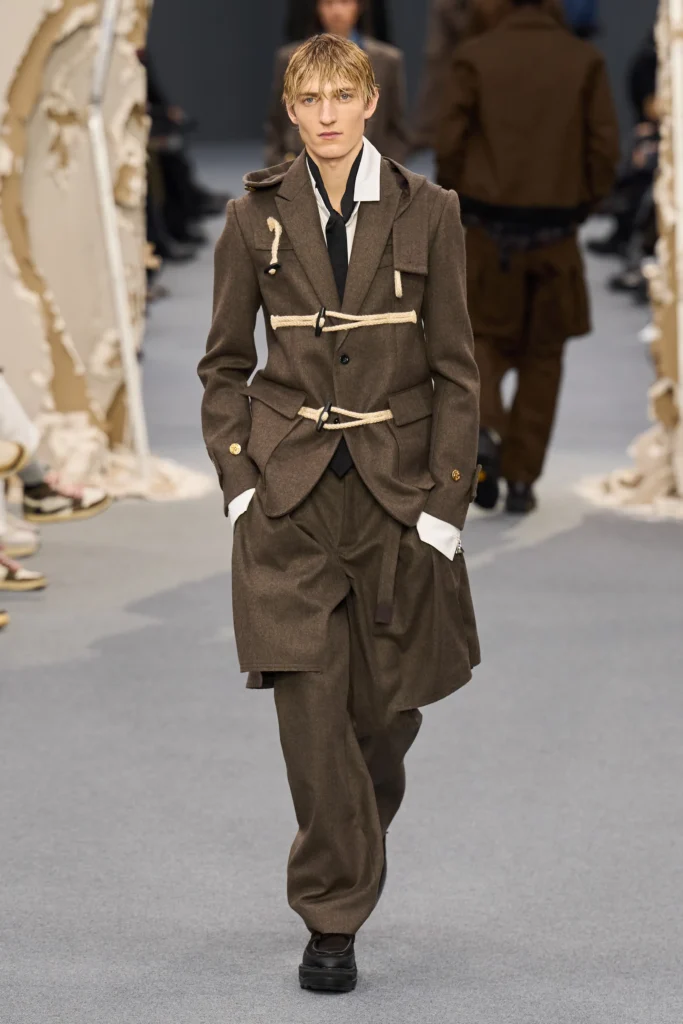
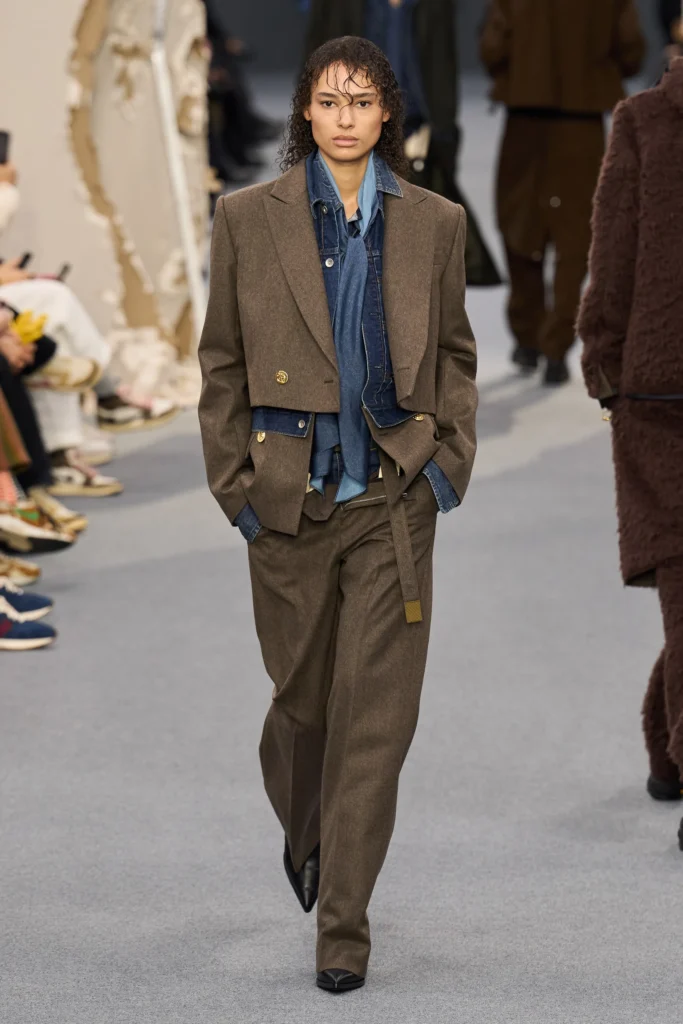
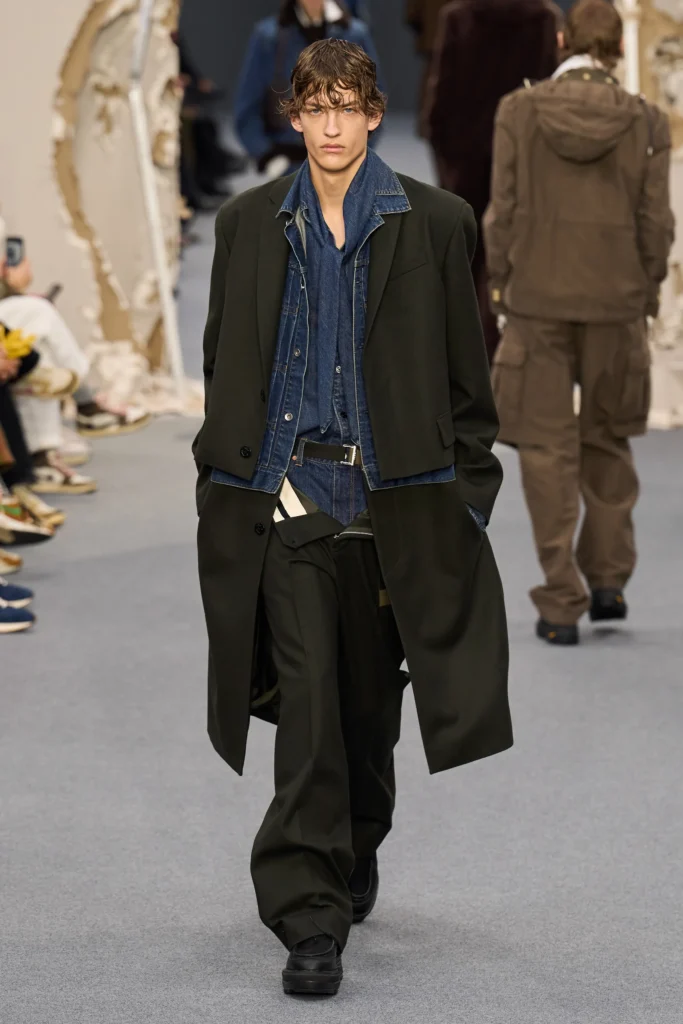
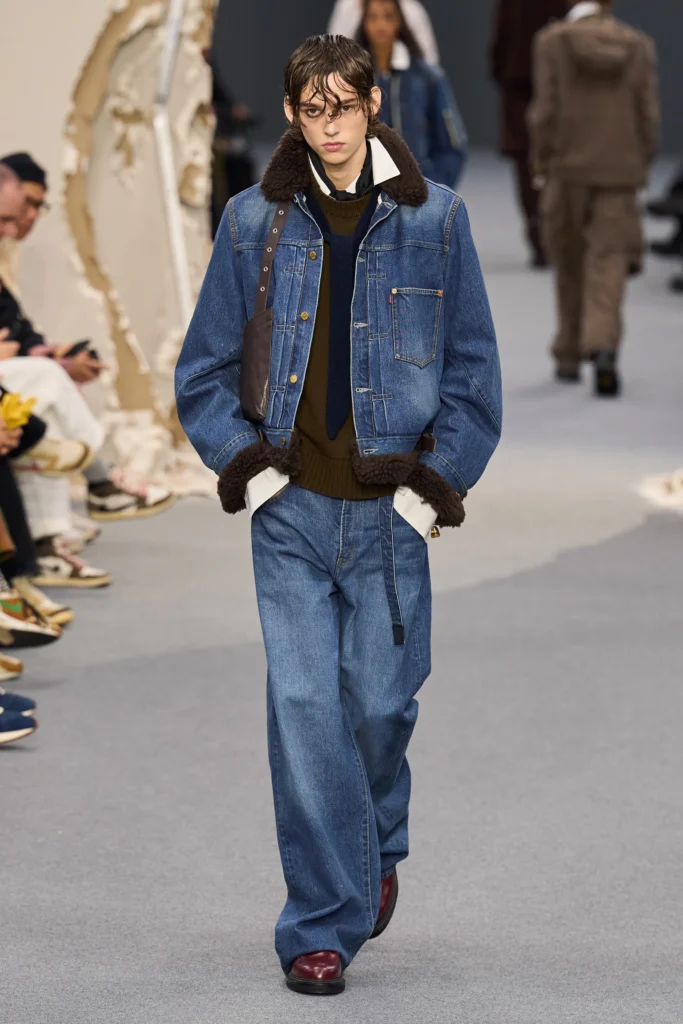
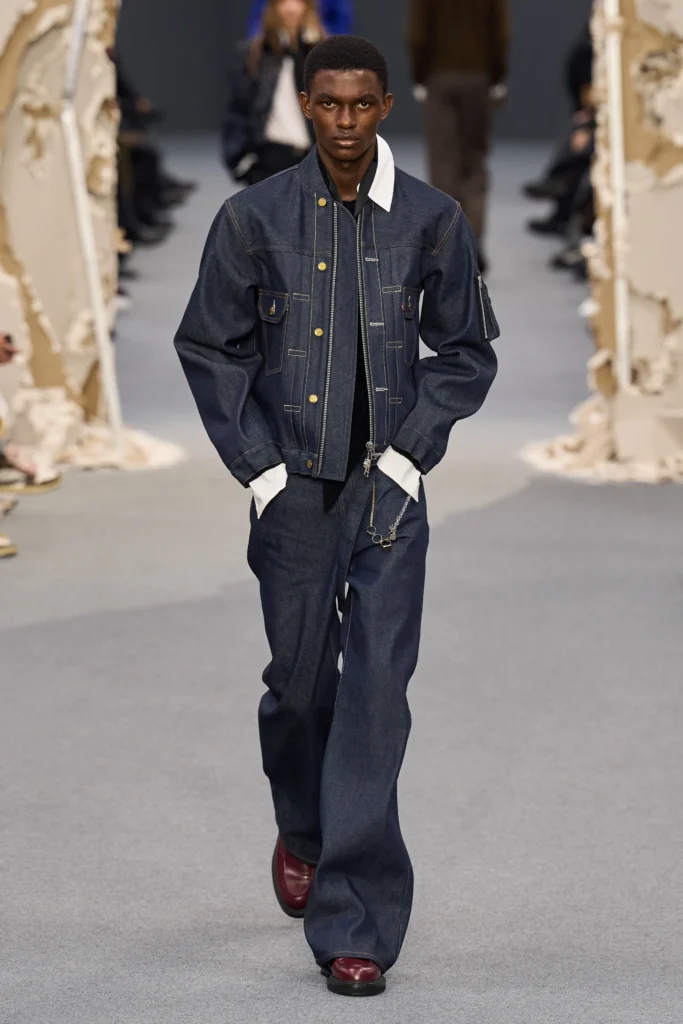
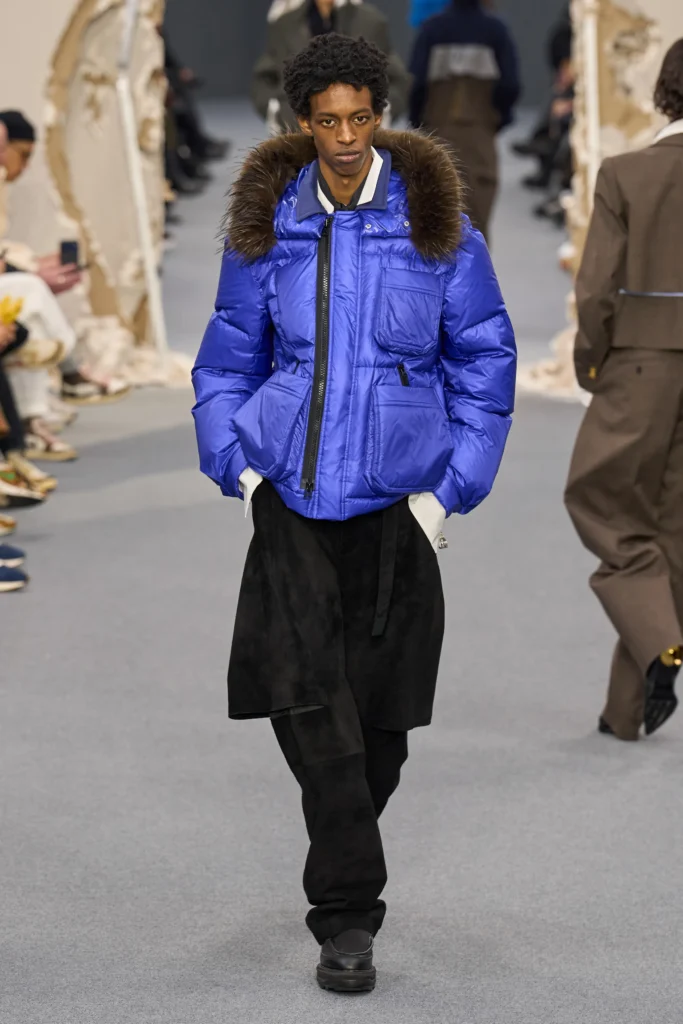
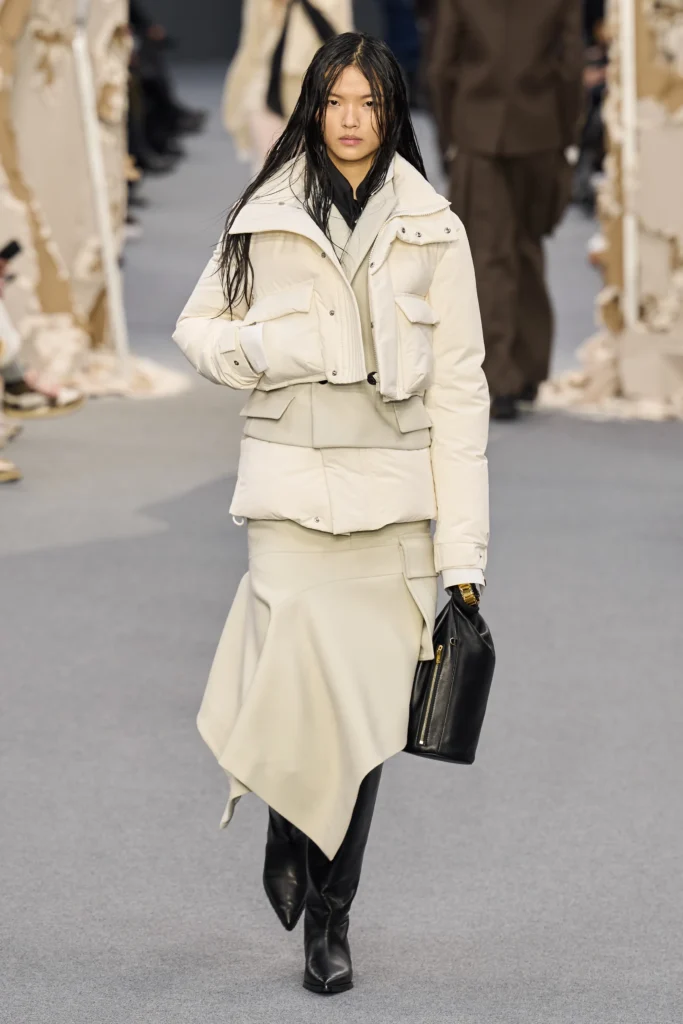
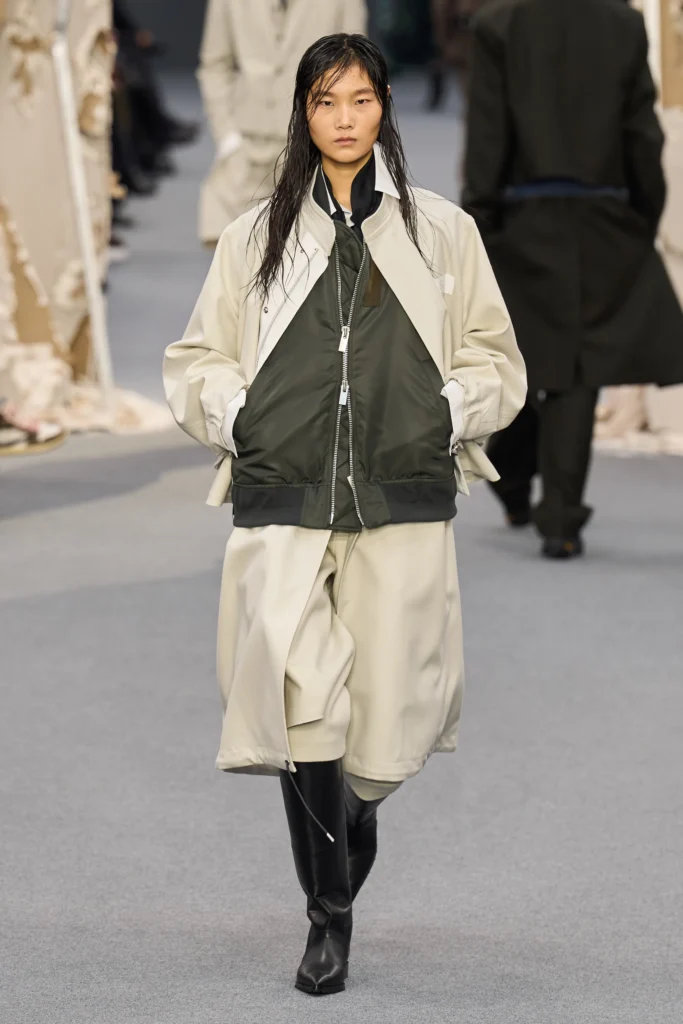
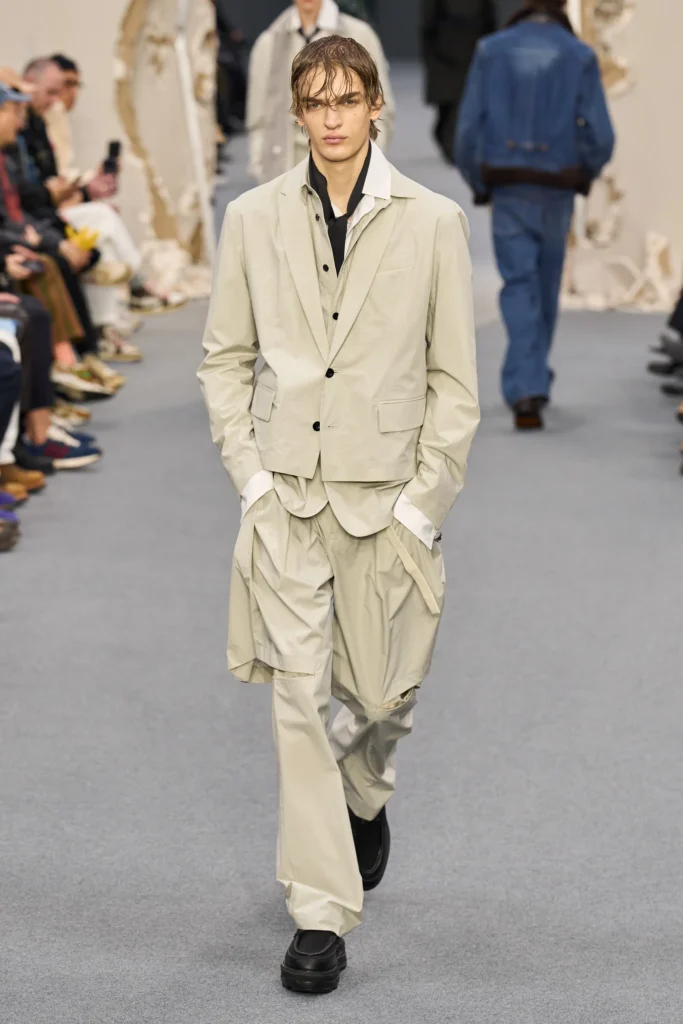
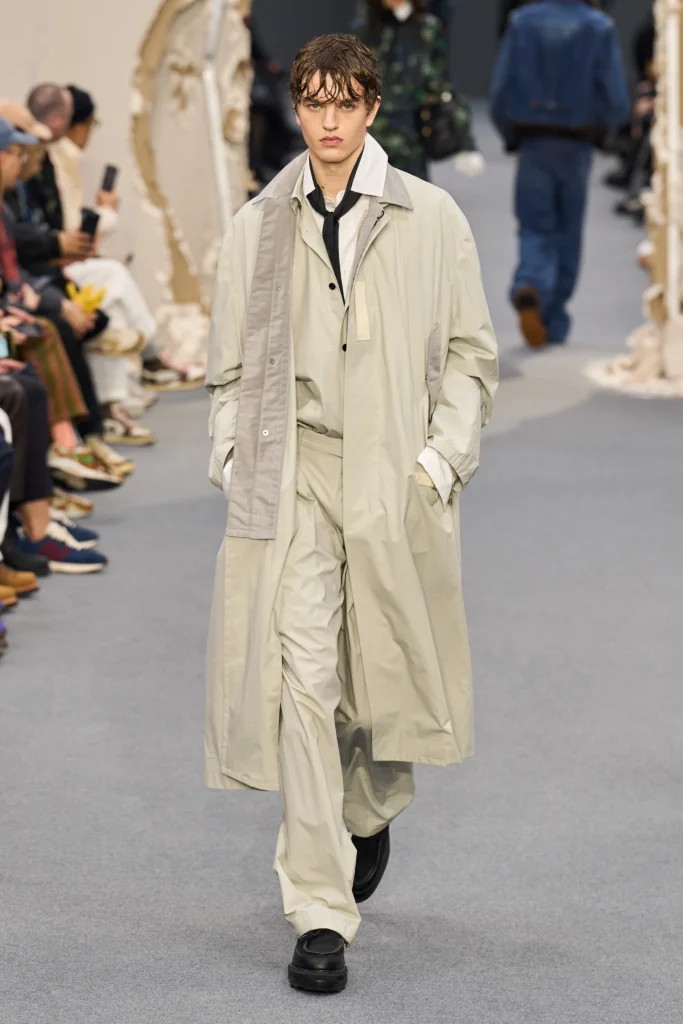
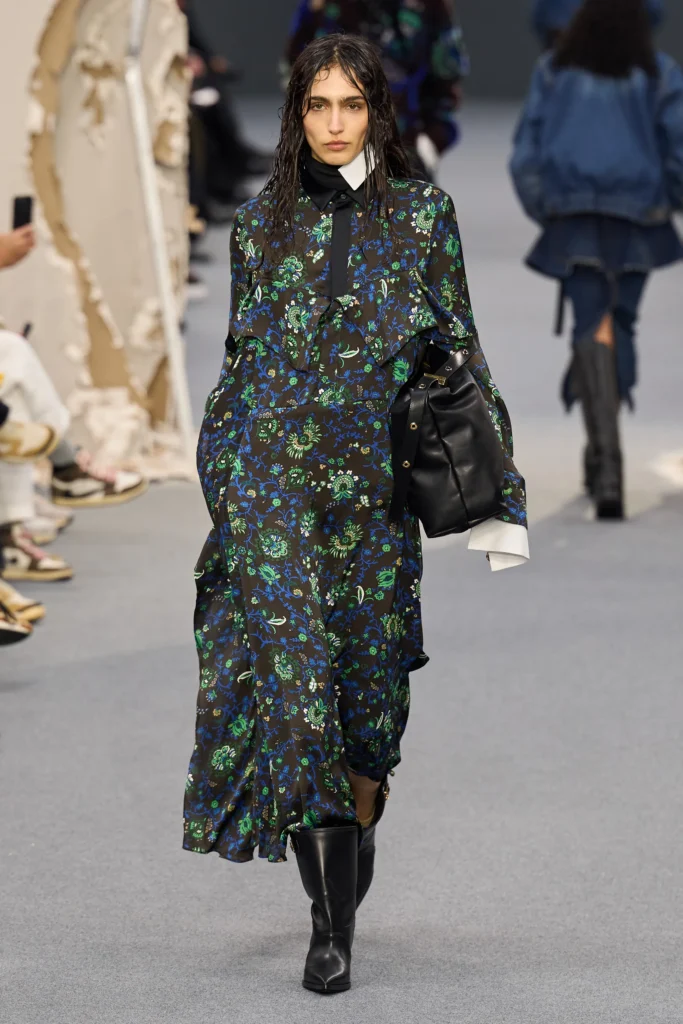
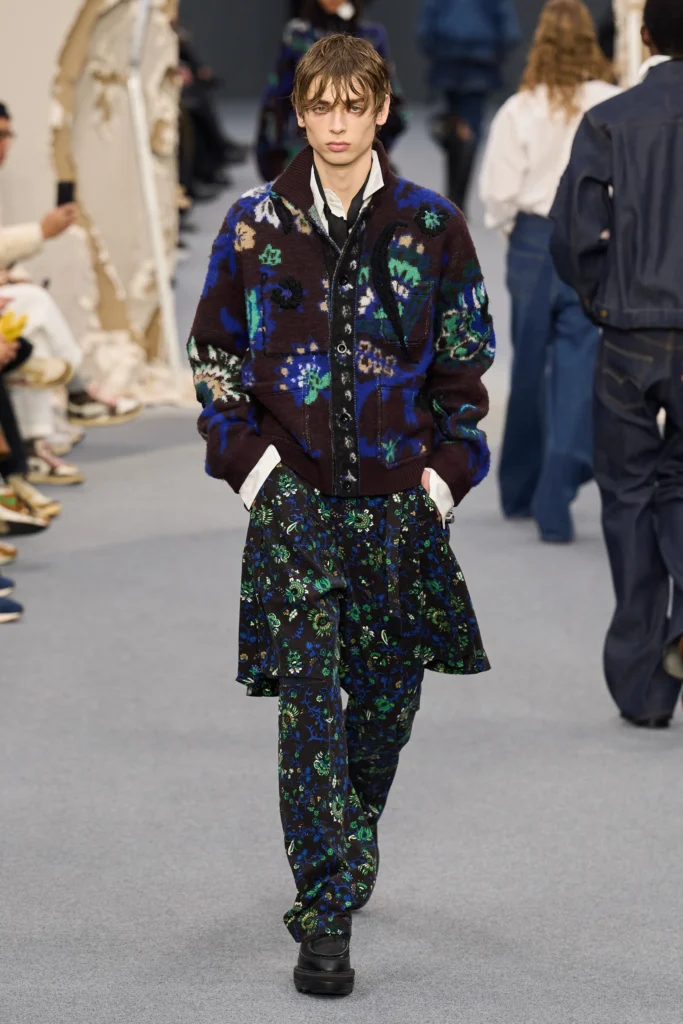
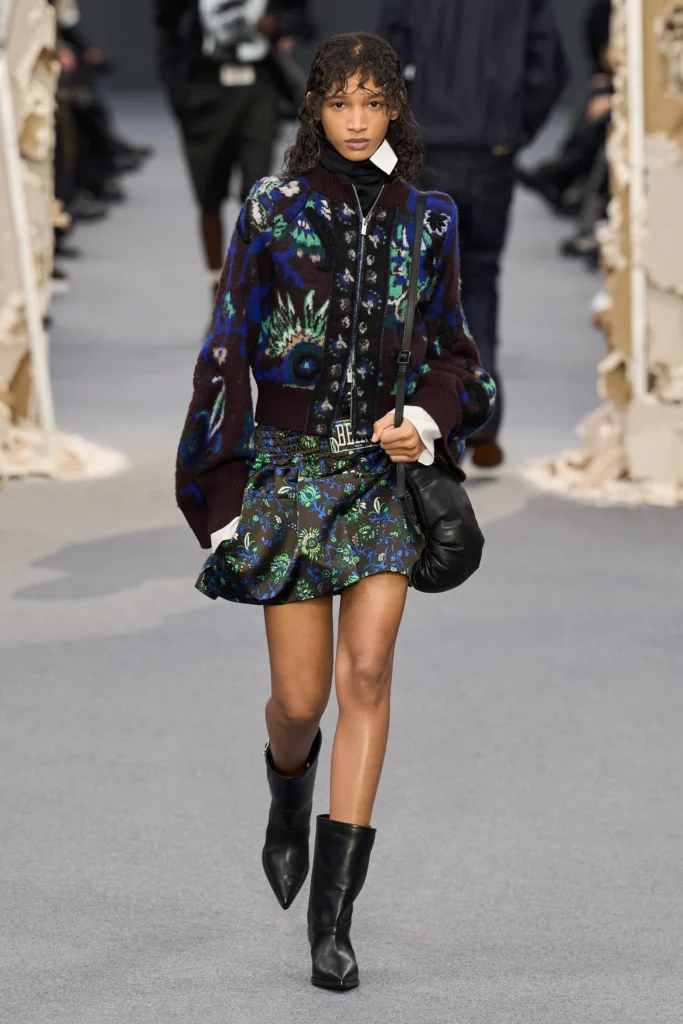
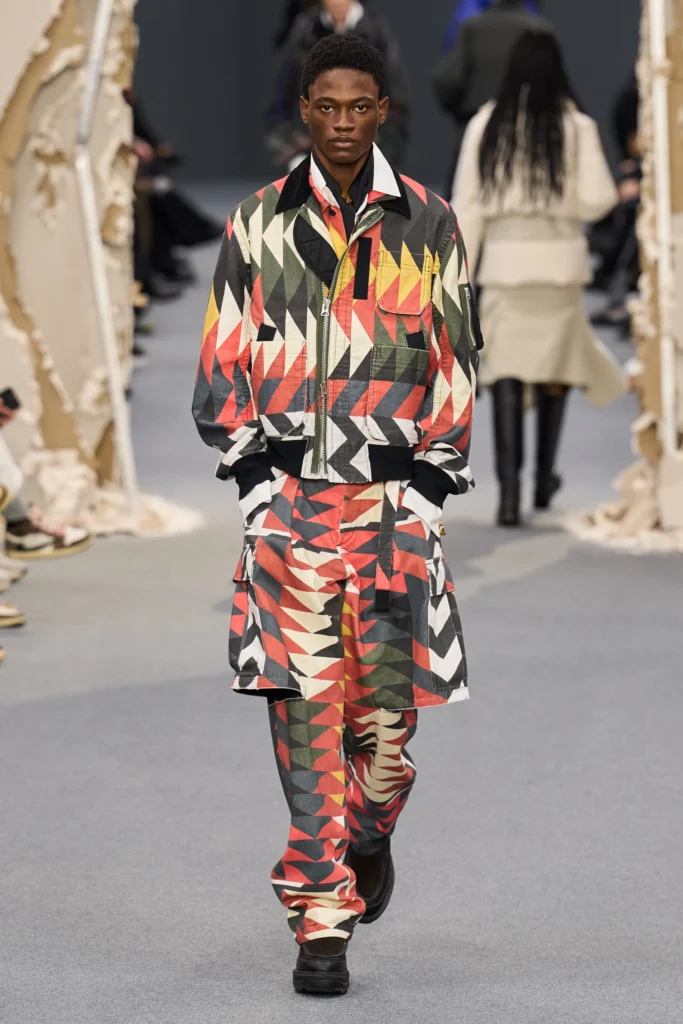
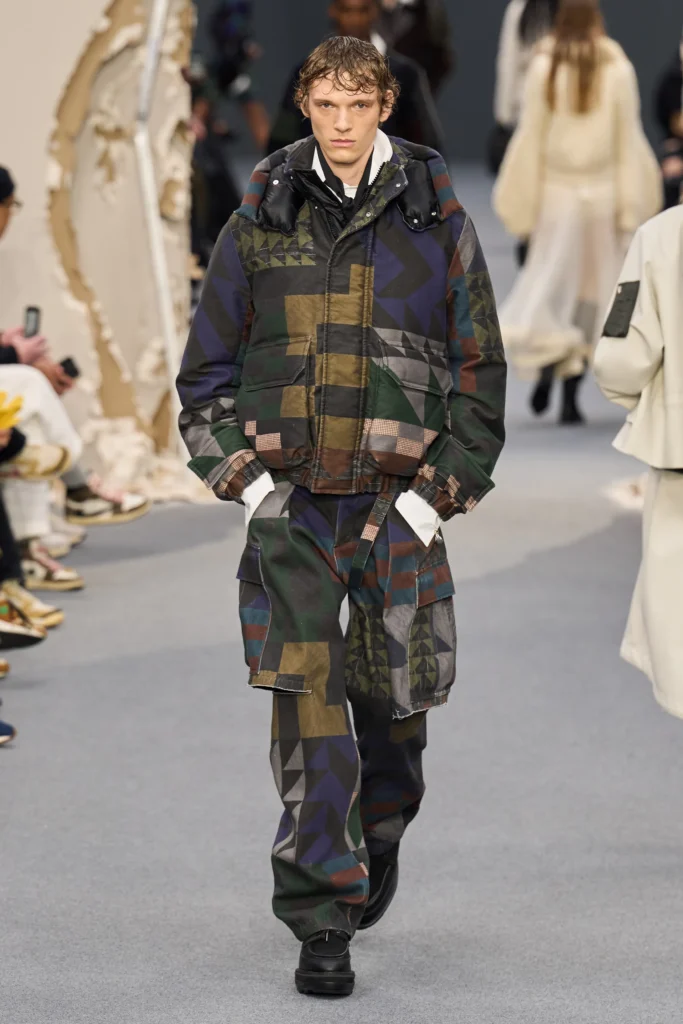
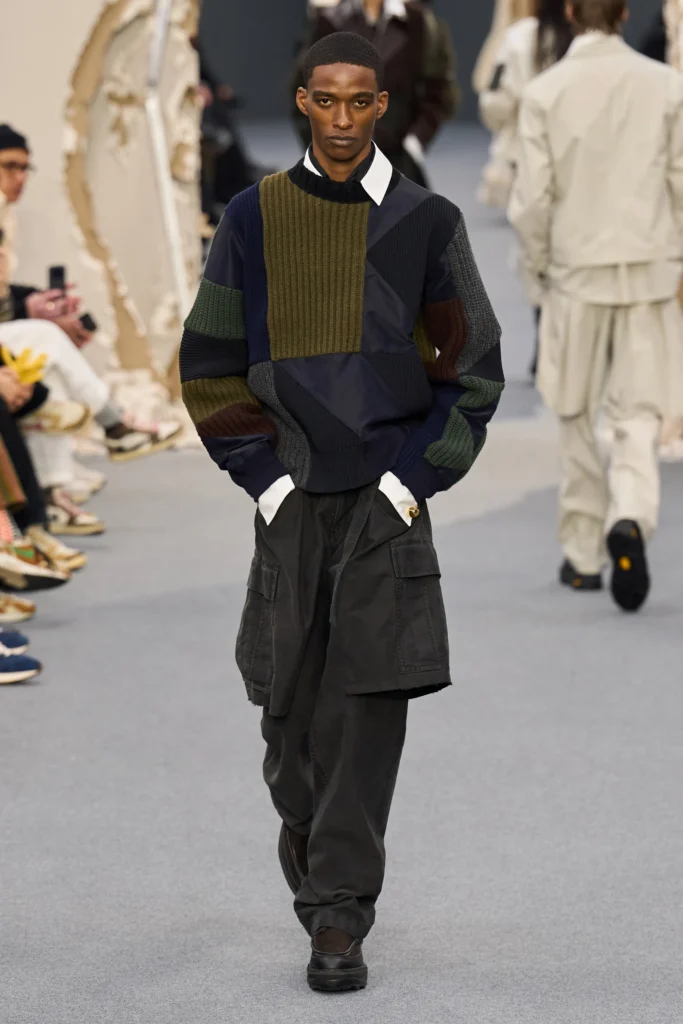
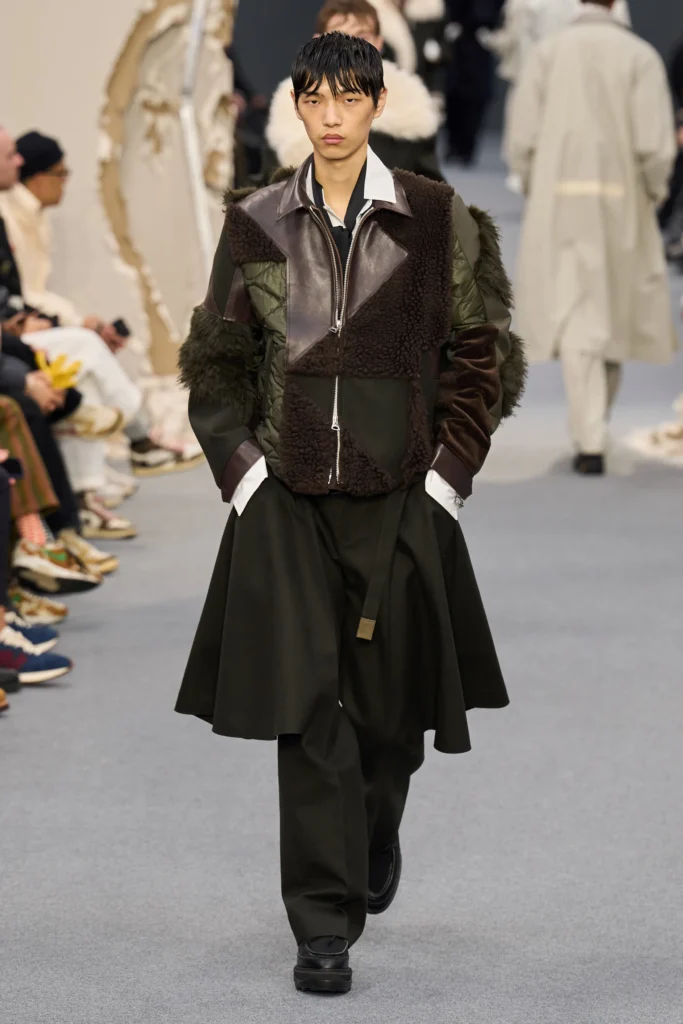
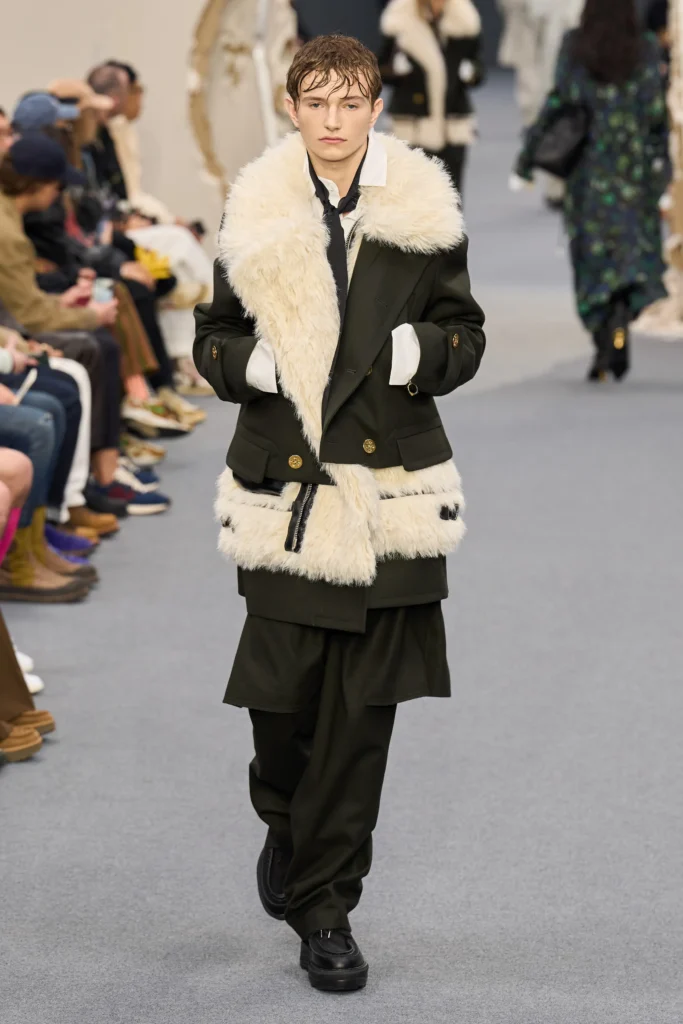
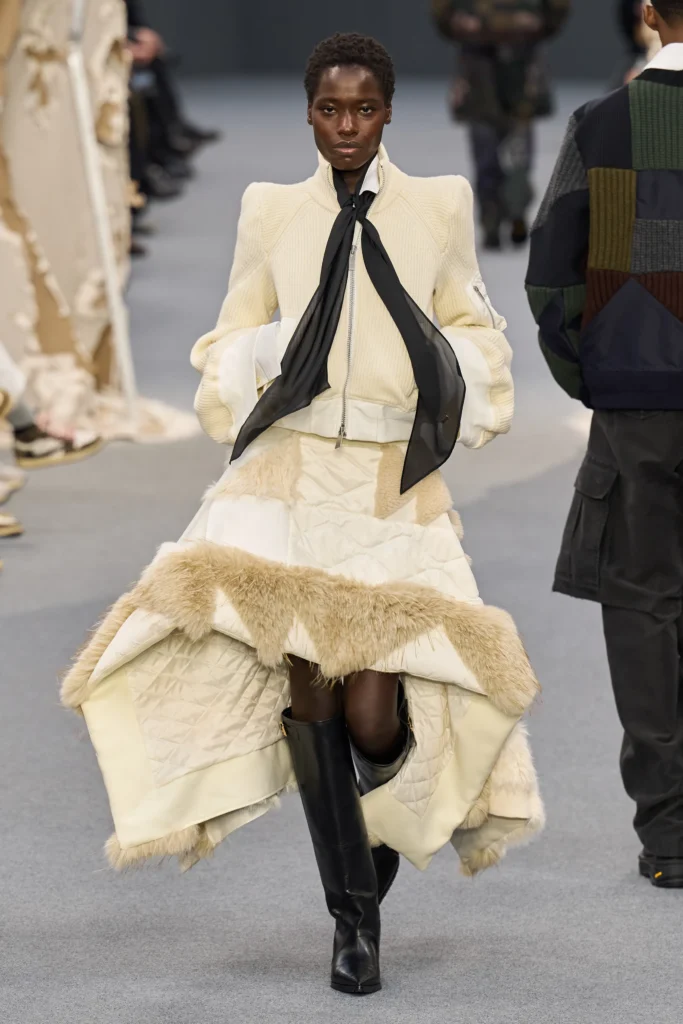
The principal convention Abe set out to dismantle was the binary logic of the silhouette—top and bottom, north and south. Instead, the show unfolded in episodic chapters that moved through monochrome tailoring, leather and shearling outerwear, fringed tweeds (curiously absent of menswear counterparts), knits, checks, and workwear, before settling into ochre-khaki tailoring. Along the way came richly washed indigo denim, Aran-accented padded outerwear, ditsy floral thistle prints, triangle-quilted workwear, aviator-tinged tailoring, and denim elevated to eveningwear. A trio of Left Bank–inflected womenswear evening looks—skirts cut from triangular quilted panels—offered a quiet counterpoint.
Those recurring triangles, never overplayed, were the key to the collection’s conceptual spine. They spoke to the three-faced silhouette Abe consistently proposed, one that introduced a new equator between shoulder and waist, knee and ankle. Through kilting, skirting, bolstered jackets, buttress-like billowing pockets, and tailored extensions (not layered add-ons), she inserted a third zone into the body’s usual geography—reshaping how garments relate to movement and proportion.
That three-way dialogue extended beyond silhouette. Sacai’s ongoing collaboration with Levi’s reappeared in denim jackets reworked with notch lapels and utility pockets, while patterned workwear came via A.P.C., using prints drawn from Jessica Ogden’s quilt designs. Footwear arrived courtesy of another seasonal partnership with J.M. Weston, the heritage Limoges shoemaker.
Michel Gaubert’s soundtrack mirrored the collection’s restless energy, weaving through Tears for Fears’ “Everybody Wants to Rule the World.” As fashion’s entrenched power structures show signs of strain, Abe’s insistence on independence and creative freedom feels less like resistance and more like a viable blueprint. If Ali’s maxim holds true, then perhaps fashion—by thinking differently—can still become something freer, too.
Photos Credit: Filippo Fior / Gorunway.com


