Paris Fashion Week: Dries Van Noten Fall/Winter 2026 Menswear
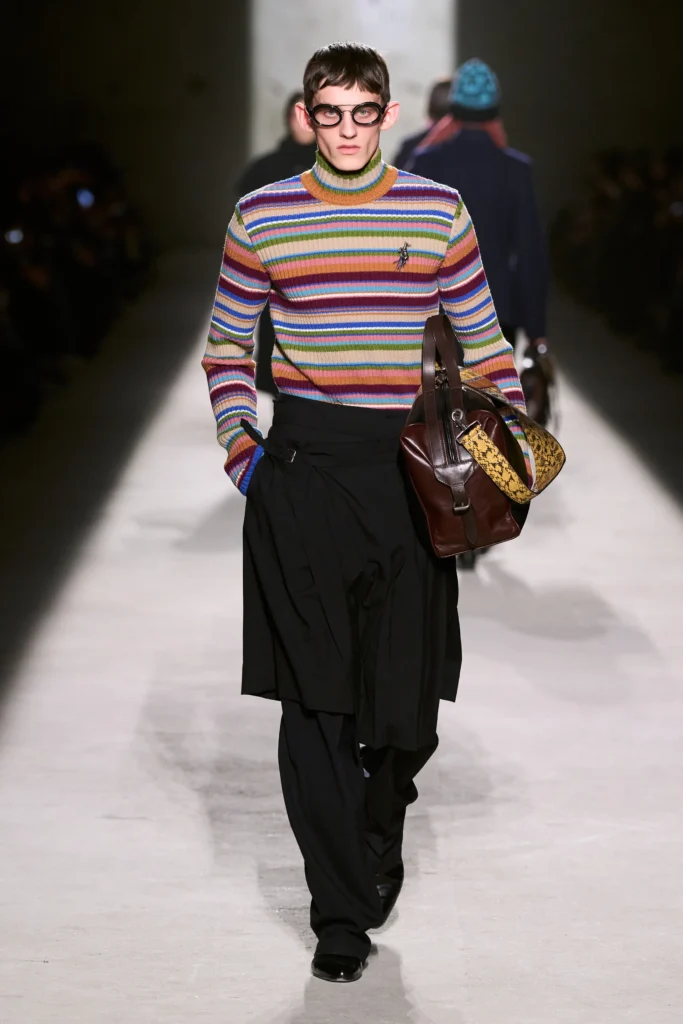
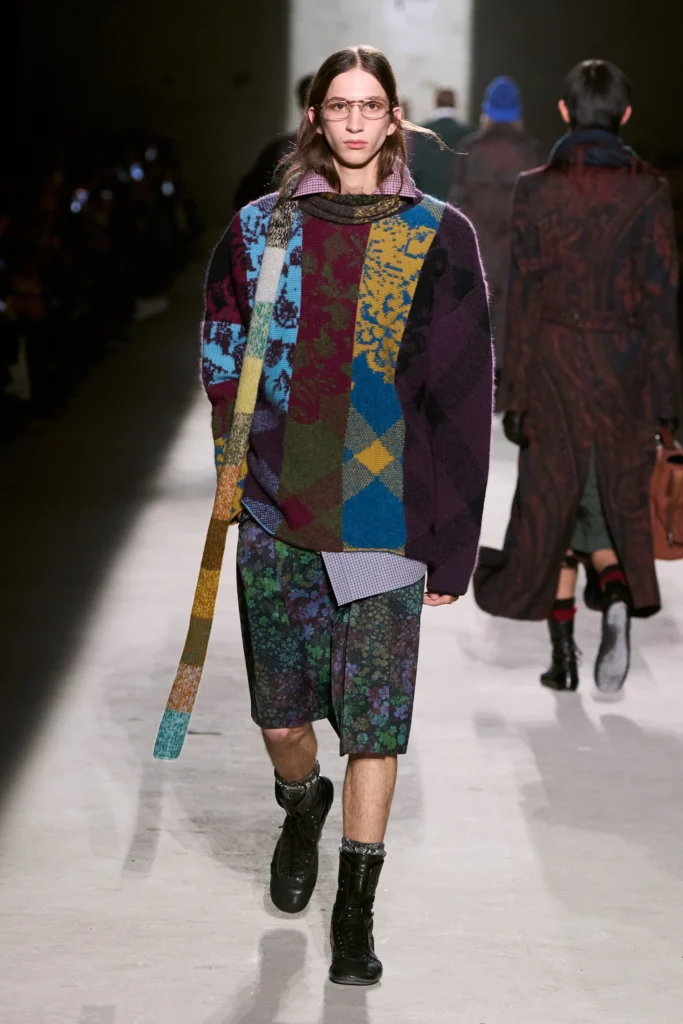
Paris – Eight years into his tenure at Dries Van Noten—and four menswear collections deep as creative director—Julian Klausner remains very much in study mode. For Fall/Winter 2026, his menswear offering unfolded like a richly layered dissertation on the house’s core codes: color, pattern, patchwork, and above all, knitwear.
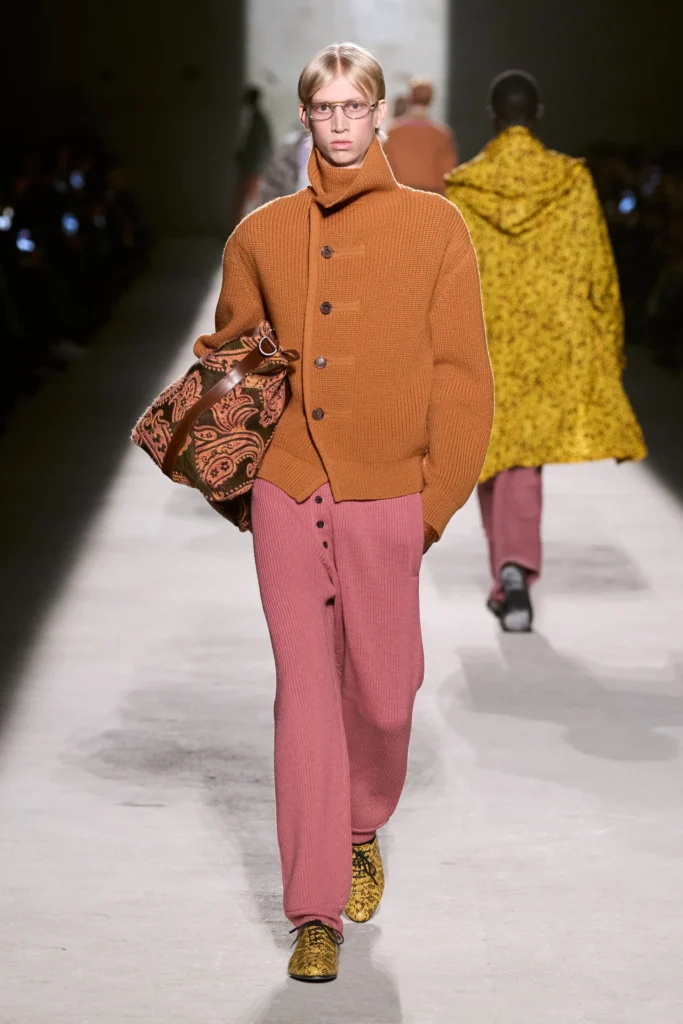
“It’s been a moment since we had a strong knit message in the show,” Klausner said backstage. With reverence, he pointed to the atelier behind it: a knit team whose members include veterans of more than three decades, responsible for much of Dries’ knit legacy. “For me, it’s a huge honor to have their experience—and their point of view.”
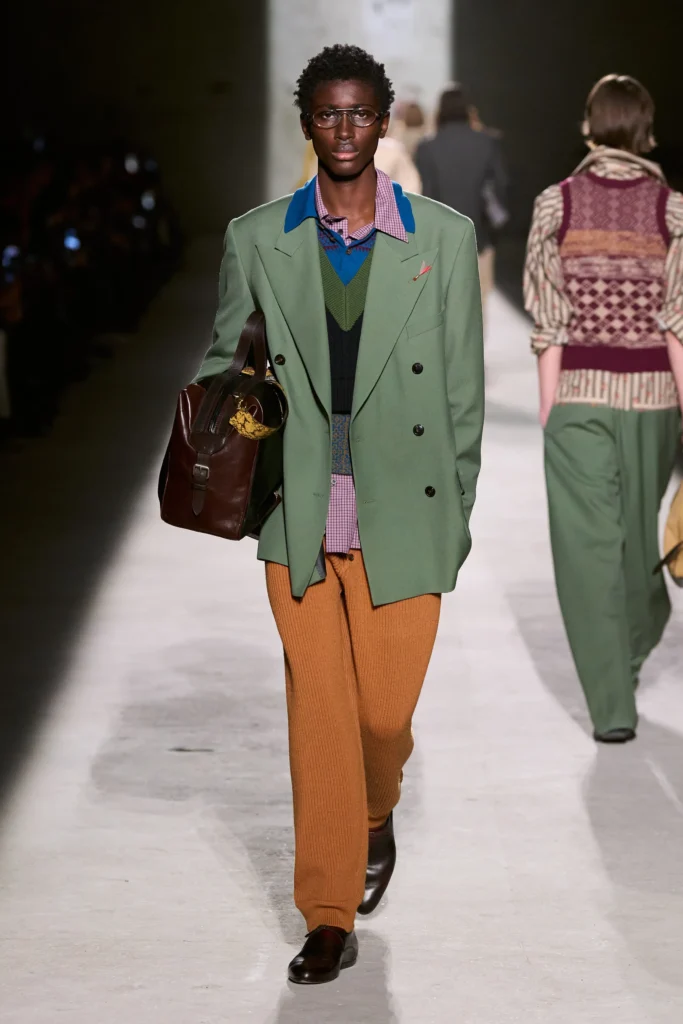
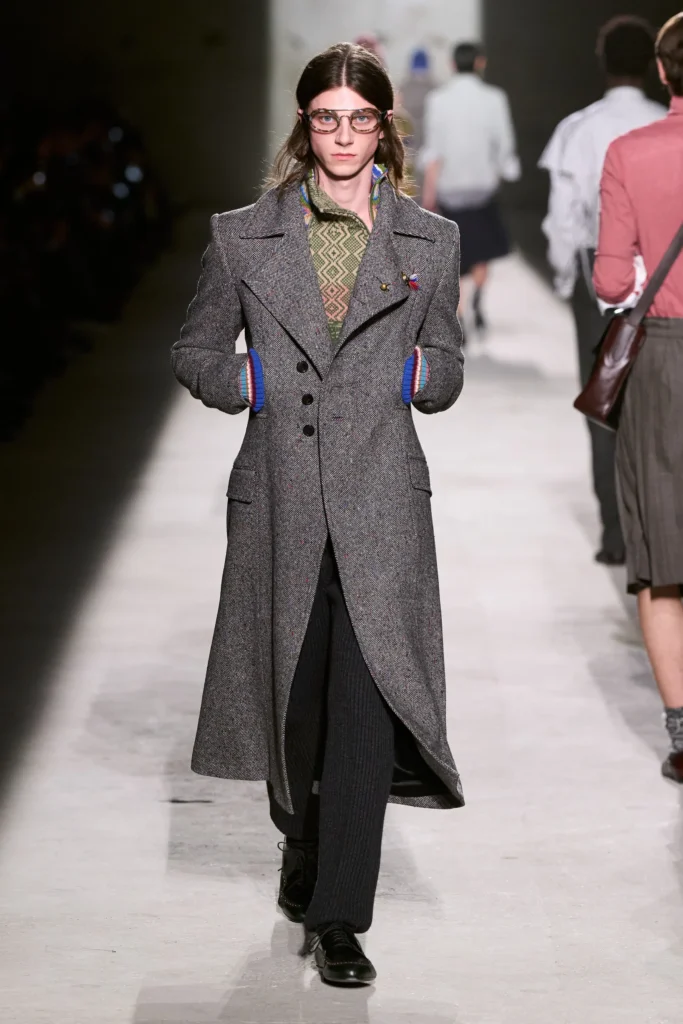
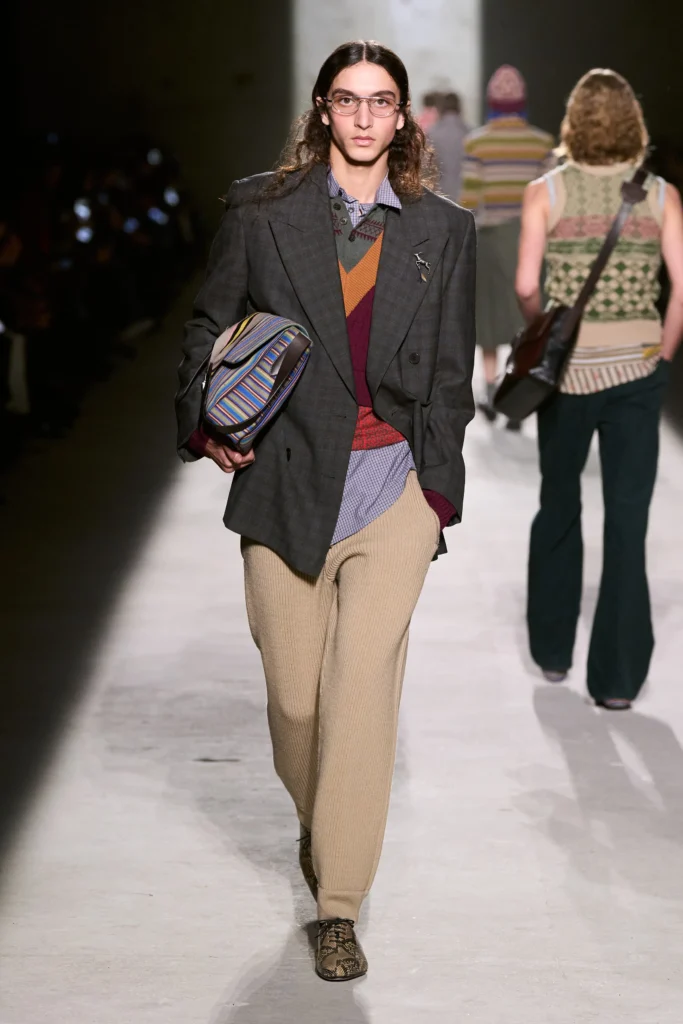
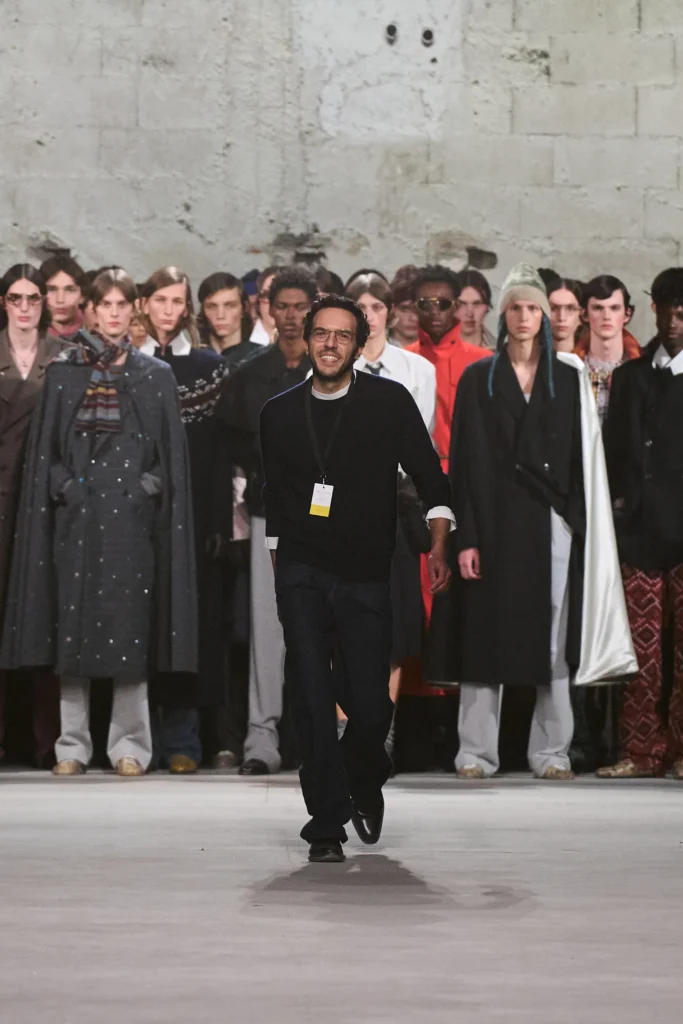
The collection was populated by imagined freshmen, figures on the cusp of adulthood. “It’s about coming of age,” Klausner explained. “Leaving home, exploring the world, taking the things you love with you—hand-me-downs, your granddad’s coat, your childhood blazer.” That sense of identities still forming allowed for experimentation, awkwardness, and play, all embraced rather than edited out.
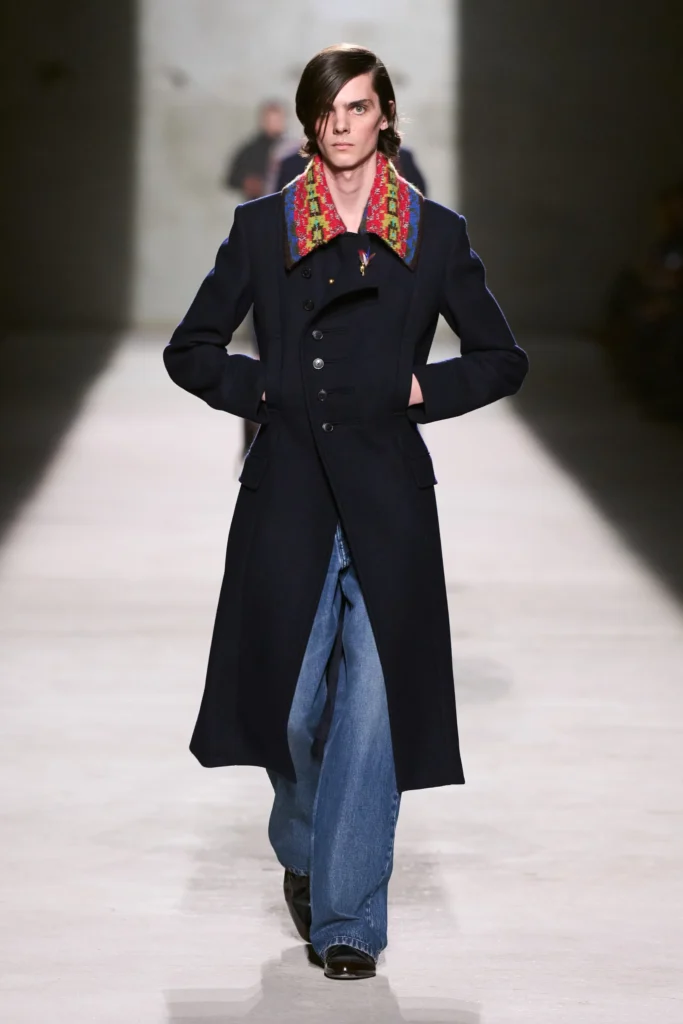
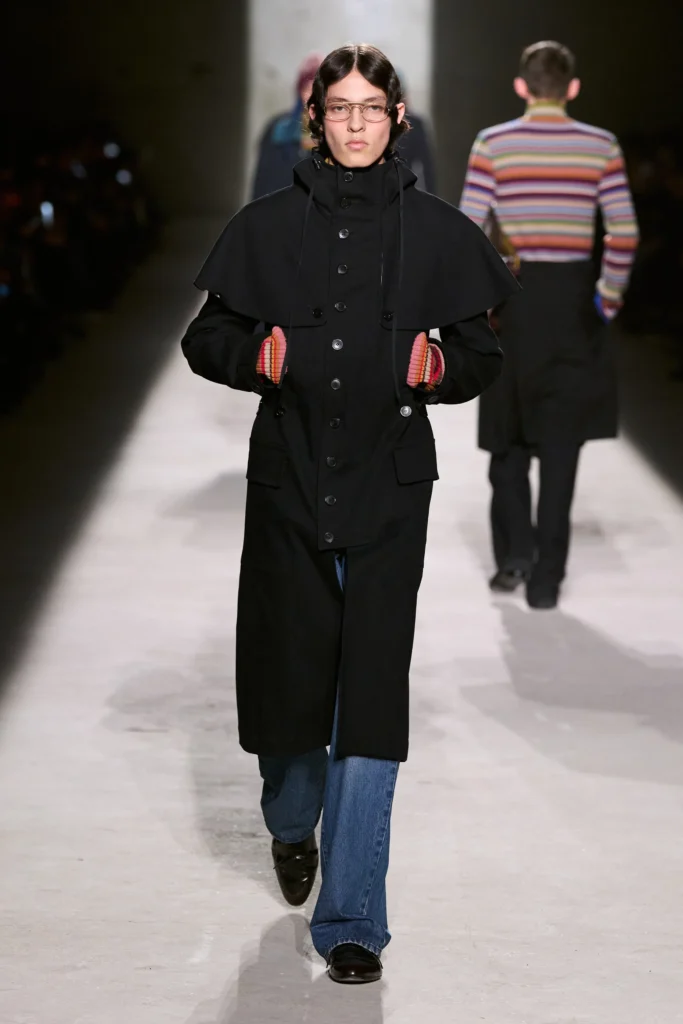
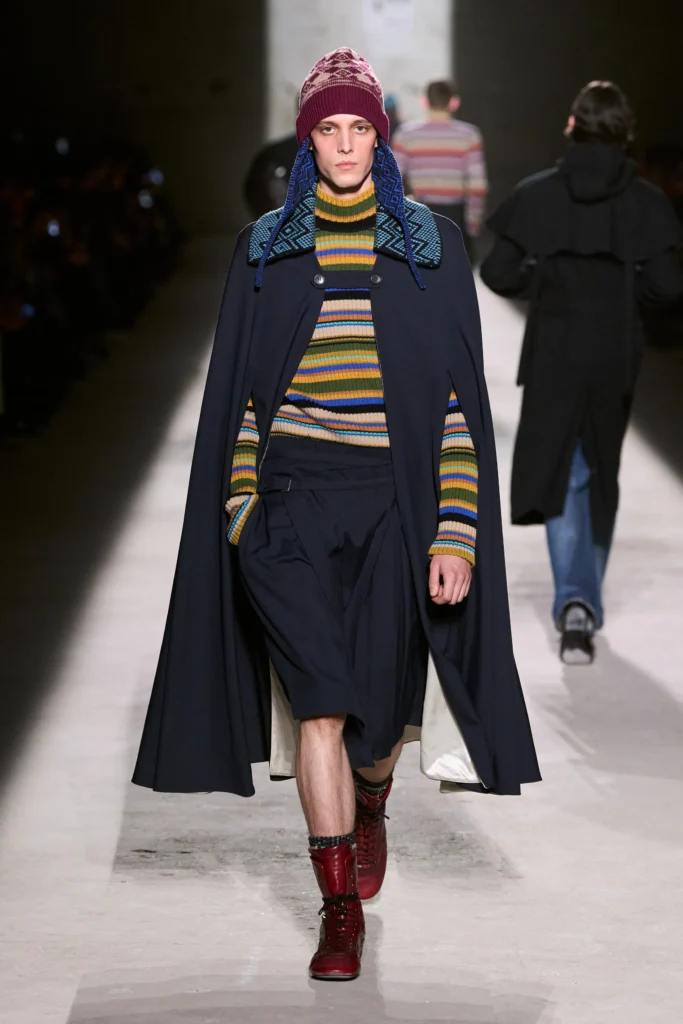
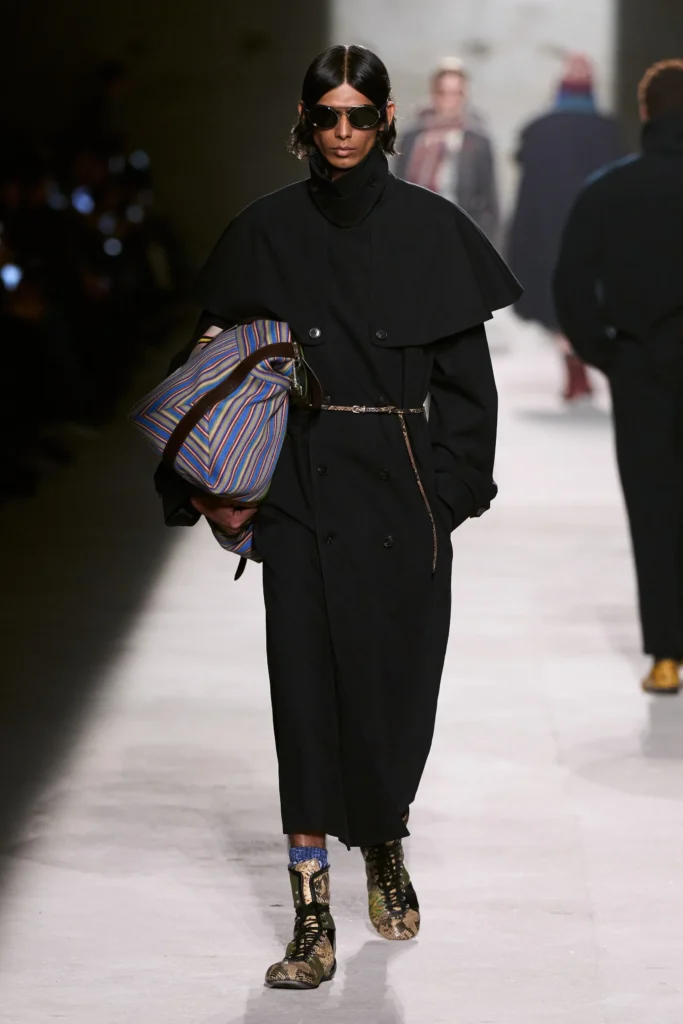
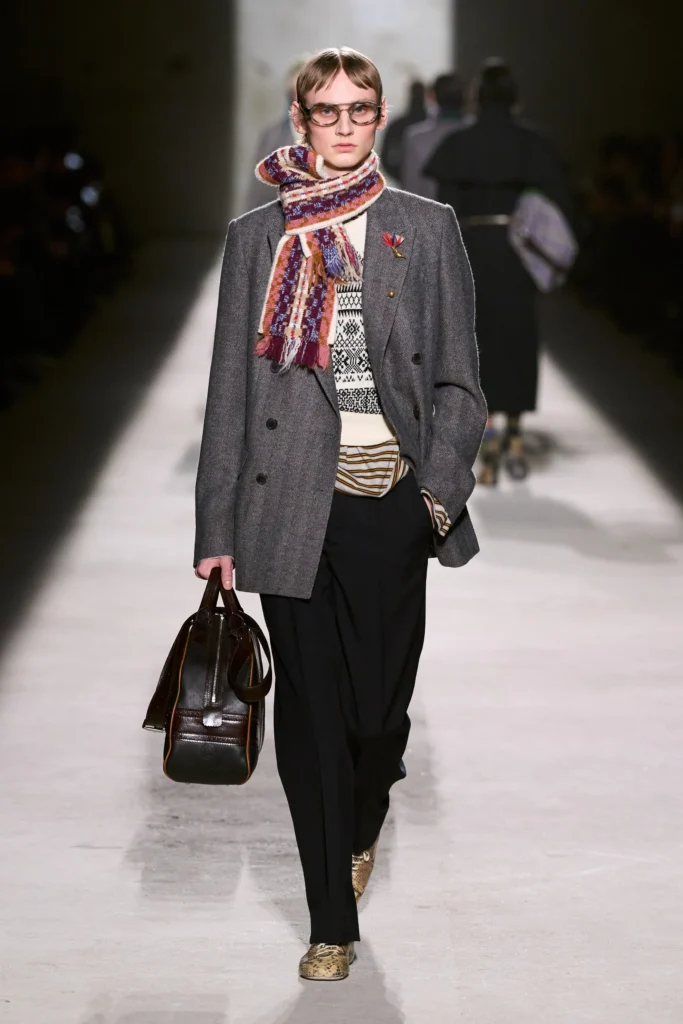
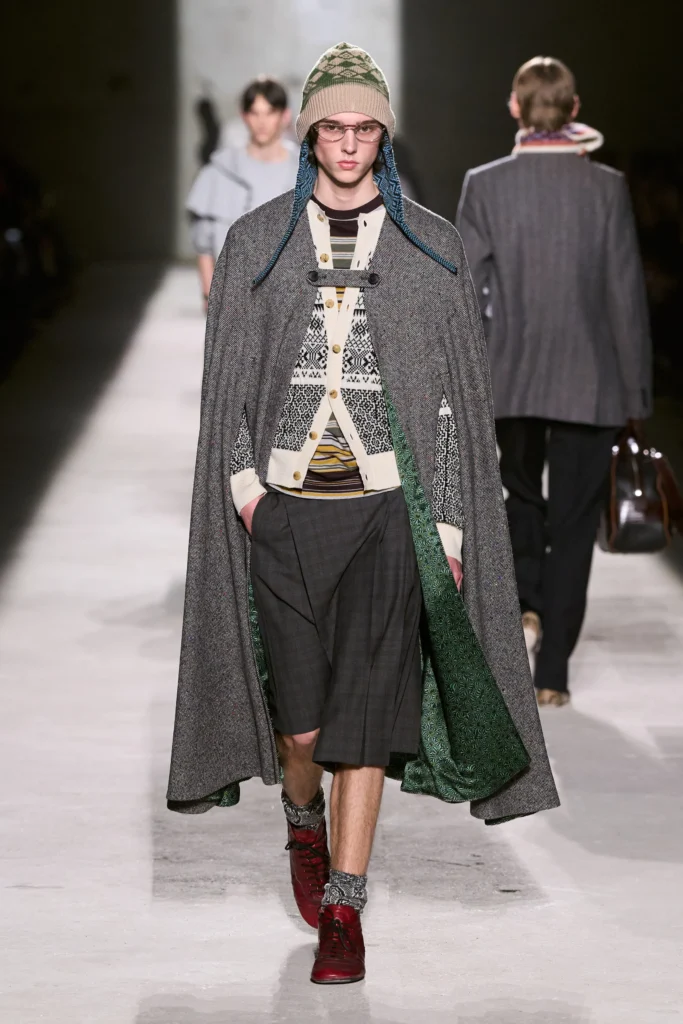
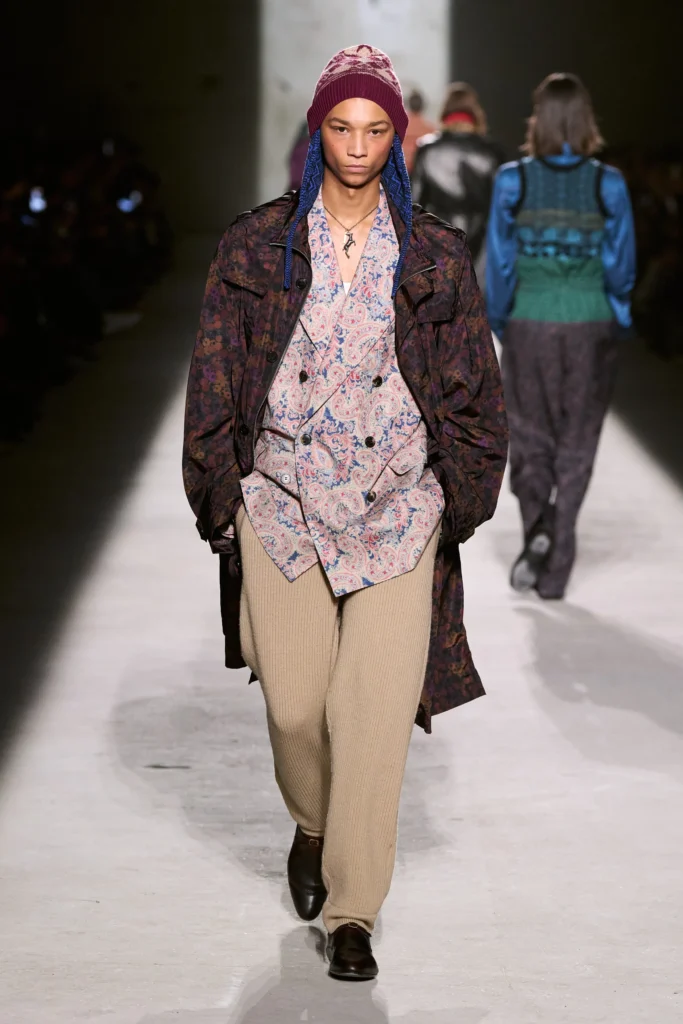
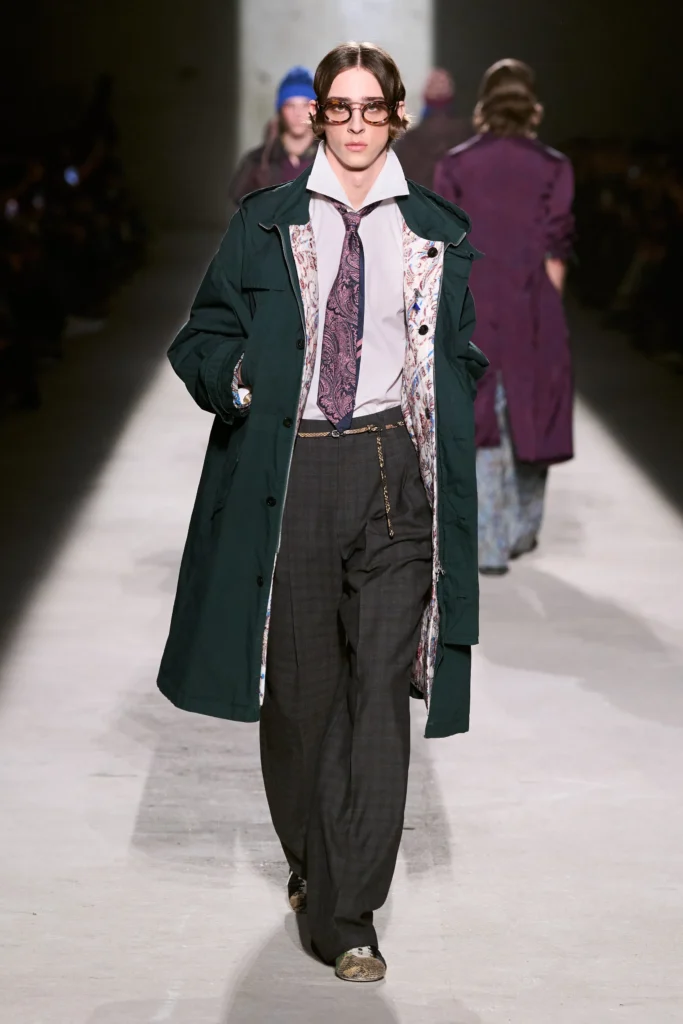
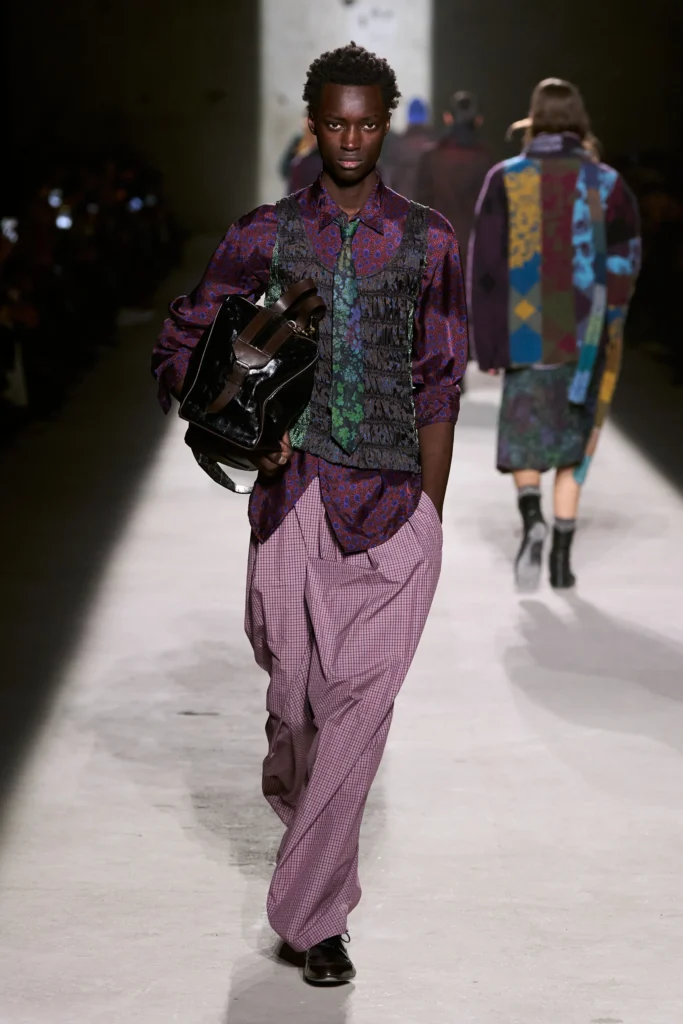
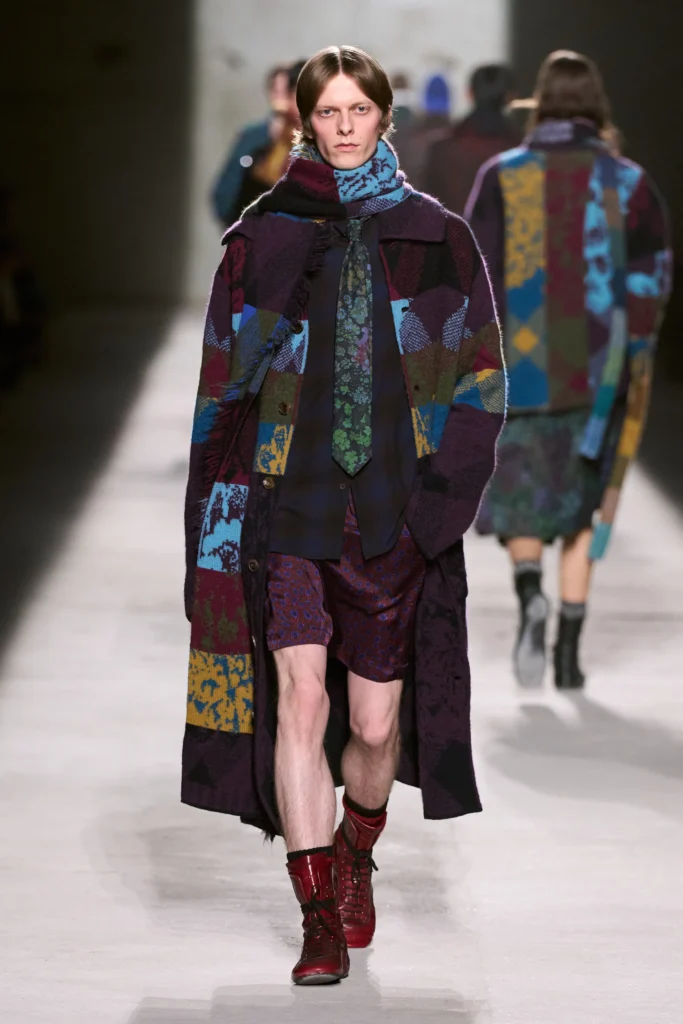
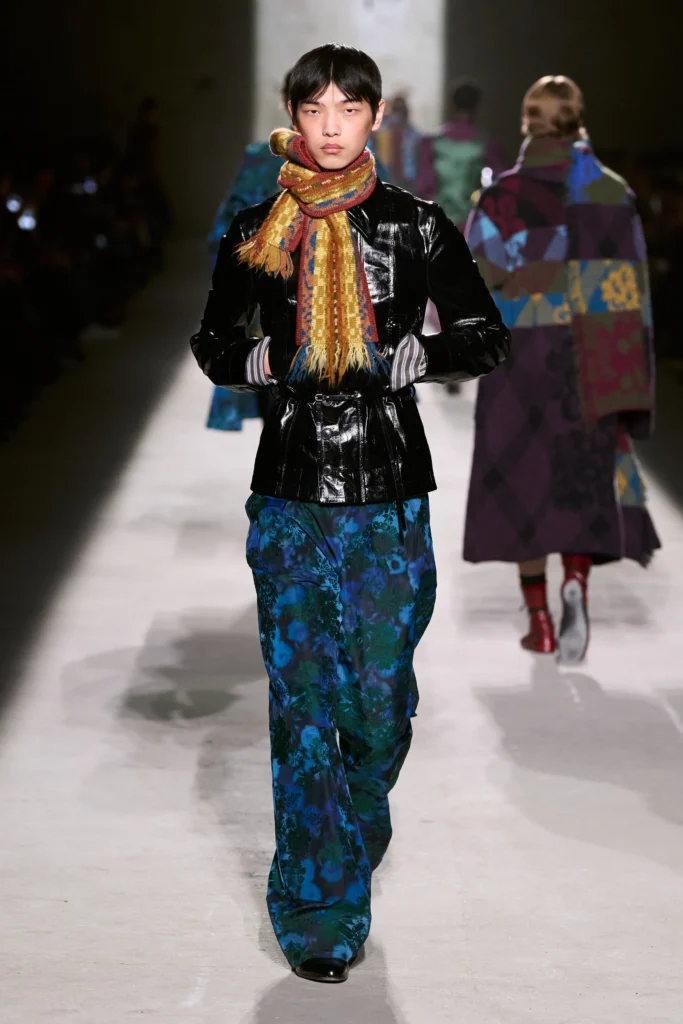
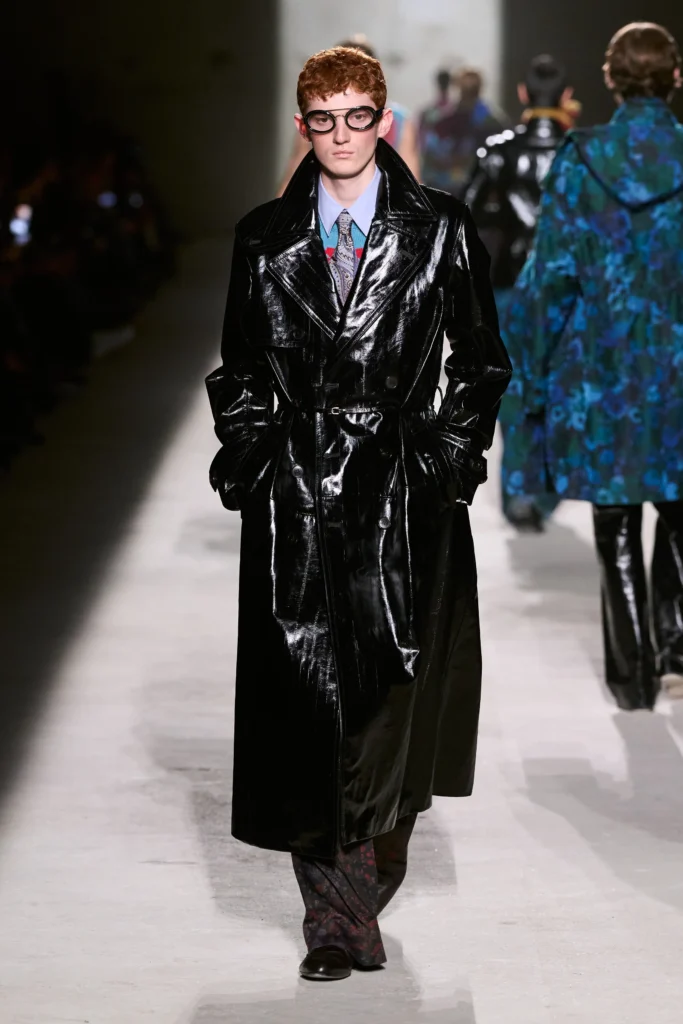
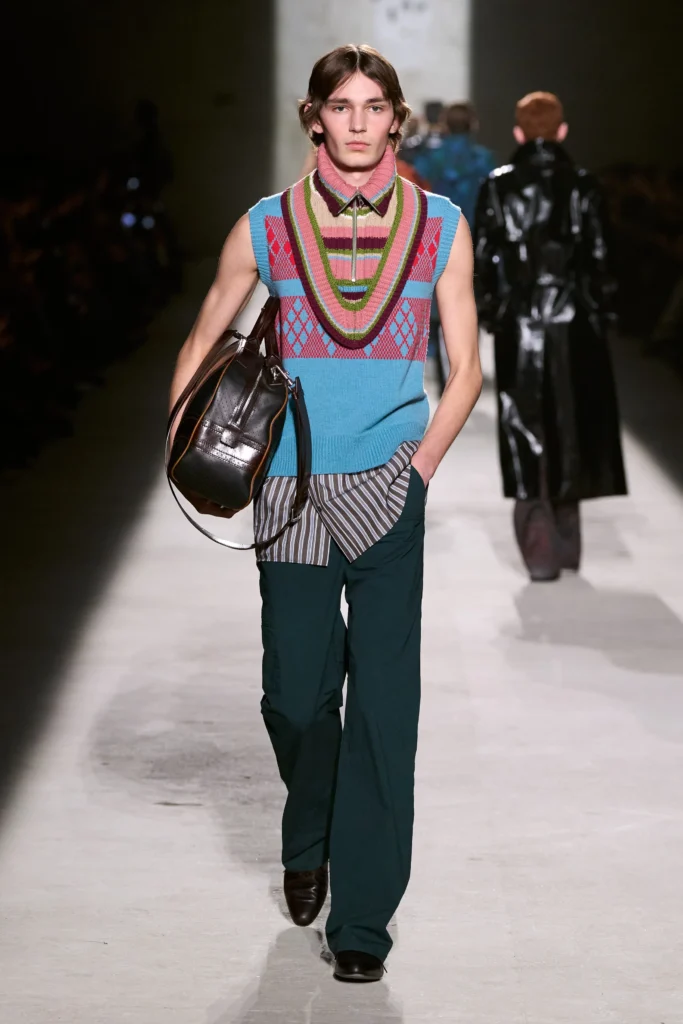
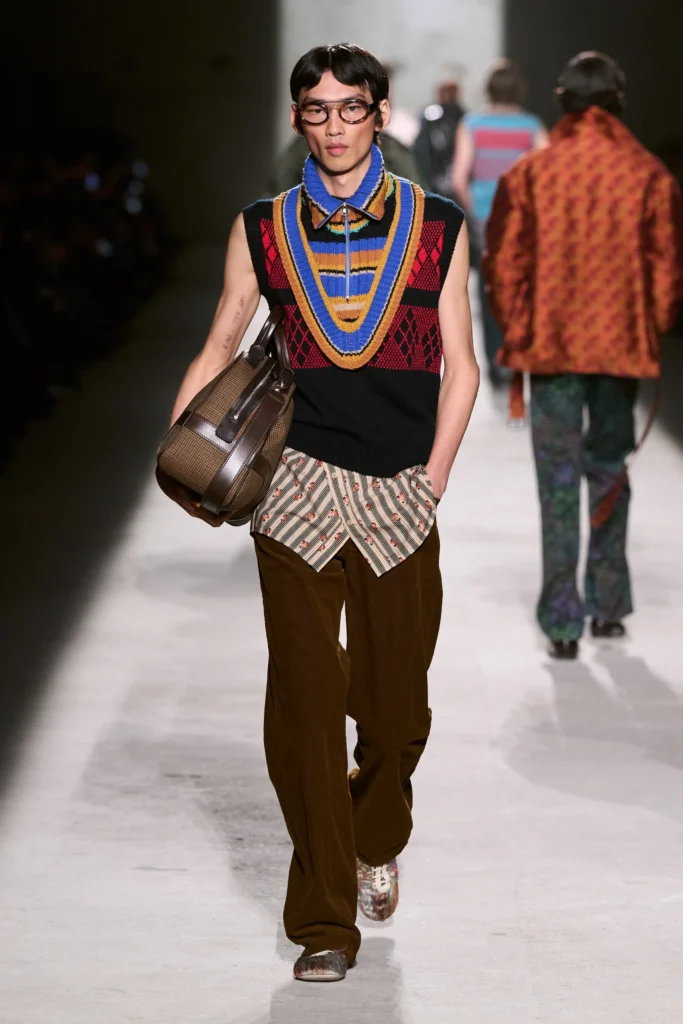
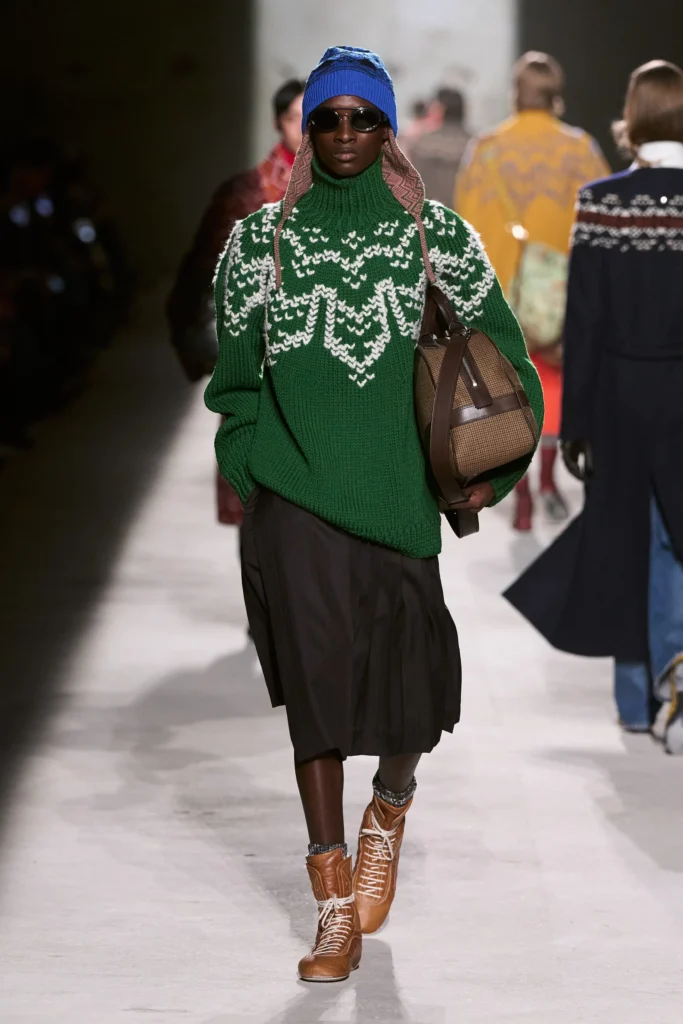
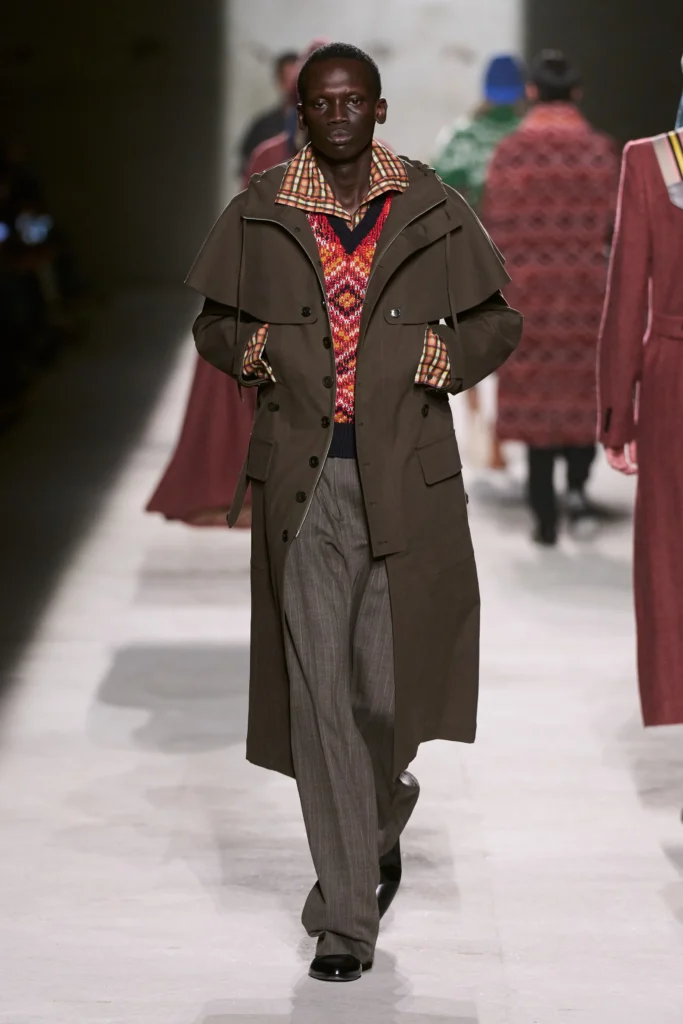
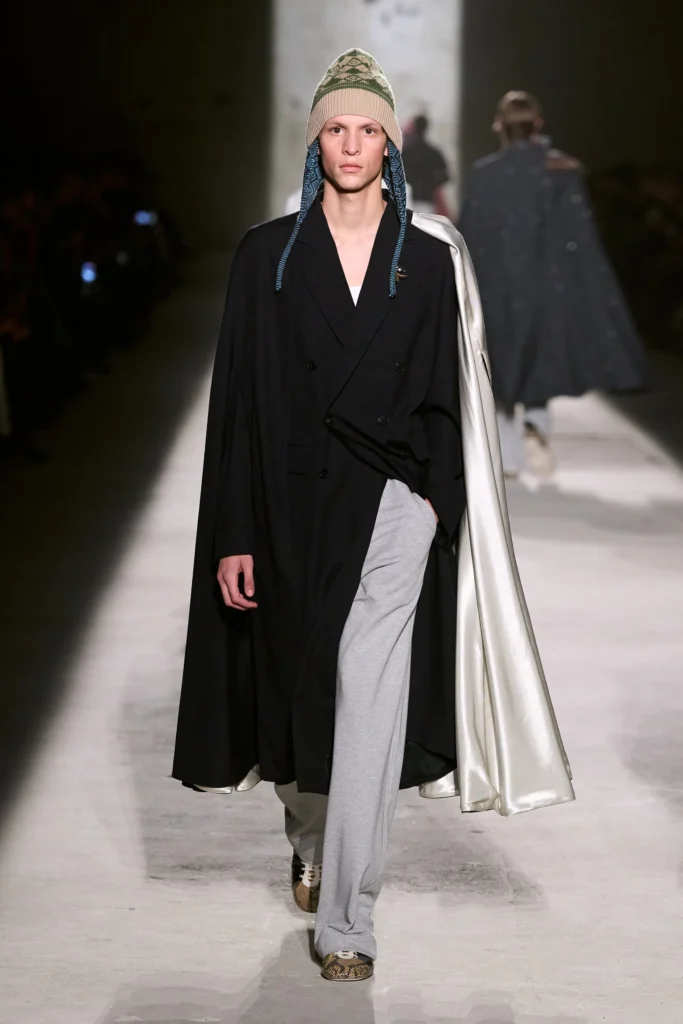
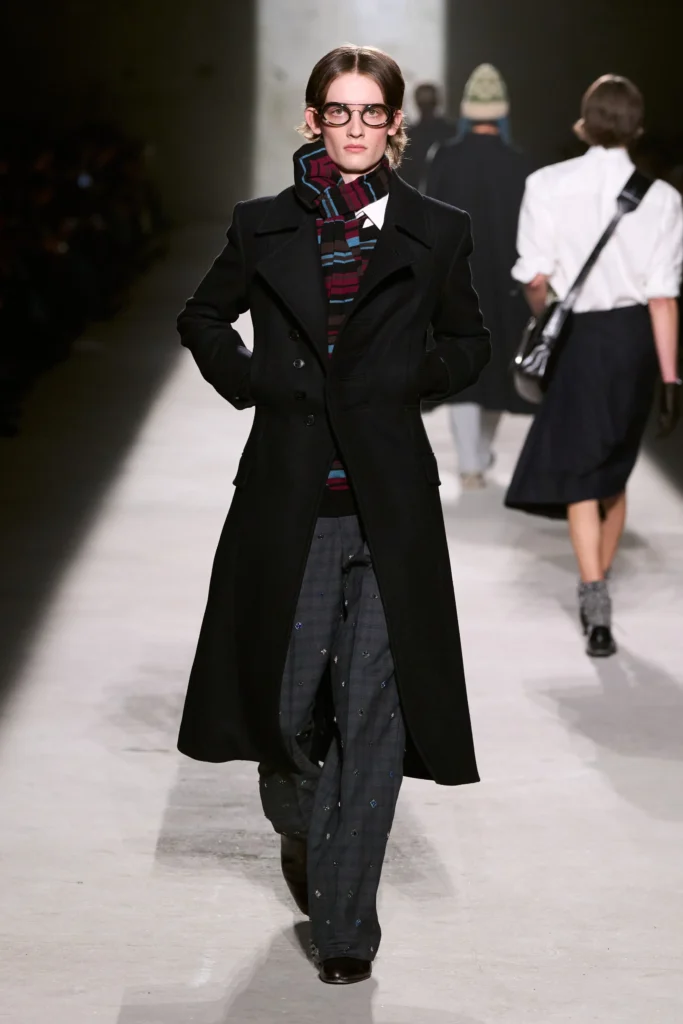
The characters appeared caught between departure and arrival, somewhere en route to campus. Knit headwear fused Nordic beanies with chullo-like silhouettes, while patterned knit collars framed narrow pencil coats and sweeping cloaks. Collegiate crests punctuated shirting, ties, and suiting, lending the collection a dreamy, late-Victorian academic air.
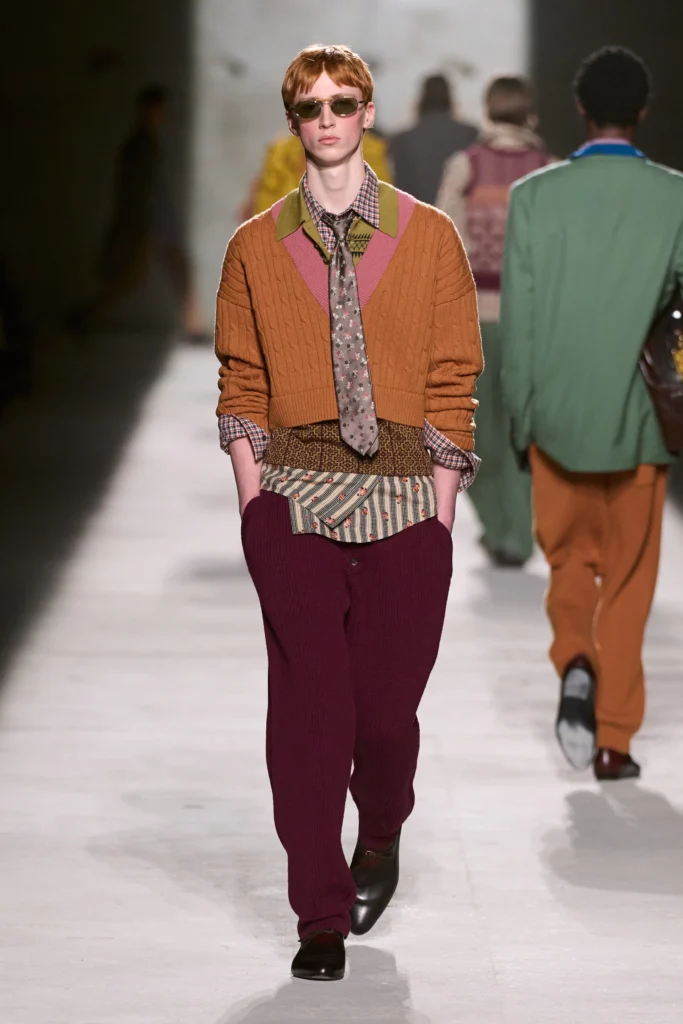
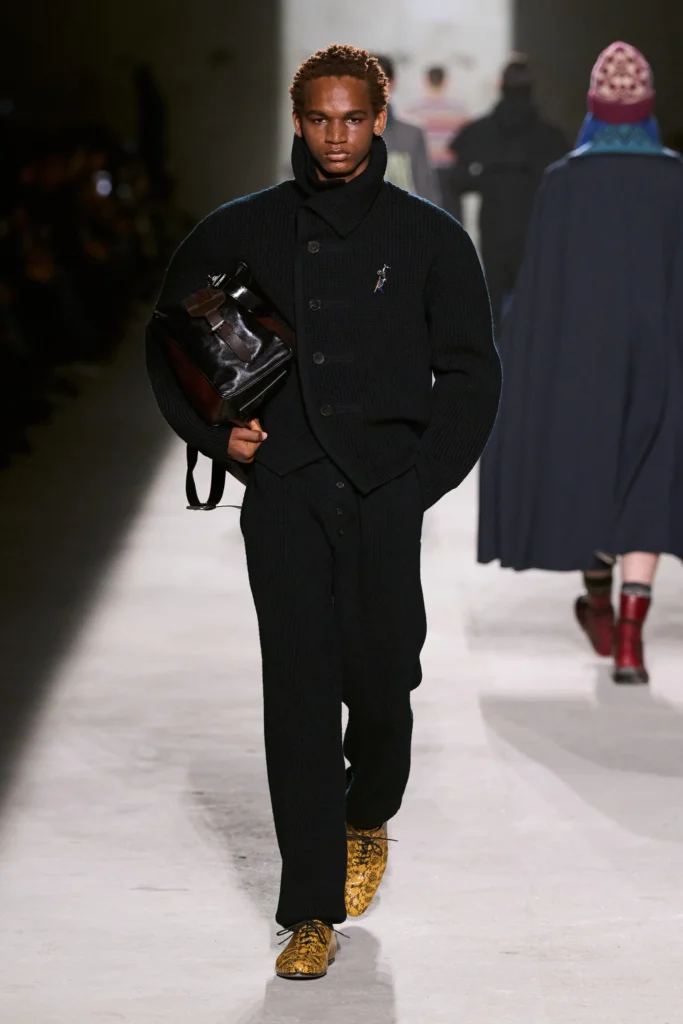
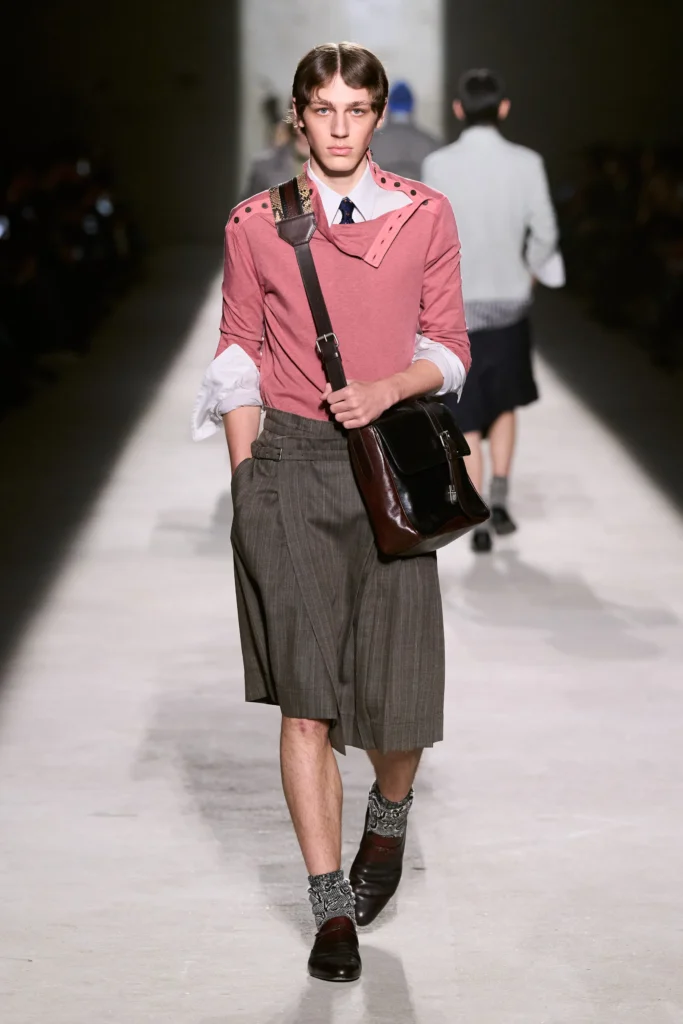
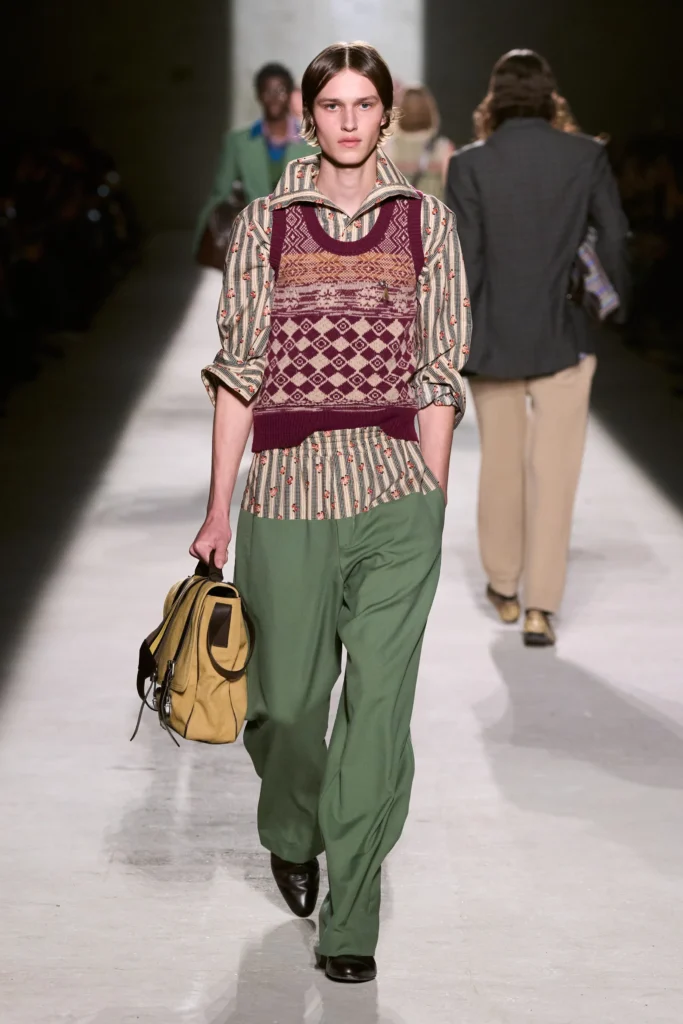
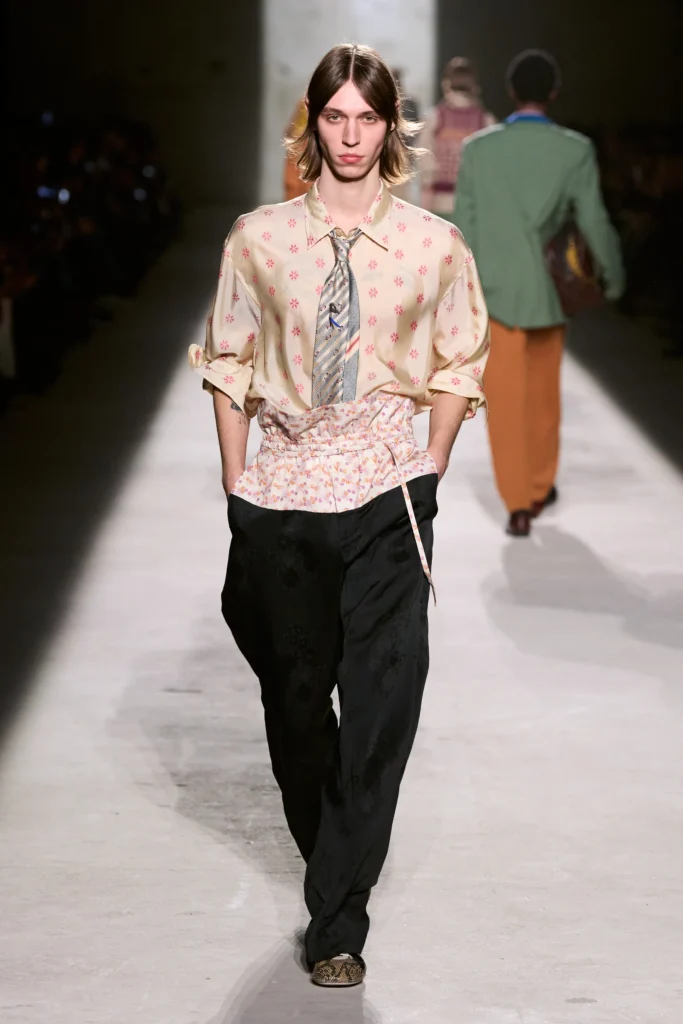
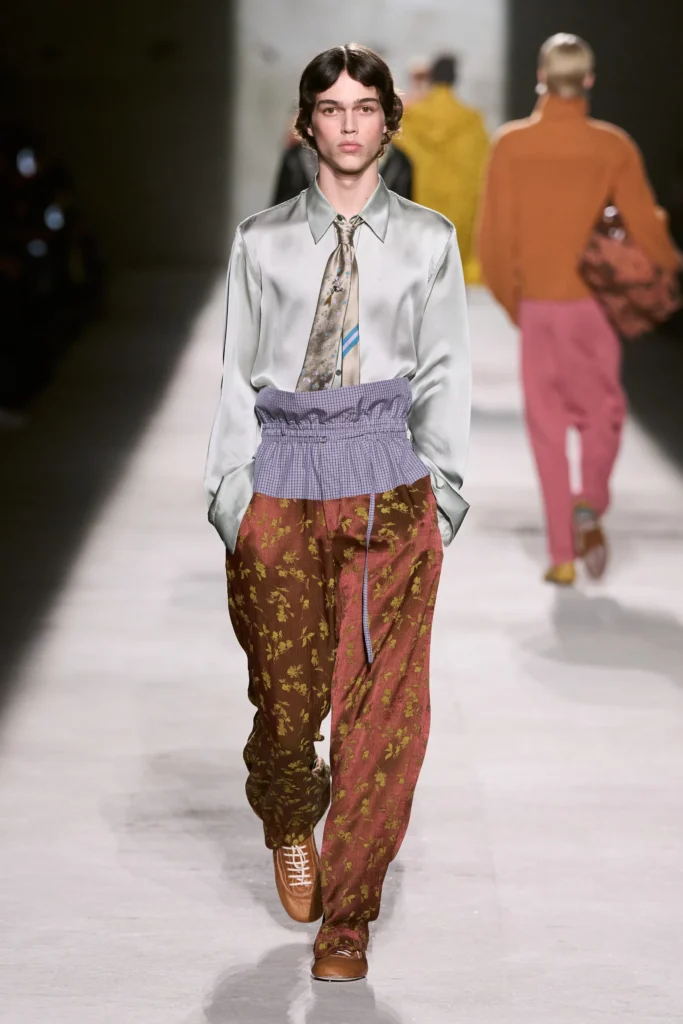
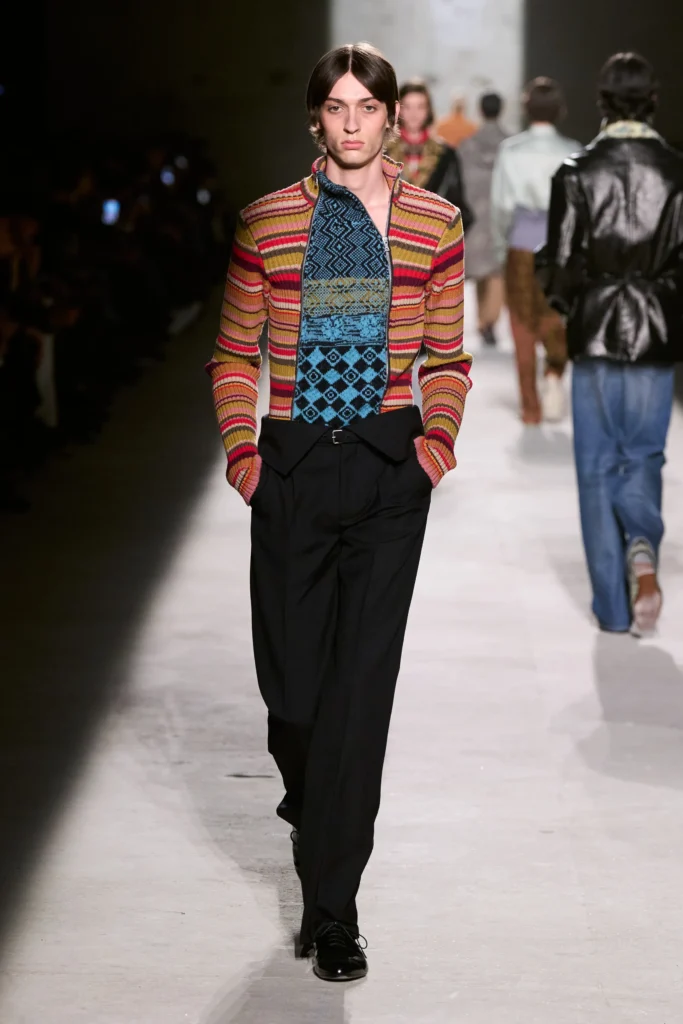
Knitwear functioned as both structure and decoration. Ribbed striped cardigans with softly shaped shoulders were bibbed with geometric knit panels—some glitched, some removable, some unzippable at either side. Shrunken knit tanks layered over crested shirts or jersey vests and often sat atop a clever hybrid garment: a cropped adaptation of last season’s sarong, designed to mimic shirt tails but belted at the waist like a skirt. “I’ll let you baptize them,” Klausner smiled—shkirt, perhaps?
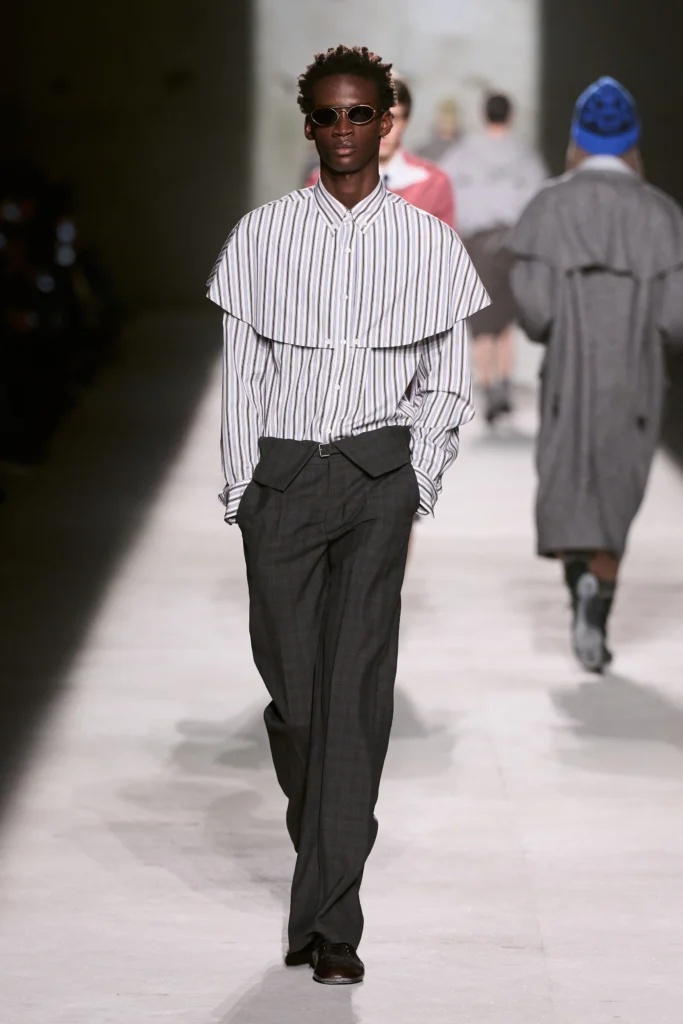
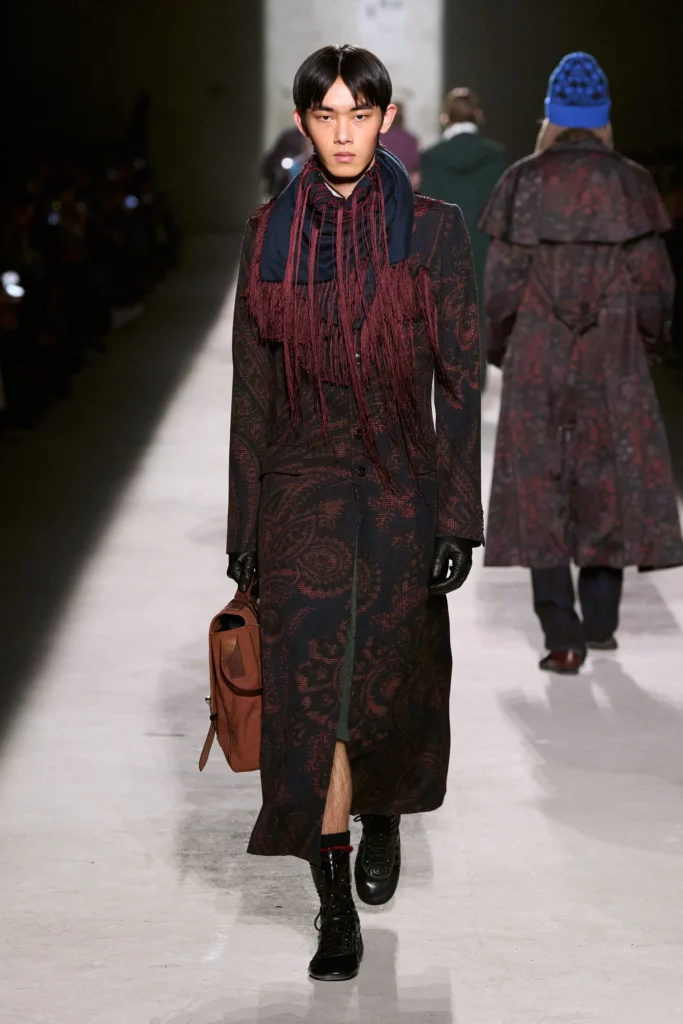
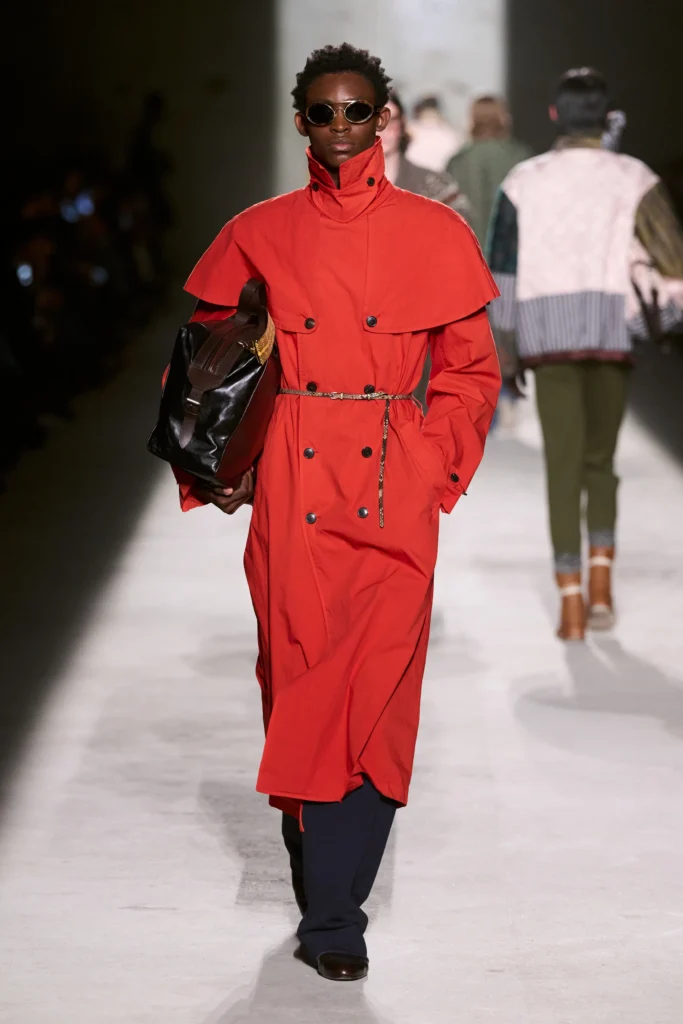
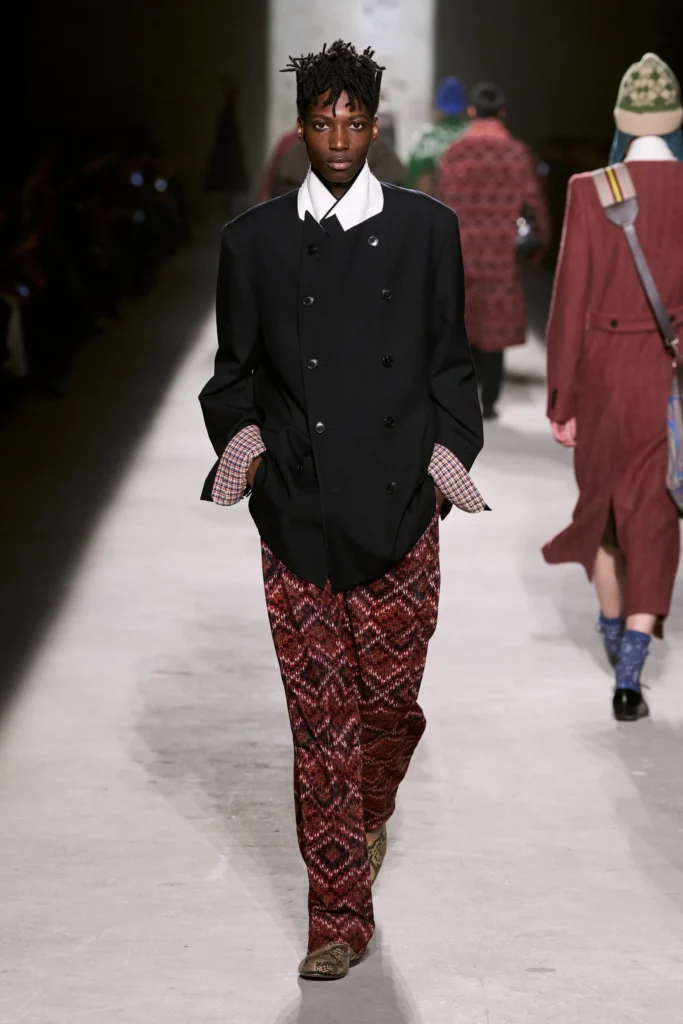
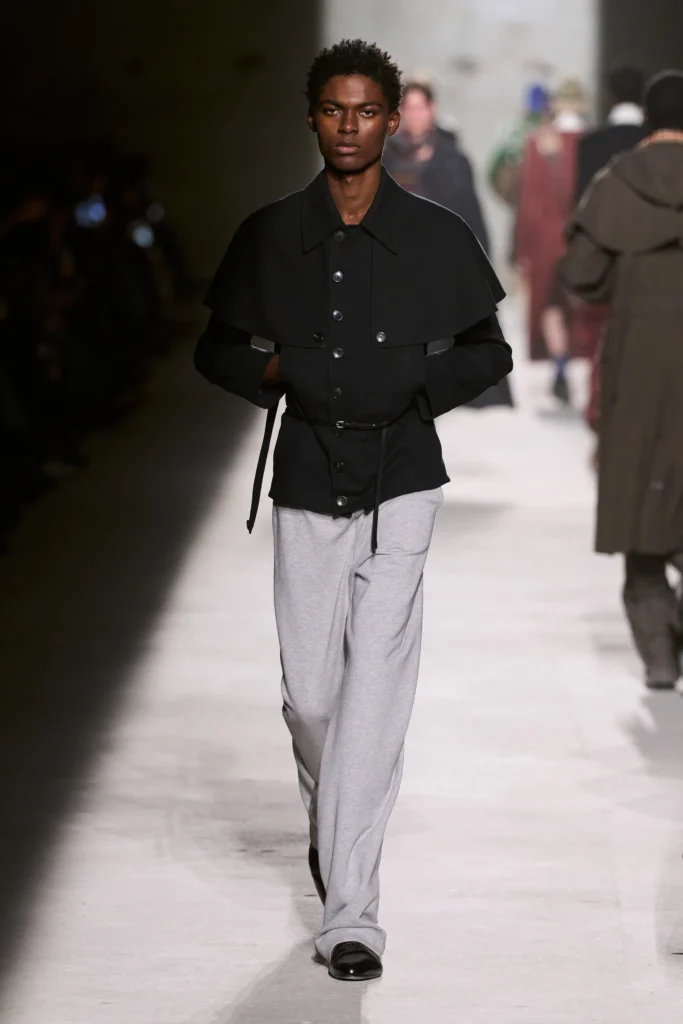
Kilts, a Dries signature from the early 2000s, returned in tailoring wools, sometimes worn over trousers, sometimes bare-legged. Almost clerical capelets draped the shoulders of shirts and coats, echoed later by fair isle knit embroidery arcing across outerwear in the same mantle-like placement. Elsewhere, trompe l’oeil knit tanks mimicked layered polos, and geometric knit motifs were printed onto overdyed corduroy overcoats.
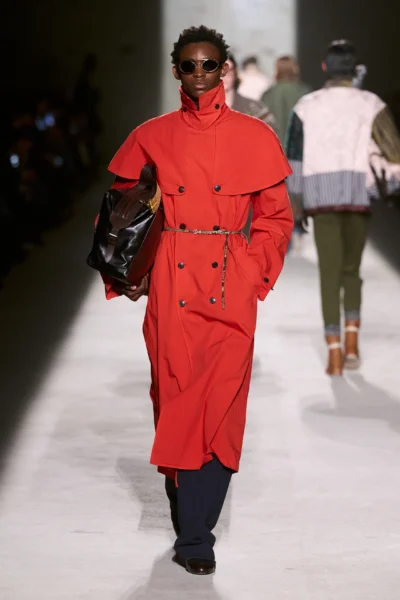
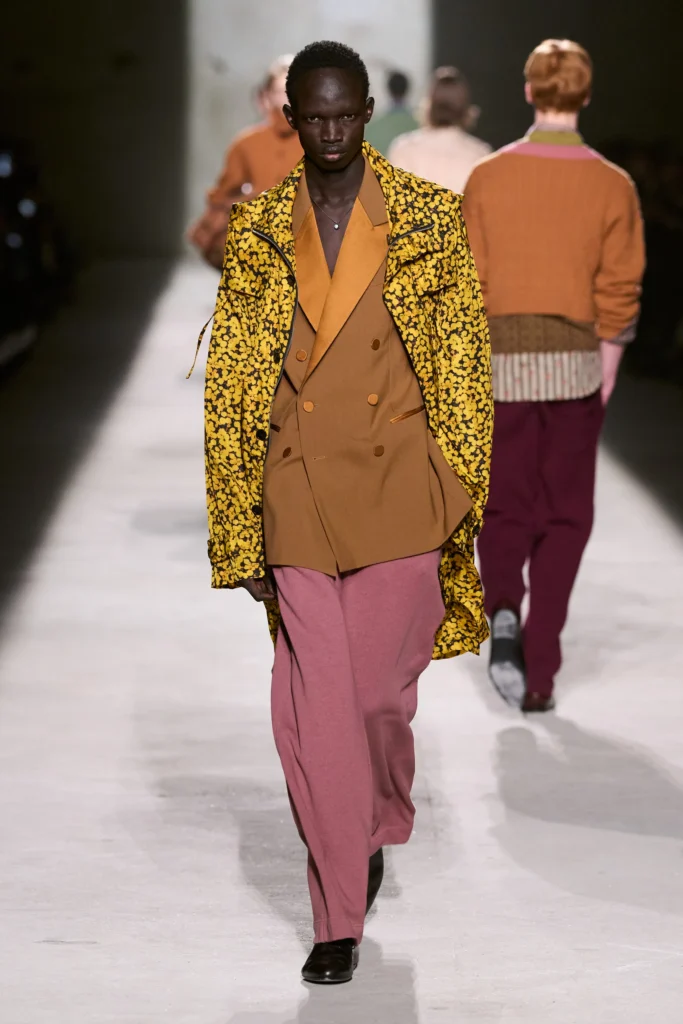
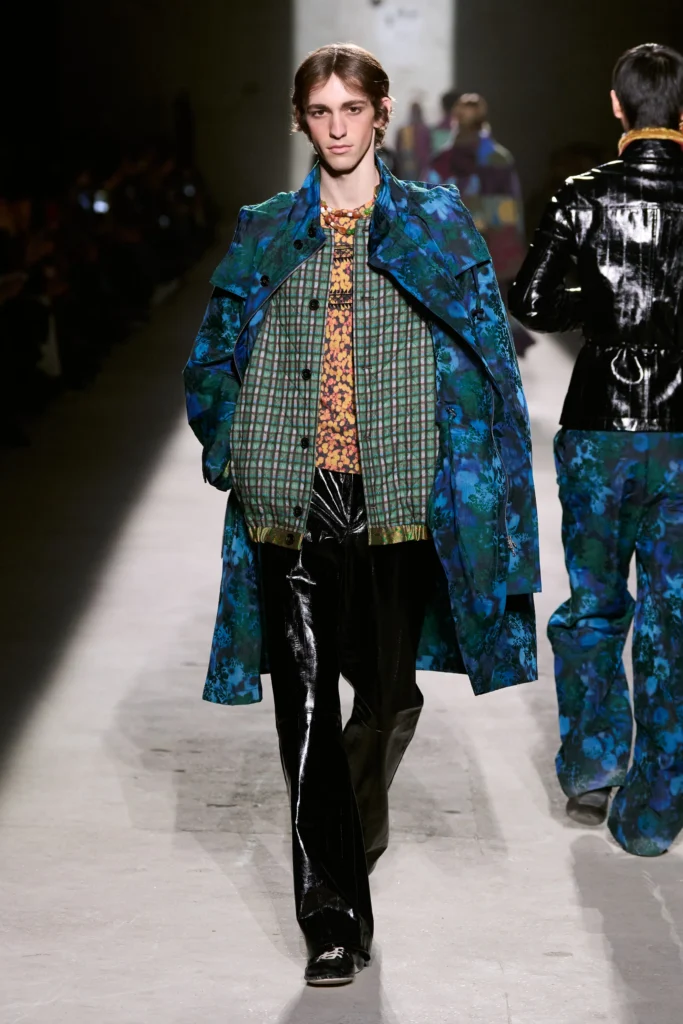
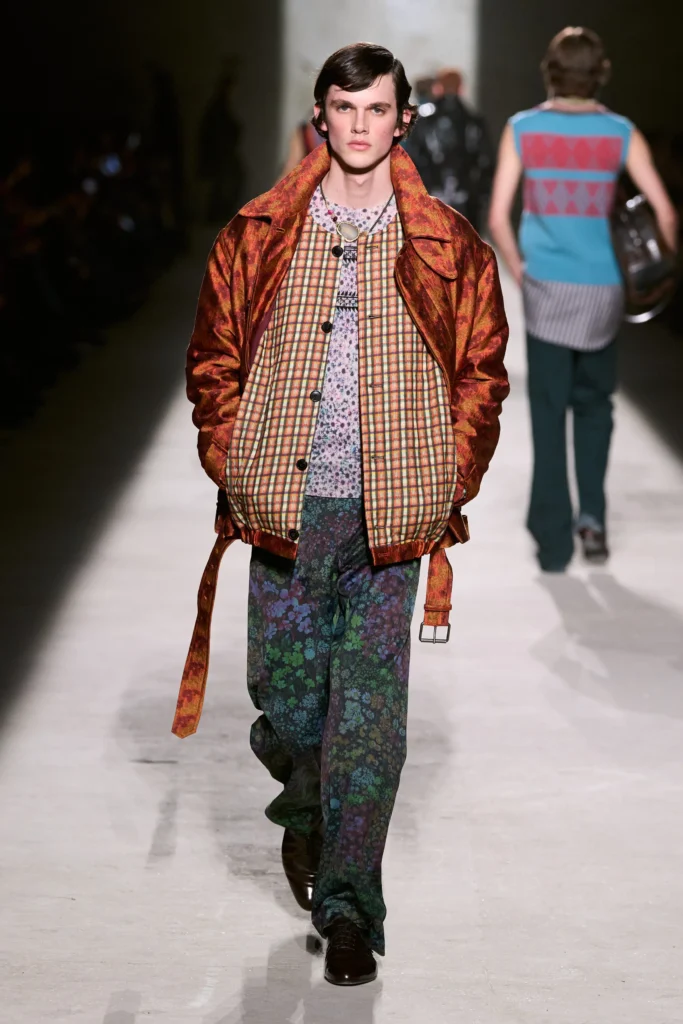
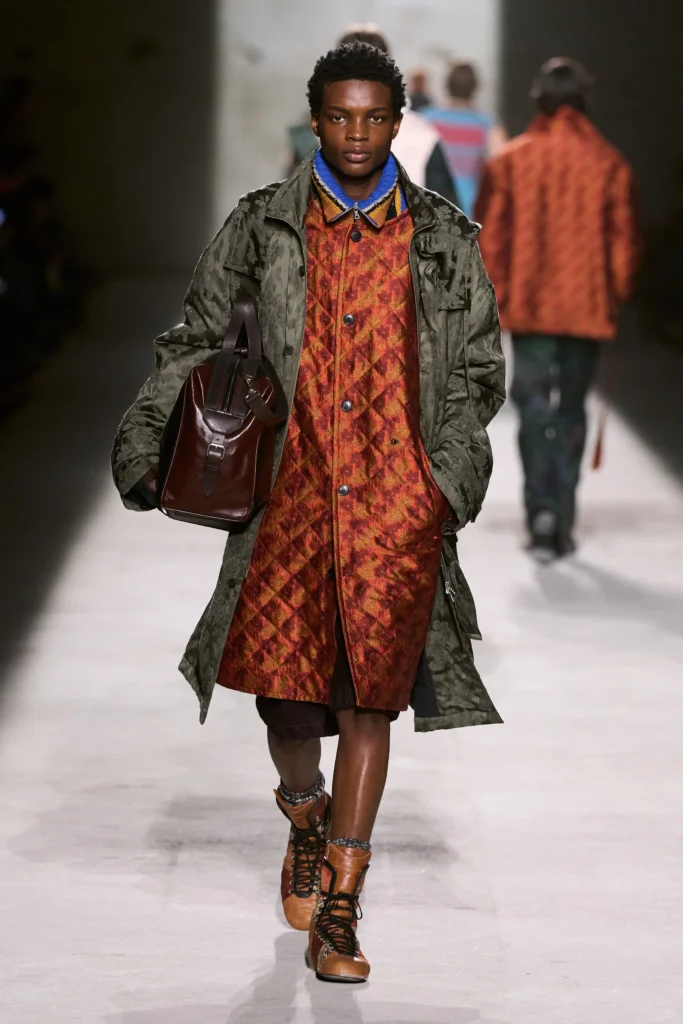
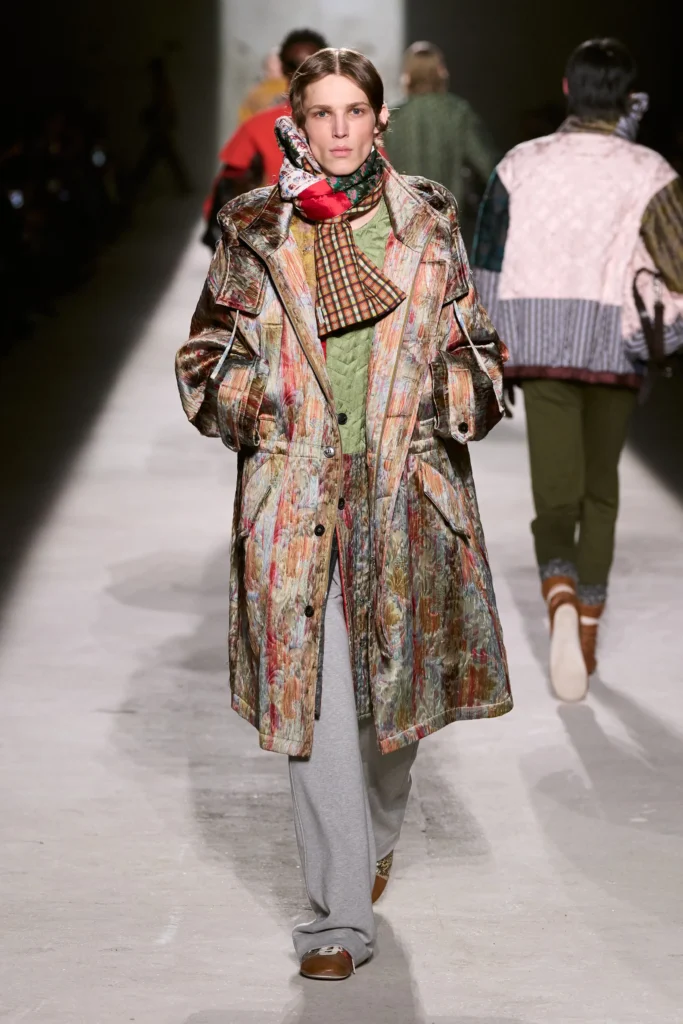
The collection’s highest honors belonged to the outerwear. Hooded overcoats bloomed with Polaroid florals; an olive tonal floral jacquard parka layered over a burnt orange quilted liner earned top marks. A satin trench with a Polaroid flower-printed capelet—double overdyed in red and petrol—stood out as a show highlight, especially when styled over a shirred shirt beneath.
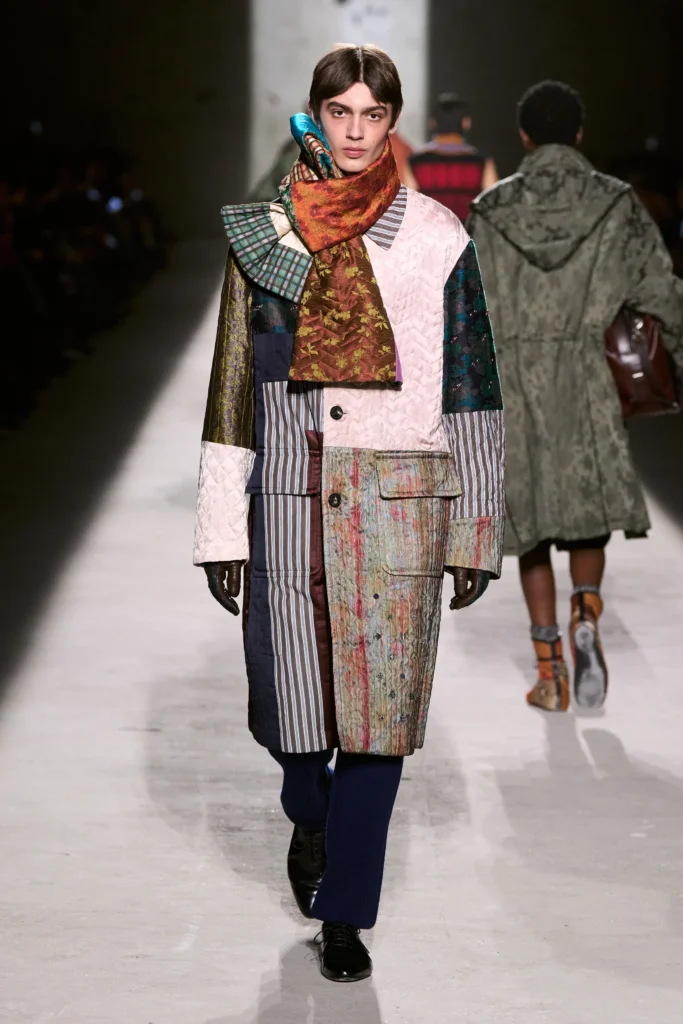
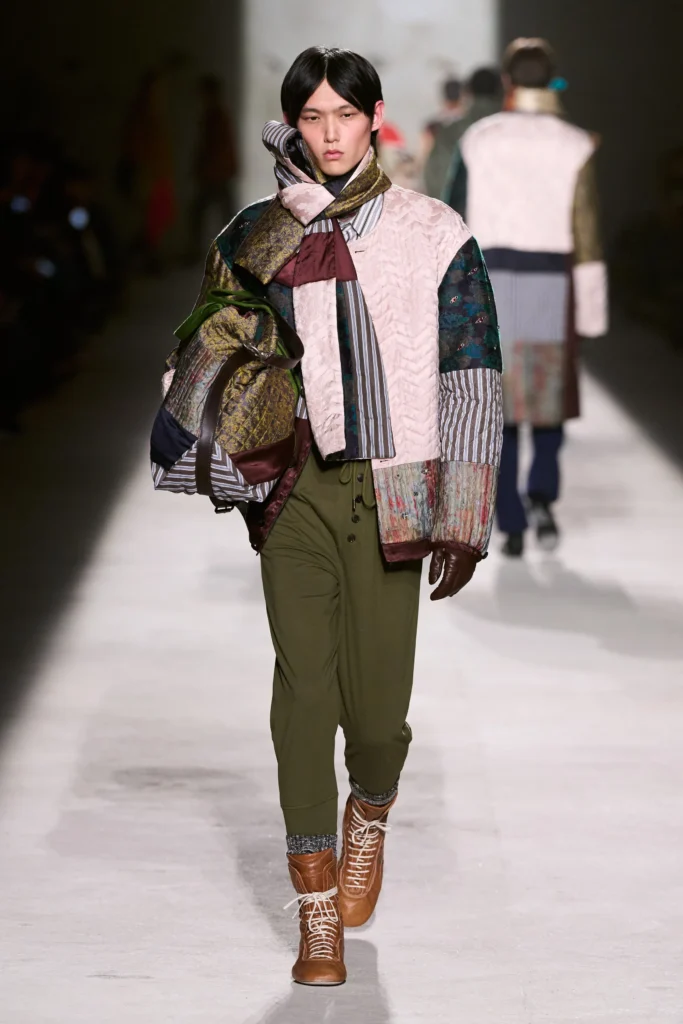
Patchworked overcoats and liners combined contrasting yet harmonious panels, while a crisp white under-collar detail subtly framed the face. Paper-bag trousers played visual tricks with clashing patterns and contrasting waist sections, oscillating between shirting illusion and low-slung tailoring.
Asked whether the collection was autobiographical, Klausner demurred. “Not really. It’s more of a fantasized idea,” he said. “It’s about the steps of self-exploration and finding yourself.” In fabric, color, and craft, that journey unfolded beautifully—thoughtful, poetic, and confidently unfinished.
Photos Credit: Daniele Oberrauch / Gorunway.com
