Paris Fashion Week: Dior Men Fall/Winter 2026 Menswear By Jonathan Anderson
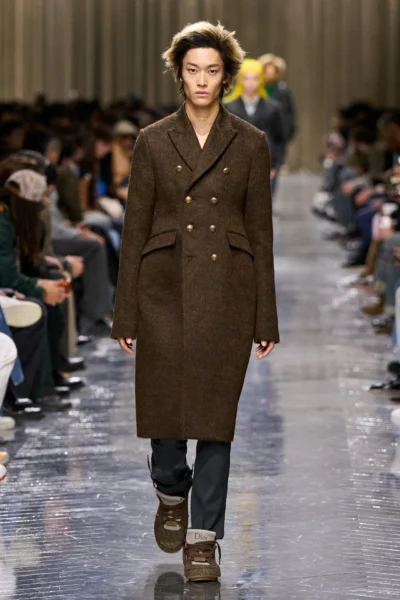
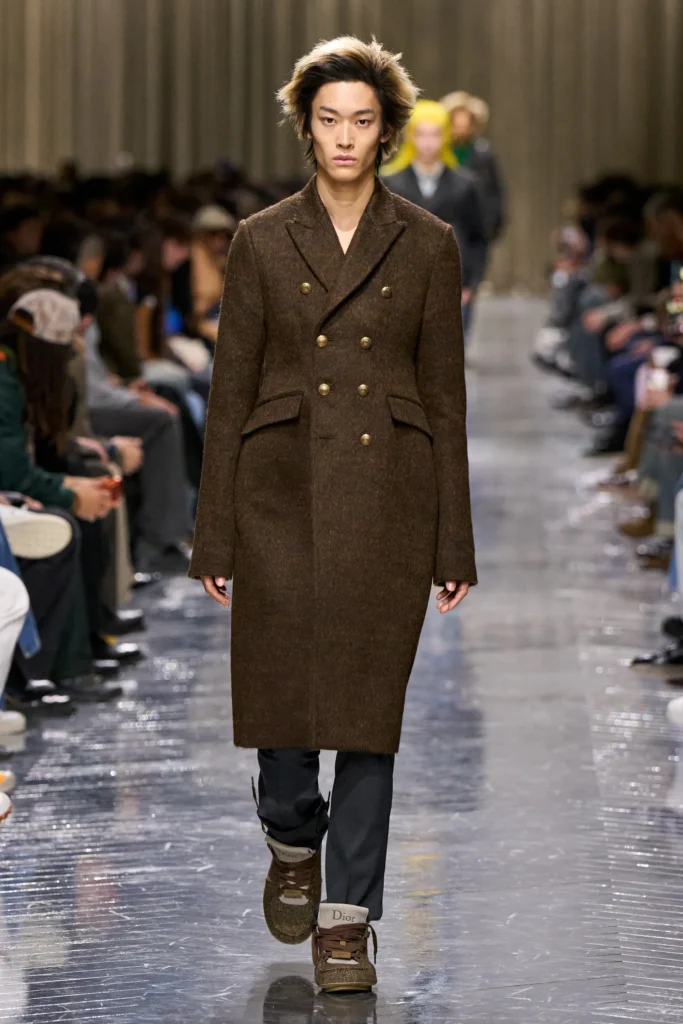
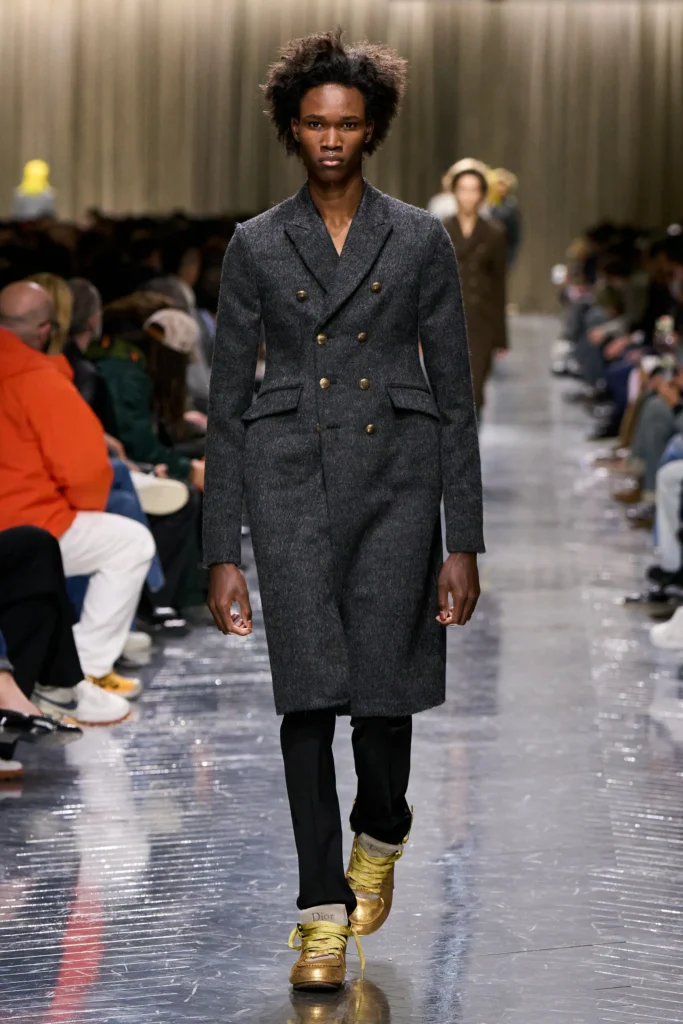
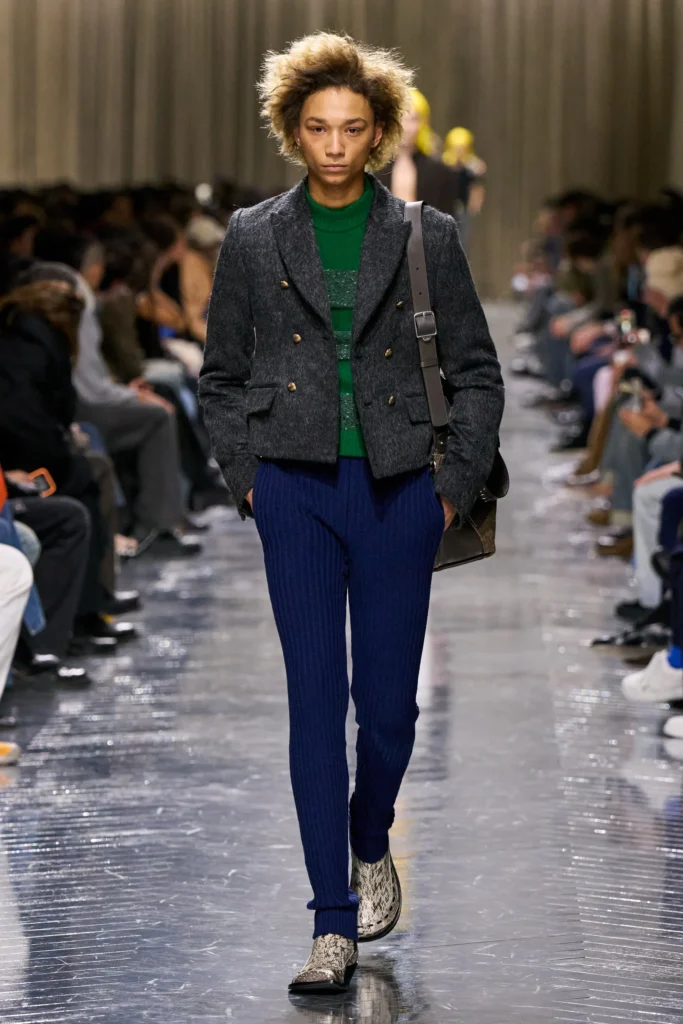
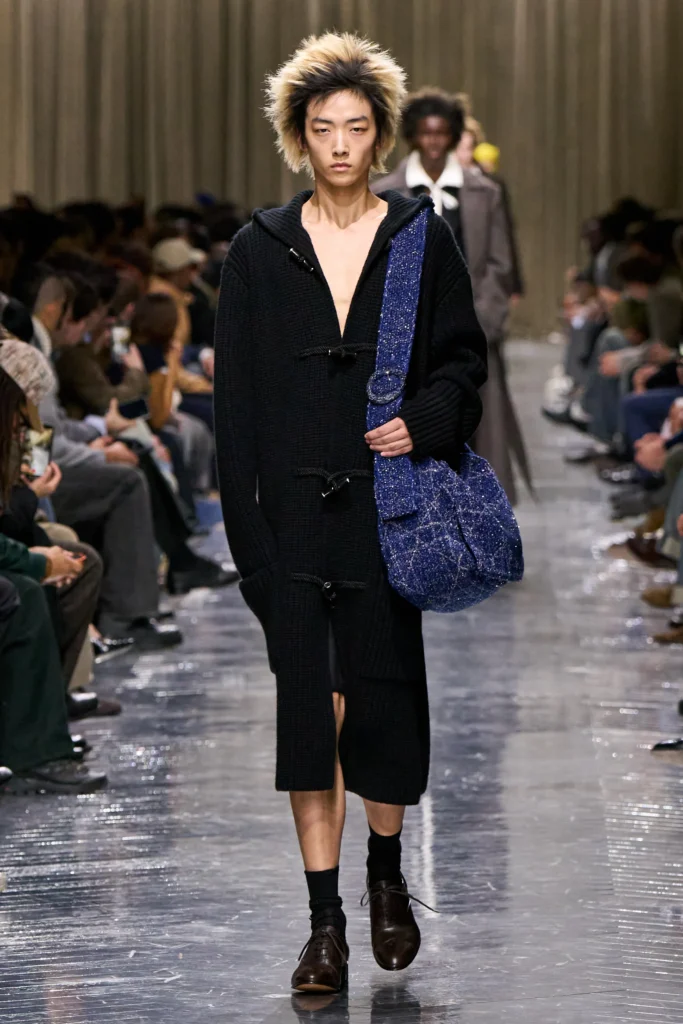
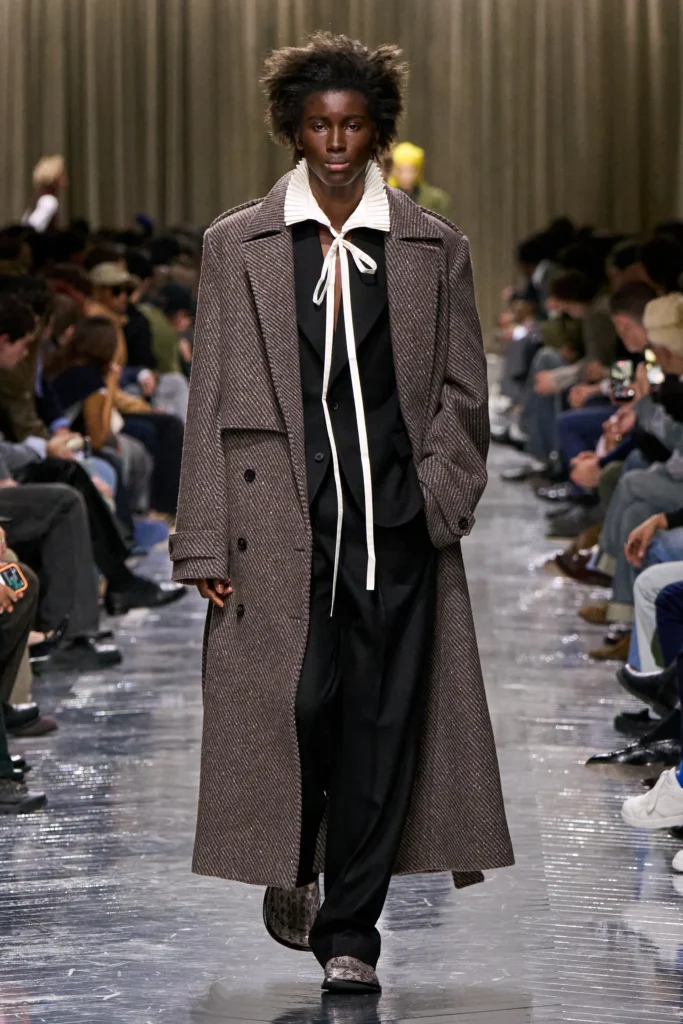
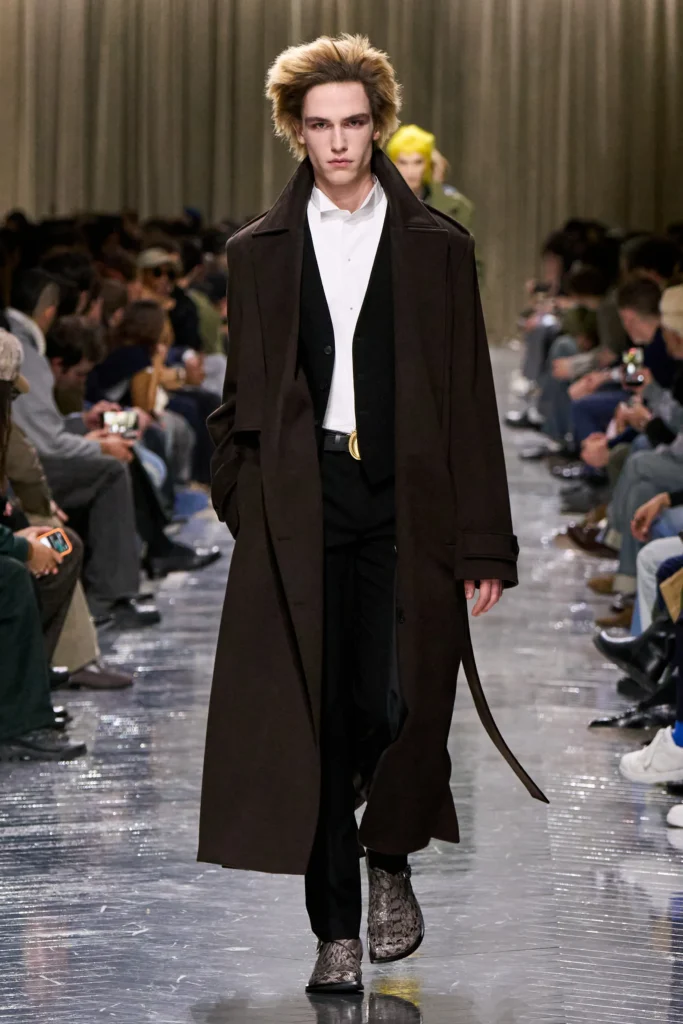
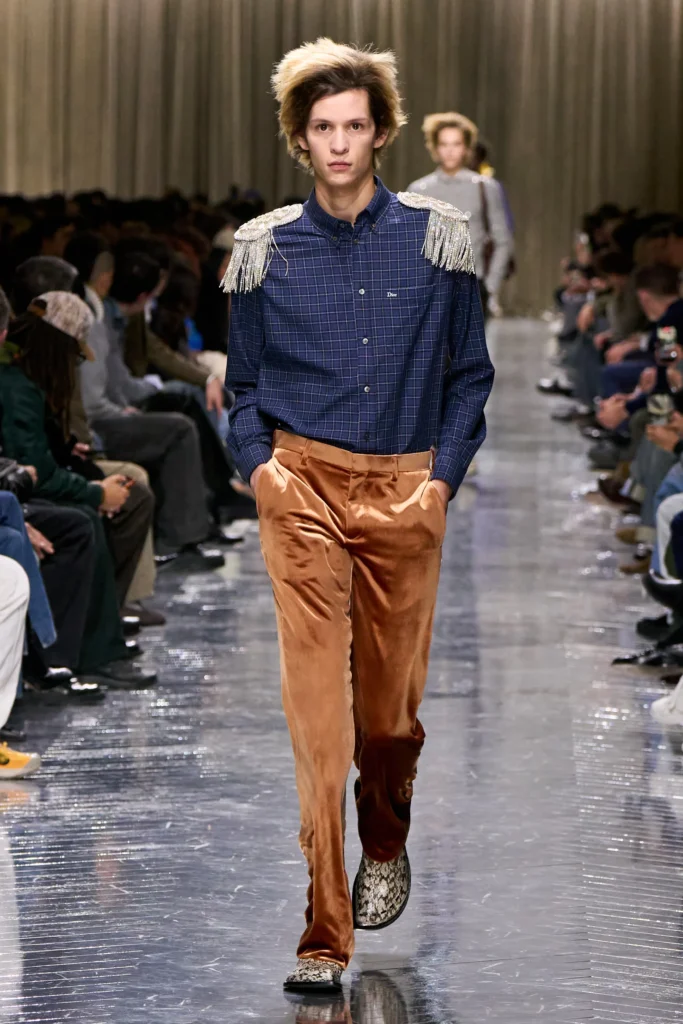
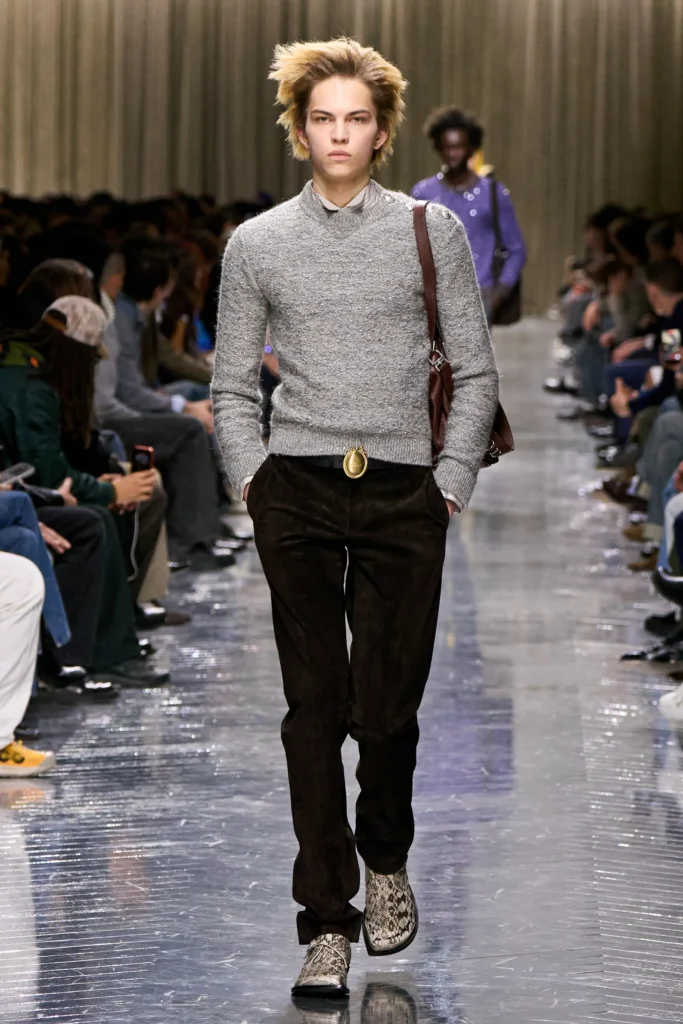
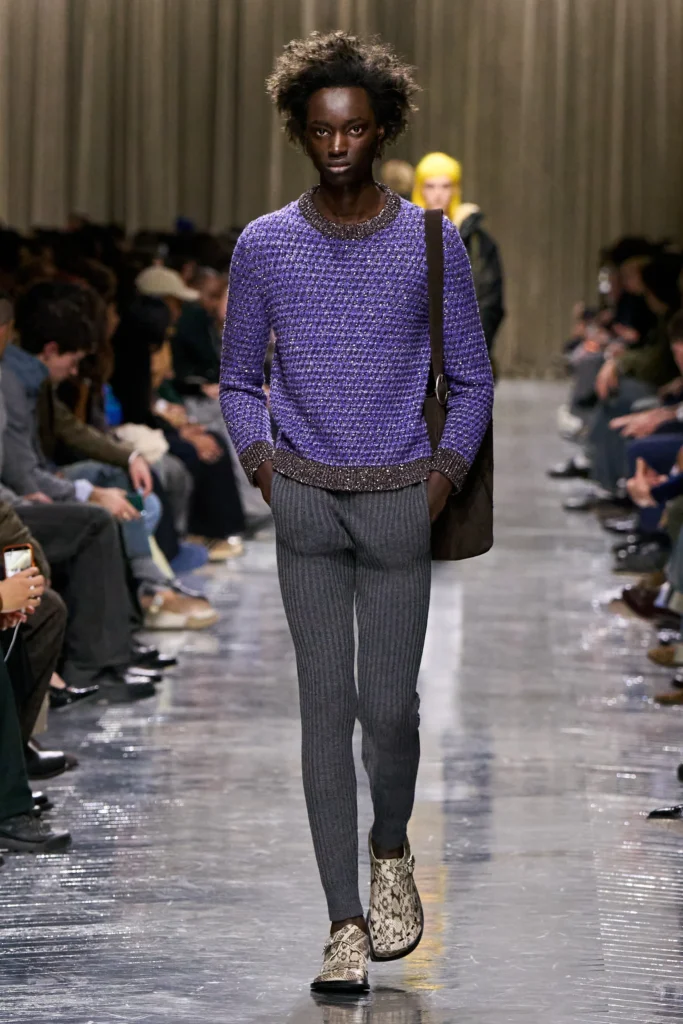
Paris — “I don’t want normality,” Jonathan Anderson declared during his pre-show press conference—an event made deliberately unorthodox by its filming under the watchful eye of Luca Guadagnino. The comment was initially aimed at the untamed wigs crafted by Guido Palau, whom Anderson called a “genius,” but it ultimately described the ethos of the entire Fall/Winter 2026 Dior Men collection. What unfolded was a masterful collage of references—historical, cultural, and personal—assembled into a cast of characters that felt both intellectually provocative and undeniably wearable.
Anderson’s process, as he explained, is rooted in accumulation. “I collect things or experiences throughout the process and then infiltrate them,” he said. For this season, that collection of ideas began quite literally at Dior’s doorstep: a plaque honoring Paul Poiret outside 30 Avenue Montaigne. Poiret founded his house in 1903 at just 23 years old—one year younger than Anderson when he launched JW Anderson in 2008—and would go on to define the spirit of Belle Époque fashion while inventing the foundations of the modern runway show.
That lineage became tangible when Anderson acquired an unworn Poiret dress from 1922, still preserved in pristine tissue paper. “What is that, meeting with Christian Dior?” he wondered. The answer opened the show. The first three looks featured the reconstructed upper portions of the historic garment, meticulously reworked by the Dior ateliers, paired unexpectedly with modern denim—blue wash, white, and distressed black—cinched by Dior-buckled belts and finished with reptile-textured Cuban-heeled boots. This collision of eras was energized further by another influence: musician Mk.gee, whose offbeat style helped shape what Anderson described as “a new radical” character.
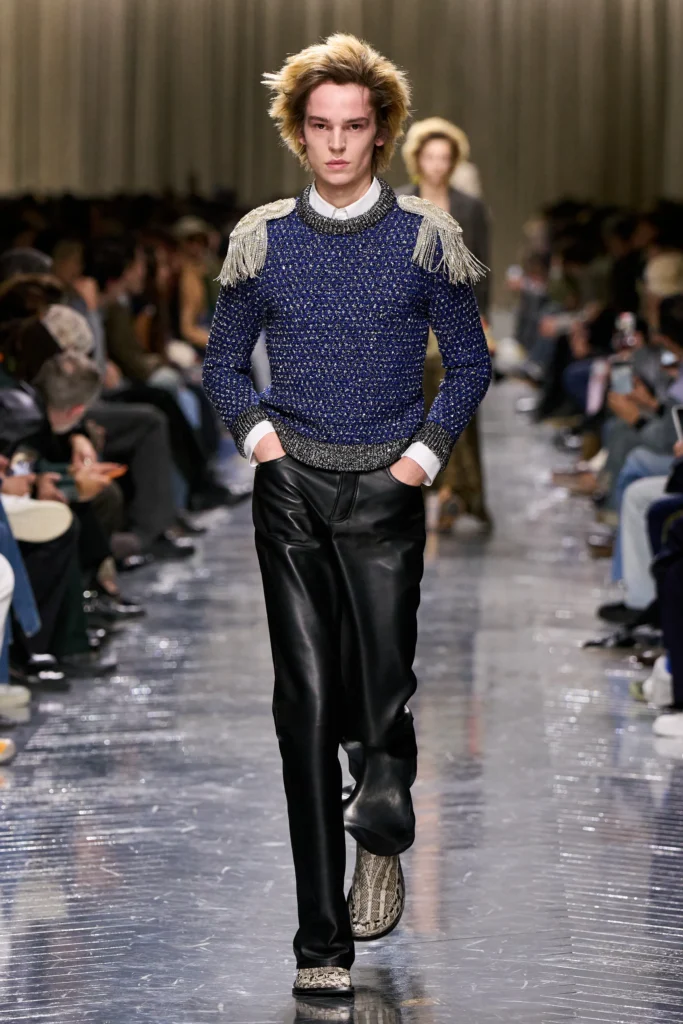
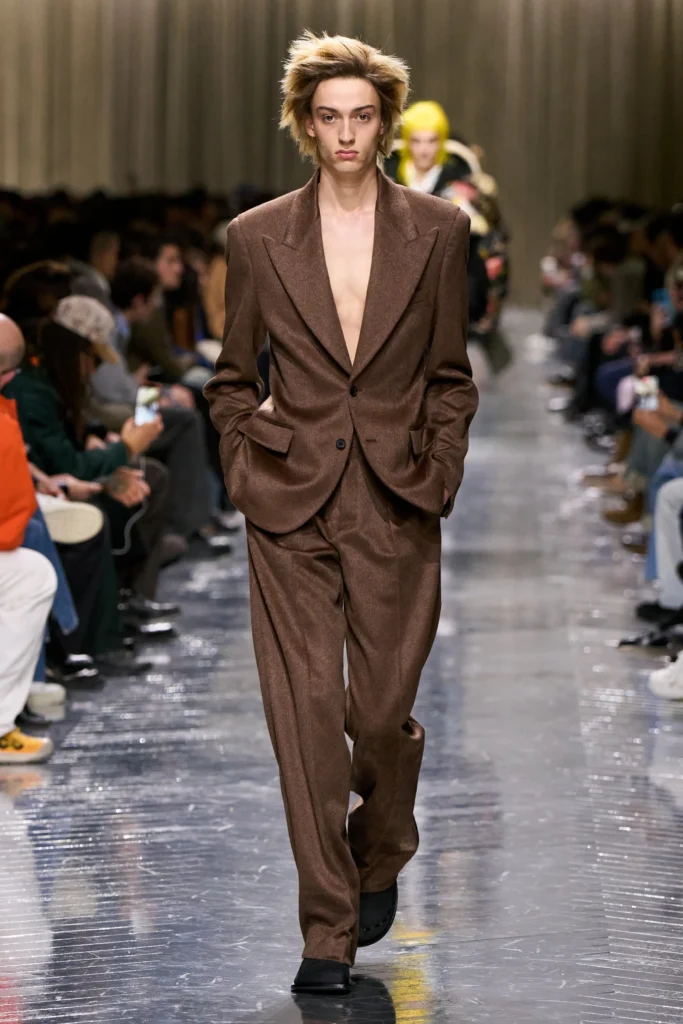
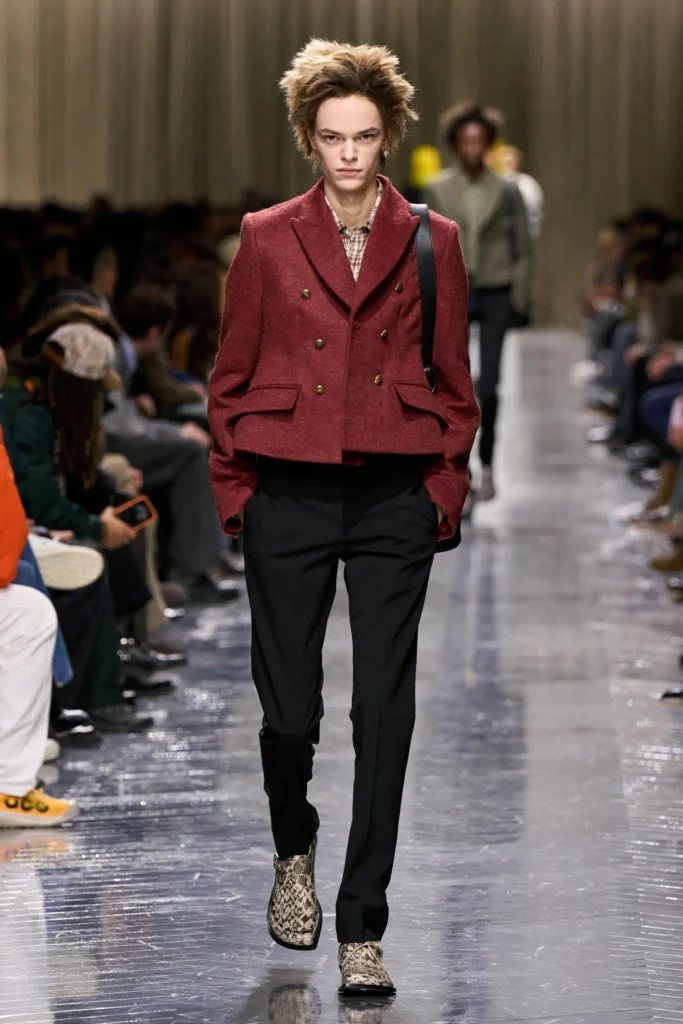
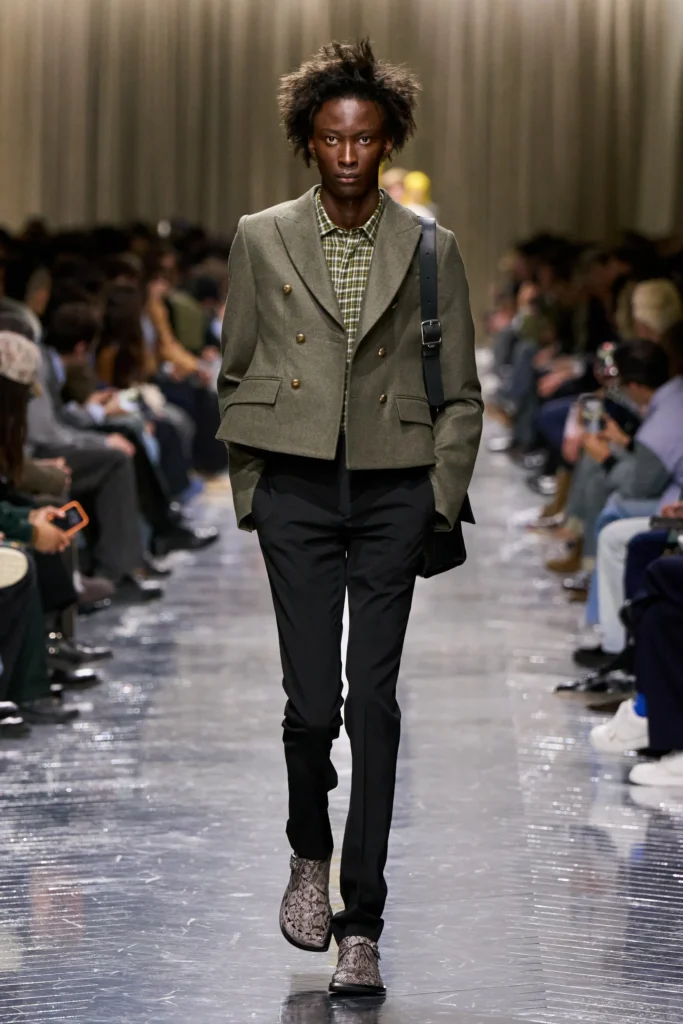
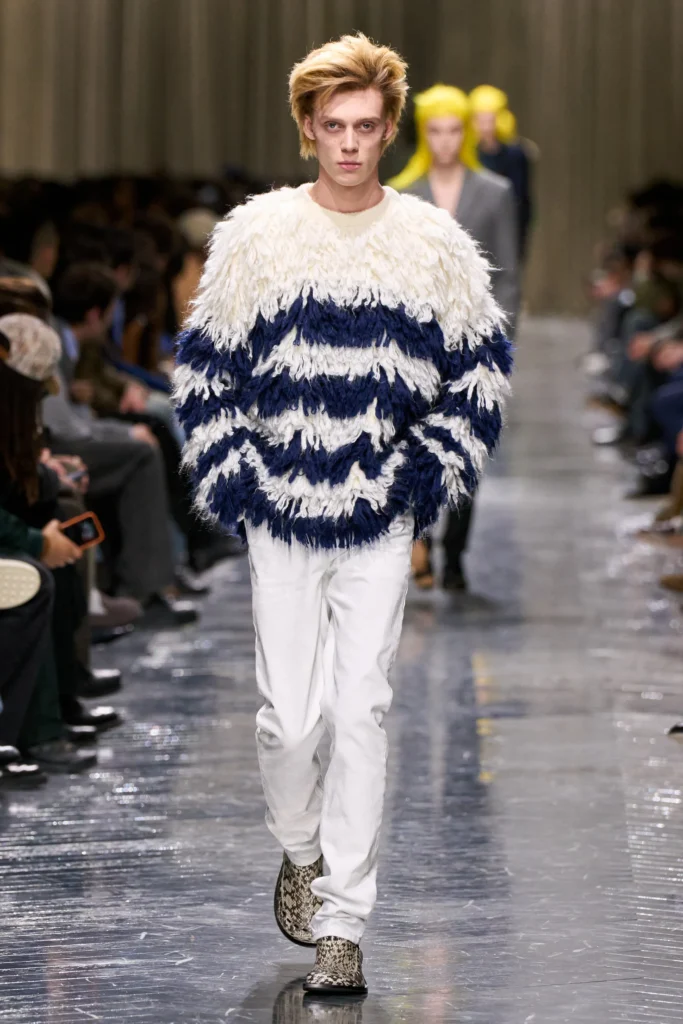
From there, the collection expanded into an exploration of pivotal ruptures in tailoring history. Anderson examined moments when structure collapsed and proportions shifted. Double-breasted houndstooth jackets with pronounced shoulders and bar hips nodded to the 1940s but were cut abruptly short. Early-1960s-inspired black jackets were shrunken to the point of exposing the hipbone. “Dior menswear is about tailoring,” Anderson said. “But how do you play with it to find new shapes? I don’t want mechanical repetition.” His answer came through transformation: tailcoats reimagined as cable-knit sweaters, and seemingly ordinary wool pullovers elongated dramatically to ankle length. Familiar garments were made strange through scale, fabrication, and unexpected juxtapositions.
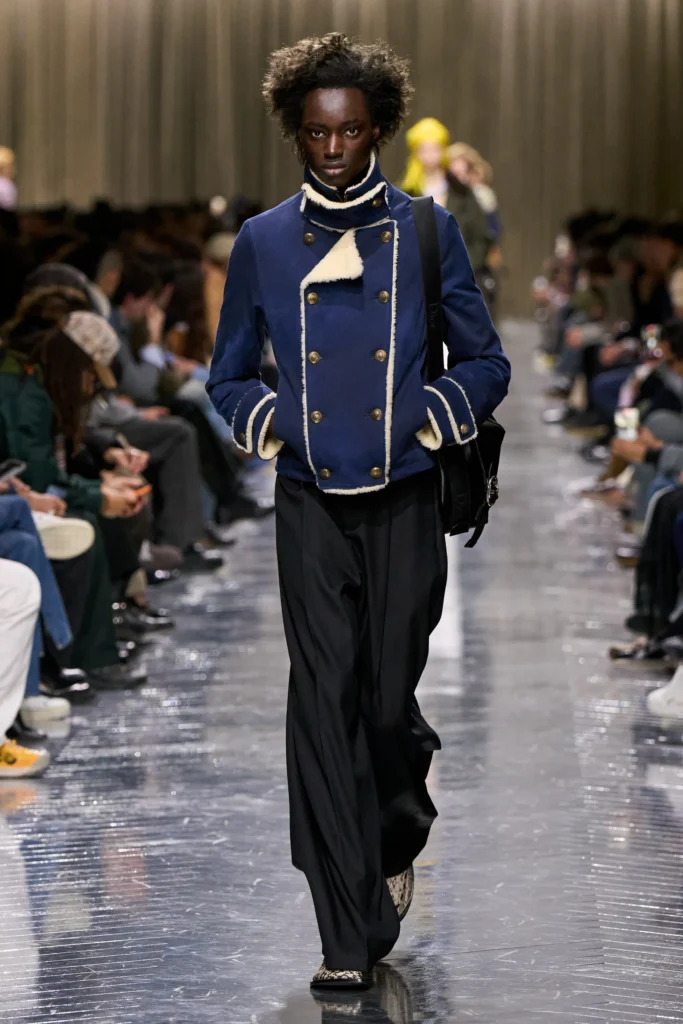
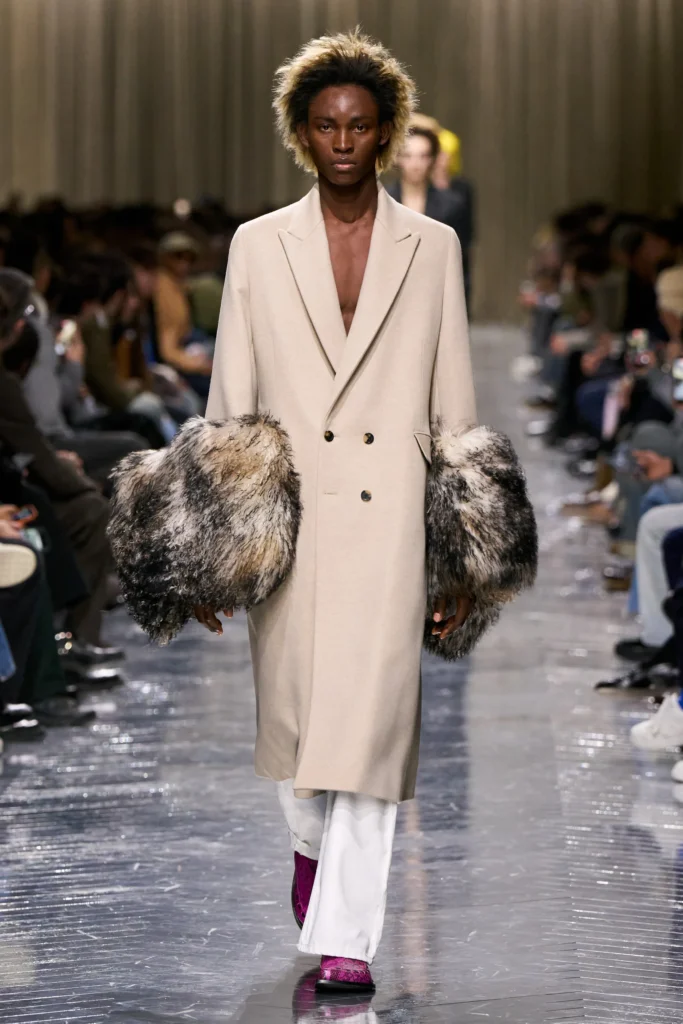
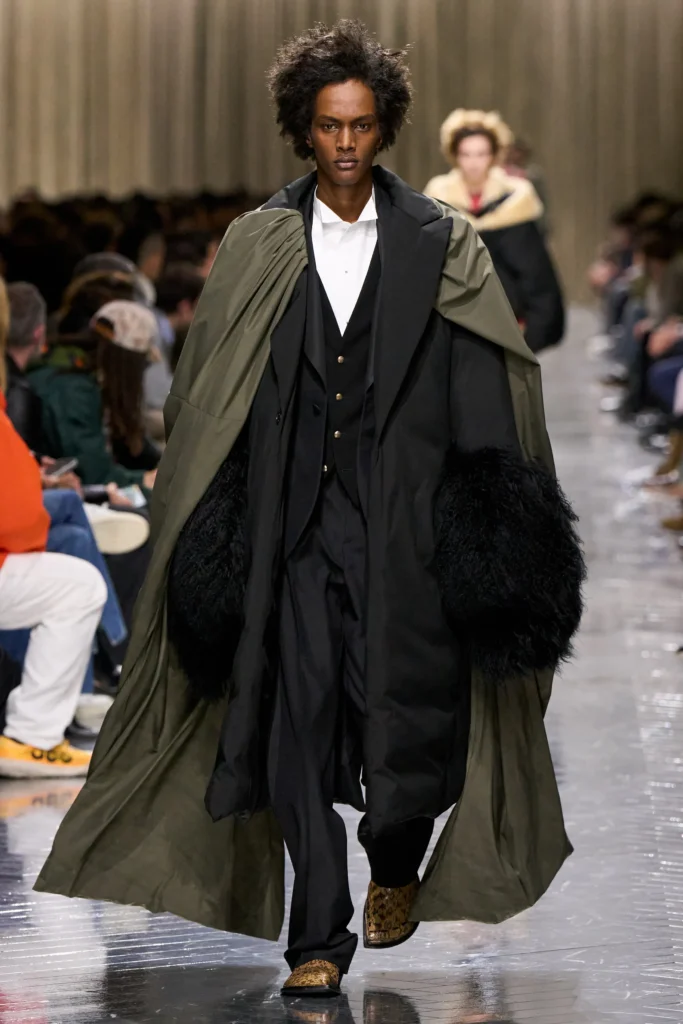
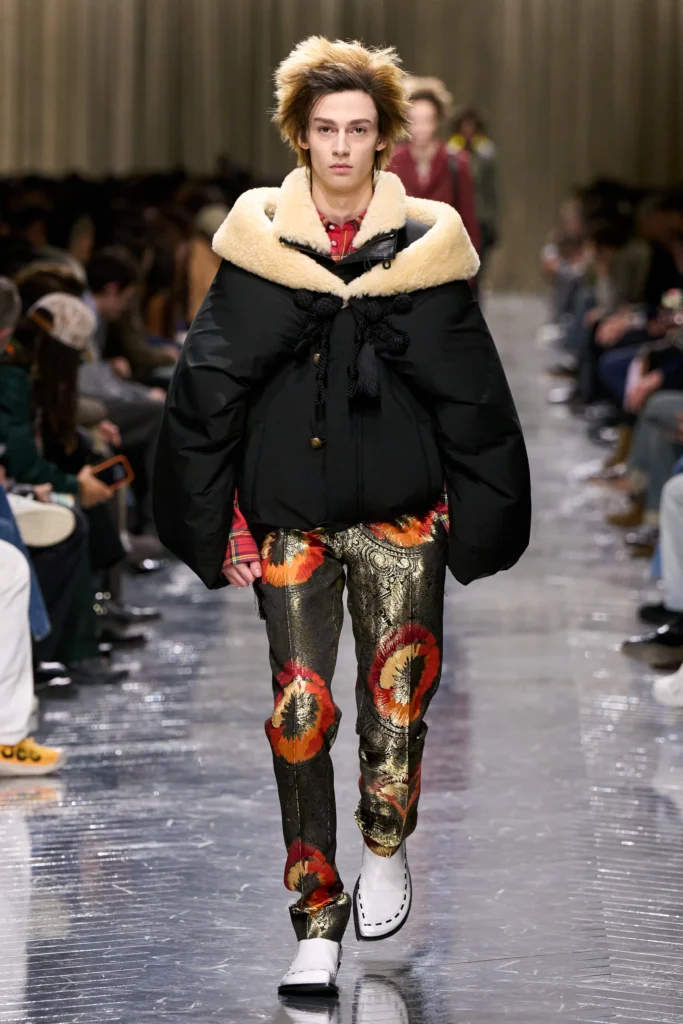
Poiret’s own louche spirit—his love of fantasy, distance, and collage—was filtered through Dior’s technical rigor. Butterfly jacquard trousers, worn with a rock-star nonchalance, were woven using textiles from Poiret’s original supplier. Archival fabrics bearing Poiret’s designs appeared as cape-like panels on parkas and topcoats, accented with sweeping shearling cuffs. Cropped puffer jackets curved sculpturally from shoulder to coccyx, cocooning the body in controlled volume.
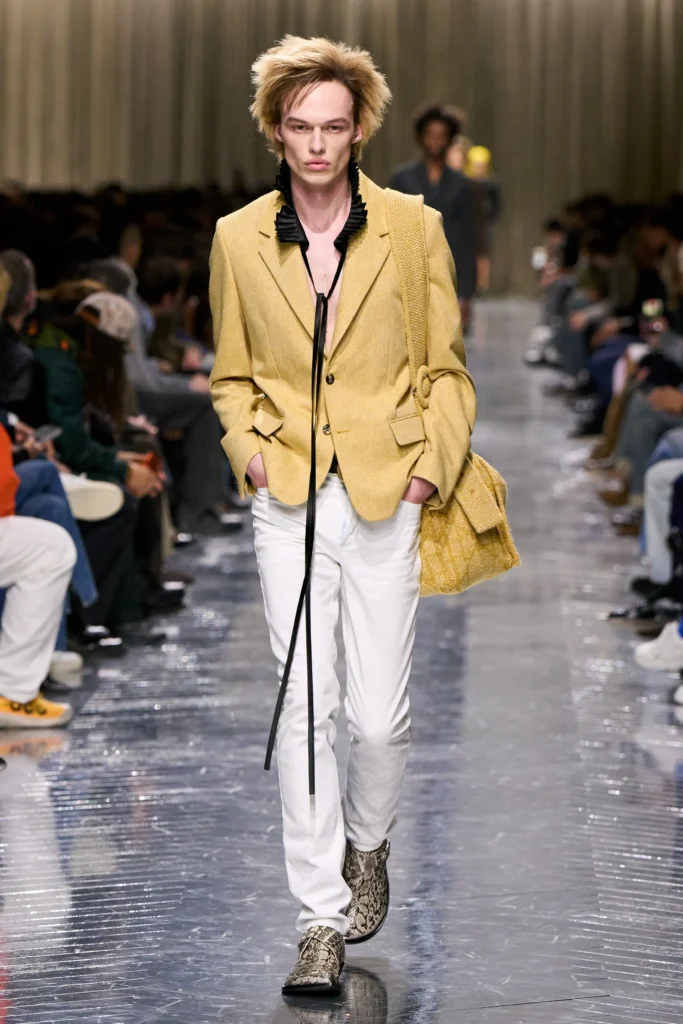
Poiret was also a devotee of costume and character, a philosophy Anderson clearly shares. Ruff collars—worn by select models and guests alike—became the show’s most potent symbol. Though archaic and formal, they were styled with deliberate irreverence, reading as punkish, romantic, and faintly dangerous. “Fashion shows are about showing ideas,” Anderson said. “It’s not a formula. I want to have a bit of fun with it.”
Fun, here, did not come at the expense of substance. Dior Men Fall/Winter 2026 was a confident, imaginative menswear collection that also blurred the lines of who it was for—offering women compelling reasons to browse beyond their usual departments, a shift Anderson noted is already underway at the house.
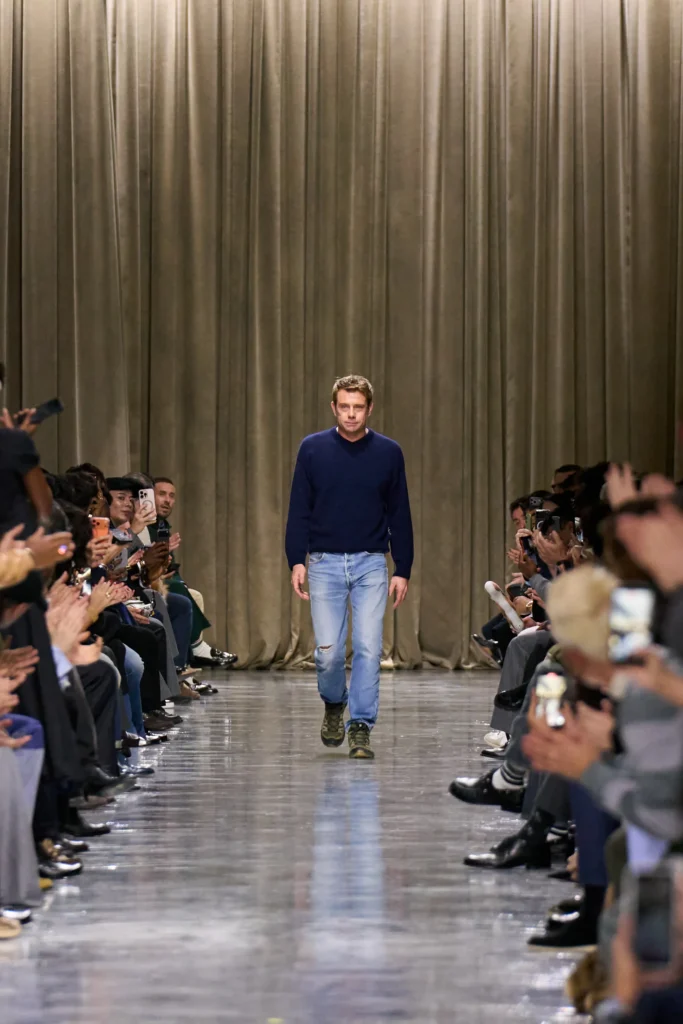
Photos Credit: Isidore Montag / Gorunway.com


