Virginie Viard Reflects on Chanel Exit, Karl Lagerfeld and What Comes Next
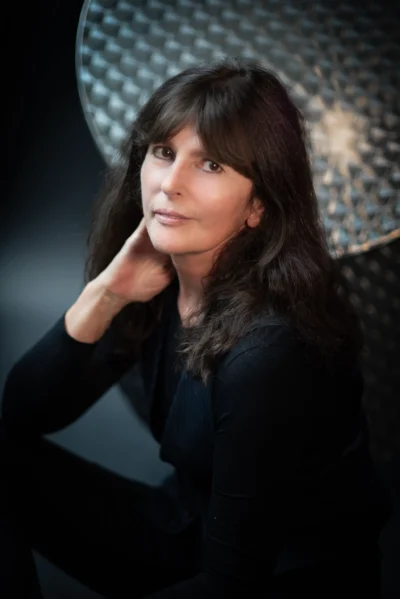

Virginie Viard
Two years after her unexpected departure from Chanel, Virginie Viard is finally telling her side of the story.
The former Chanel creative director has opened up about her five-year tenure at the legendary French fashion house, her complicated relationship with Karl Lagerfeld, the circumstances surrounding her dismissal and her life after Chanel in a new book, Un Regard: Une Vie Chez Chanel.
Viard, who famously maintained a low profile throughout her time leading Chanel, discussed the book during an appearance on the French television program Quotidien. Published by Stock to coincide with Paris Fashion Week, the book offers an unusually personal look at one of fashion’s most closely guarded institutions.
Viard spent 37 years at Chanel, first working alongside Lagerfeld before eventually succeeding him following his death in 2019. However, her time at the top came to an abrupt end in June 2024.
According to Viard, she learned of her dismissal during a lunch with Chanel global executive chairman Alain Wertheimer. Rather than a lengthy conversation about the decision, she says Wertheimer simply told her, “We’re going to end it here.”
The news reportedly came as a shock. Viard had sensed that the atmosphere inside the company had changed following Chanel’s May 2024 Cruise collection in Marseille, which was disrupted by severe weather. Still, she said she never expected to be dismissed so suddenly.
At the time, Chanel’s business remained exceptionally strong. The company reported approximately $19.7 billion in revenue for 2023, while also highlighting significant growth in its ready-to-wear business during Viard’s leadership. Despite those numbers, criticism of her collections had intensified, with speculation surrounding her future at the brand becoming increasingly public.
Looking back, Viard described her departure as an emotional rupture rather than simply the end of a job.
“Chanel was not a job: It was my backbone, the framework of my existence,” she writes in the book.
After leaving, Viard said she struggled to adjust to life outside the house she had known for most of her professional career. Some members of her former team reportedly even considered striking in protest of her dismissal. Chanel, however, quickly moved forward, presenting its Fall 2024 Haute Couture collection with the studio team credited following Viard’s exit.
The experience also forced Viard to reconsider her own leadership style.
Unlike many creative directors, Viard rarely relied on public appearances or extensive interviews. She also did not traditionally sketch designs, instead communicating ideas to her teams through inspiration collages and visual references.
She believes that her reserved approach may have ultimately worked against her.
Viard argued that women in positions of power can sometimes be judged differently from men, suggesting that professional discretion is more likely to be interpreted as discipline and focus when exhibited by a man, while the same behavior from a woman can be perceived as weakness or a lack of leadership.
She also believes she should have had a trusted partner working alongside her. Having previously served as Lagerfeld’s right-hand person, Viard acknowledged that she may have benefited from someone who could have helped communicate and defend her vision publicly.
Her Complicated Relationship With Karl Lagerfeld
One of the most personal elements of the book is Viard’s discussion of Lagerfeld.
Their relationship stretched across decades and included professional loyalty, creative chemistry, admiration and tension. Lagerfeld famously referred to Viard as his “right arm and my left arm,” and she eventually became his successor at Chanel.
But Viard’s memories of Lagerfeld are far from uncomplicated.
She reveals that she once considered leaving Chanel for an opportunity at Louis Vuitton with Marc Jacobs, partly because she became frustrated by the dynamic surrounding Lagerfeld and his longtime muse Amanda Harlech.
Despite those tensions, Viard ultimately remained at Chanel because of the unique creative partnership she had developed with Lagerfeld.
She describes the two as an intense creative duo whose relationship involved admiration, frustration and a level of professional dependence that was difficult to replicate.
Viard also reflects on the final months of Lagerfeld’s life. She says Lagerfeld remained guarded about the seriousness of his illness, and she only learned of his death from Chanel executive Bruno Pavlovsky at the hospital.
It was also then that she learned she had been selected to succeed him.
Viard admits that she wondered whether Lagerfeld himself had played a role in that decision.
“If he wanted me, it meant he recognized my place,” she reflected. At the same time, she wondered whether Lagerfeld had chosen her because he could not imagine anyone else taking over his position.
Her relationship with Lagerfeld ultimately remains one of the central contradictions of her career: she was deeply grateful to him while also carrying unresolved frustrations about their working relationship.
Reconnecting With Hedi Slimane
Following her departure from Chanel, Viard also reconnected with Hedi Slimane, another influential designer whose career had long intersected with the same fashion circles.
The two became closer in September 2024 after reconnecting through mutual acquaintances, including Princess Caroline of Hanover and her daughter Alexandra.
Viard said their conversations quickly became natural and intense. Both had experienced the pressure and politics that accompany working at the highest levels of fashion, and both shared a connection to Lagerfeld.
According to Viard, speaking with Slimane helped her understand some of the power dynamics she had experienced throughout her career but had never fully articulated.
She acknowledged that she had struggled with the political side of being a creative director, saying that the pressure affected her creativity and sense of freedom.
A New Chapter at Chanel
When Viard learned that Matthieu Blazy would become her successor, she said she actually felt relieved.
Rather than viewing Blazy’s appointment as a continuation of her work or Lagerfeld’s legacy, she saw it as an opportunity for Chanel to enter an entirely new era.
For Viard, that distinction allowed her to finally move forward.
She was particularly struck by descriptions of Chanel’s history that appeared to place Gabrielle “Coco” Chanel, Lagerfeld and Blazy at the center of the house’s story while leaving her own contribution largely unmentioned.
In the book, she describes herself as feeling like “the space between two acts” — a temporary interval between major chapters in Chanel’s history.
But Viard ultimately rejects the idea that her tenure should be treated as merely a transition between Lagerfeld and Blazy.
She says she wrote the book because she believes her work deserves to be remembered, from her collections and fashion shows to her collaborations and years spent working behind the scenes.
After decades at Chanel, Viard says she is now ready to return to work, although she has no plans to create her own fashion label.
For the designer who spent much of her career away from the spotlight, Un Regard: Une Vie Chez Chanel represents something very different: an opportunity to finally speak in her own voice and define her own chapter of fashion history.
And this time, the story belongs to her.
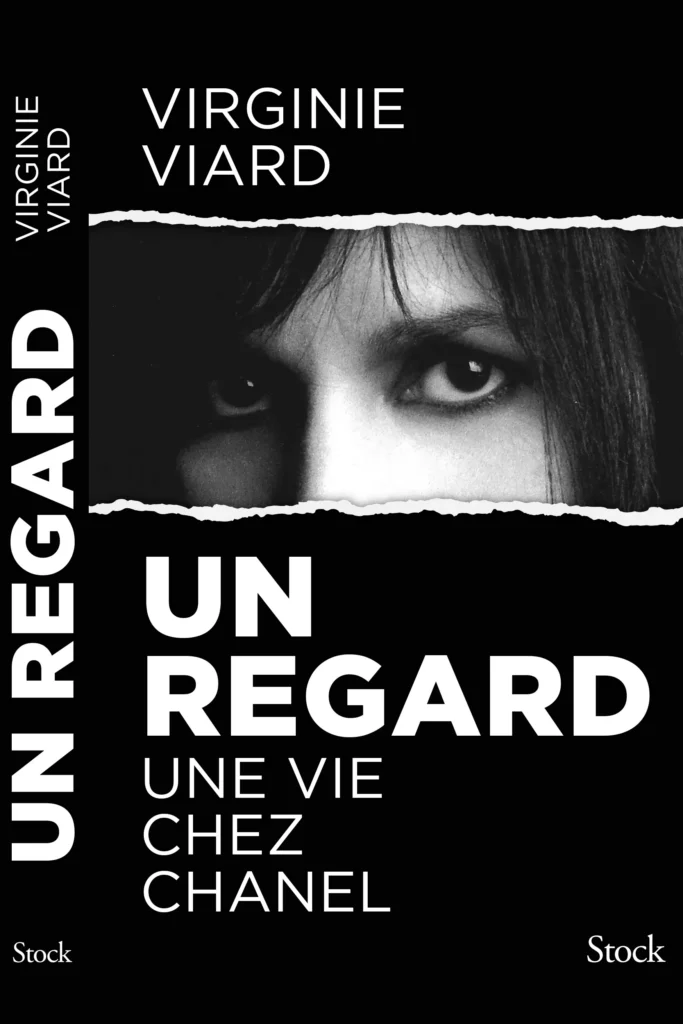
The cover of Virginie Viard’s book.
Photo: Astrid di Crollalanza/Courtesy of Stock


