Do You Really Need Fashion School or a Prestigious Internship to Become a Successful Designer?


Photo: Kai Cenat
The recent conversation surrounding Kai Cenat’s debut at New York Fashion Week got me thinking about something I wrote more than a decade ago.
By Donovan Moore
Back in 2014, I published an article for a fashion publication that has since closed, asking a question that sparked plenty of debate: “Is Kanye West a Fashion Icon? Do You Think Talent or Racism Is the Reason That He Hasn’t Succeeded in the Fashion Industry?”
At the time, Kanye West was fighting for credibility in an industry that did not necessarily view him as a legitimate fashion designer. He had already collaborated with major names, designed footwear, launched his own collections and established himself as one of the biggest entertainers in the world. Yet his celebrity status often seemed to work against him when he tried to establish himself within the traditional fashion system.
More than a decade later, the industry looks very different.
The conversation surrounding Kai Cenat and his VIVET collection raises a similar question: Who gets to be considered a legitimate fashion designer?
And perhaps more importantly, who gets to decide?
I don’t believe you need to attend a prestigious fashion school, graduate from an elite design program or complete an internship at a major Paris fashion house to become a successful designer today.
Those experiences can certainly be valuable. Fashion school can teach you technical skills, construction, pattern-making, textile knowledge and the history of the industry. Working inside an established fashion house can expose you to production, merchandising, sourcing, development and the realities of operating a global brand.
But none of those things should automatically determine whether someone has the right to build a fashion brand.
The Internet Changed the Rules
The biggest difference between the fashion industry of 2014 and the fashion industry of 2026 is access.
The internet has fundamentally changed how people discover designers, build audiences and establish businesses.
You no longer have to wait for a fashion editor to discover you.
You don’t necessarily have to wait for a buyer at a major retailer to give you an opportunity.
You don’t have to live in Paris, Milan, London or New York to begin building an international audience.
You can start with an Instagram account, TikTok page, website, online store or even a simple phone.
More importantly, you can network directly.
A young designer can contact a photographer, stylist, model, manufacturer, creative director, celebrity, influencer or fashion publication without necessarily having a prestigious institution serving as the middleman.
That doesn’t guarantee success. But it creates opportunities that simply didn’t exist at the same scale for previous generations.
And sometimes, those opportunities can come much sooner than they would through the traditional fashion-industry pipeline.

Your Audience Can Become Your Résumé
This is where I think the conversation around Kai Cenat becomes particularly interesting.
Cenat already built something that many aspiring designers spend years trying to acquire: an audience.
That audience doesn’t automatically make someone a great designer. Having millions of followers doesn’t mean you understand garment construction, fit, manufacturing or product development.
But an audience is still an asset.
In today’s fashion industry, knowing how to communicate with consumers is incredibly valuable.
A designer who understands how to build a community, tell a story, create demand and communicate directly with customers possesses a skill that cannot necessarily be taught through a traditional fashion-school curriculum.
And this isn’t unique to Kai Cenat.
Look at the number of independent designers, streetwear brands and fashion entrepreneurs who have built businesses through social media. Some started in bedrooms, apartments, garages or small studios. They didn’t have fashion-industry connections when they began. They built those connections along the way.
That is one of the most powerful things about the internet.
You can create your own door when nobody is opening one for you.
Networking Can Take You Places a Degree Can’t
I don’t want this to be misunderstood.
I’m not saying education doesn’t matter.
I’m saying that education is no longer the only path to opportunity.
Networking can be just as important.
You could have a degree from one of the most respected fashion schools in the world, but if you don’t know how to communicate your vision, develop relationships, find collaborators, understand your customer or actually bring a product to market, the degree itself isn’t going to build your brand.
On the other hand, someone without a fashion degree can spend years teaching themselves, surrounding themselves with experienced people and developing relationships with manufacturers, pattern-makers, stylists, photographers and other industry professionals.
That person can learn.
They can improve.
They can make mistakes.
They can find mentors.
They can build a team.
And eventually, they can create something legitimate.
That is how many creative industries work today.

But Being Famous Isn’t Enough
At the same time, I understand some of the criticism surrounding celebrity and influencer fashion ventures.
There is a legitimate difference between having an audience and having design ability.
Those things shouldn’t be confused.
A celebrity can generate enormous attention for a collection, but attention doesn’t automatically make the clothing good.
A viral post doesn’t fix bad construction.
Millions of followers don’t automatically create a strong silhouette.
Celebrity doesn’t replace fit, quality, manufacturing, pricing, distribution or a clear creative identity.
Ultimately, consumers have to decide whether they want to buy the product.
That’s where the real test begins.
Anyone can announce a fashion brand.
Building something that people want to buy repeatedly is much harder.
Fashion Has Always Been About Breaking Rules
What’s interesting to me is that fashion has historically celebrated people who challenged the establishment.
Yet the industry can sometimes become extremely protective of its own traditions.
There is nothing wrong with respecting the people who spent years studying fashion, working unpaid or low-paying internships, assisting designers and climbing the industry ladder. They worked hard for their opportunities.
But their path shouldn’t automatically become the only acceptable path.
The fashion industry is constantly changing.
Streetwear changed it.
Social media changed it.
E-commerce changed it.
Influencers changed it.
Independent designers changed it.
And now content creators are challenging the industry’s traditional definition of who a designer can be.
That doesn’t mean every influencer should become a designer.
It means the industry should judge the work rather than automatically dismissing someone because they arrived through an unconventional door.
My Perspective Has Changed Since 2014
When I wrote about Kanye West in 2014, I was much more focused on whether his lack of traditional fashion credibility was connected to his ability to succeed.
Looking back, I think the bigger question was always about access.
Who gets access to the fashion industry?
Who gets taken seriously?
Who gets invited into the room?
Who gets the opportunity to make mistakes?
And who has to prove themselves ten times over before anyone is willing to give them a chance?
Today, the internet has made it possible for people to bypass some of those traditional gatekeepers.
You can build a following before a fashion editor knows your name.
You can sell a collection before a major retailer agrees to carry you.
You can collaborate with people around the world without ever meeting them through a traditional fashion institution.
You can teach yourself.
You can experiment.
You can build a portfolio.
You can create a brand.
And you can network your way into rooms that once seemed completely inaccessible.
That’s a major shift.
So, Do You Need Fashion School?
No.
But that doesn’t mean you don’t need to learn.
That’s the distinction I think gets lost in this conversation.
You don’t necessarily need a fashion degree.
You don’t necessarily need an internship at a prestigious fashion house.
You don’t necessarily need to graduate from Central Saint Martins, Parsons, FIT or another respected fashion institution.
But you do need knowledge.
You need to understand your craft.
You need to understand your customer.
You need to understand your product.
And if you don’t know something, you need to be willing to find someone who does.
The internet gives today’s generation an incredible opportunity to educate themselves and connect with people who can help them develop.
The traditional path still exists.
But it isn’t the only path anymore.
And perhaps that’s what makes the current fashion landscape so interesting.
The gatekeepers don’t have the same control they once had.
A person with an unconventional background can build an audience, develop relationships, learn the business and create their own opportunity.
Will every person who does this become a great designer?
Of course not.
But they should have the opportunity to try.
Because ultimately, a résumé can get you into a room, but the work you create is what should determine whether you belong there.

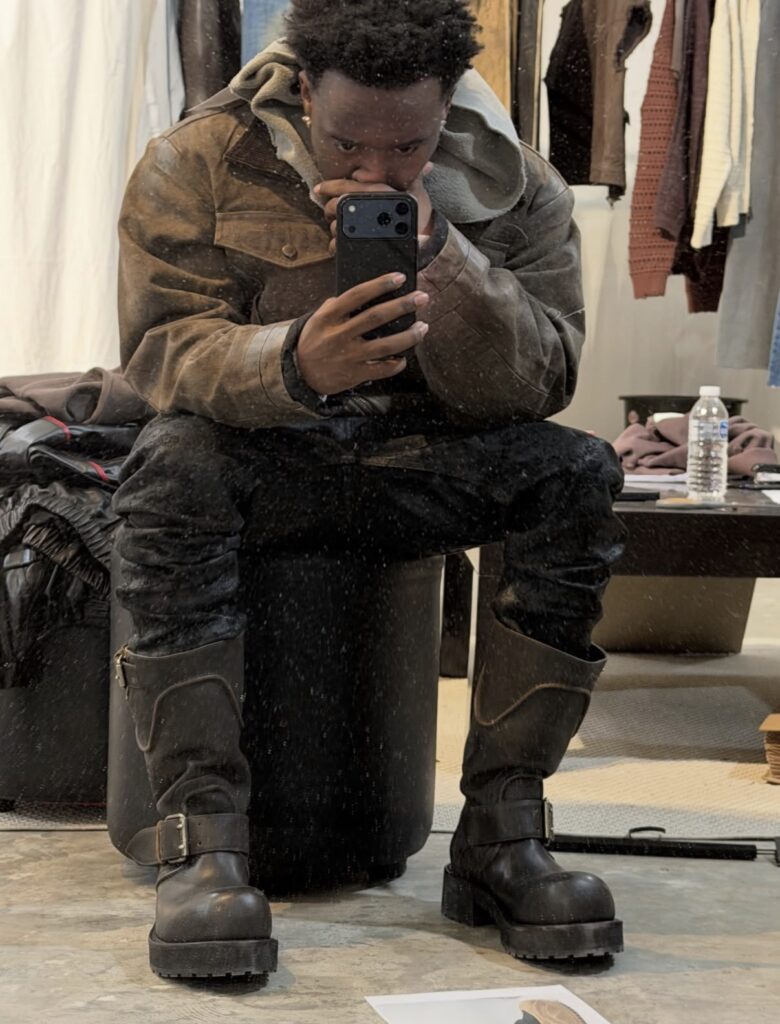
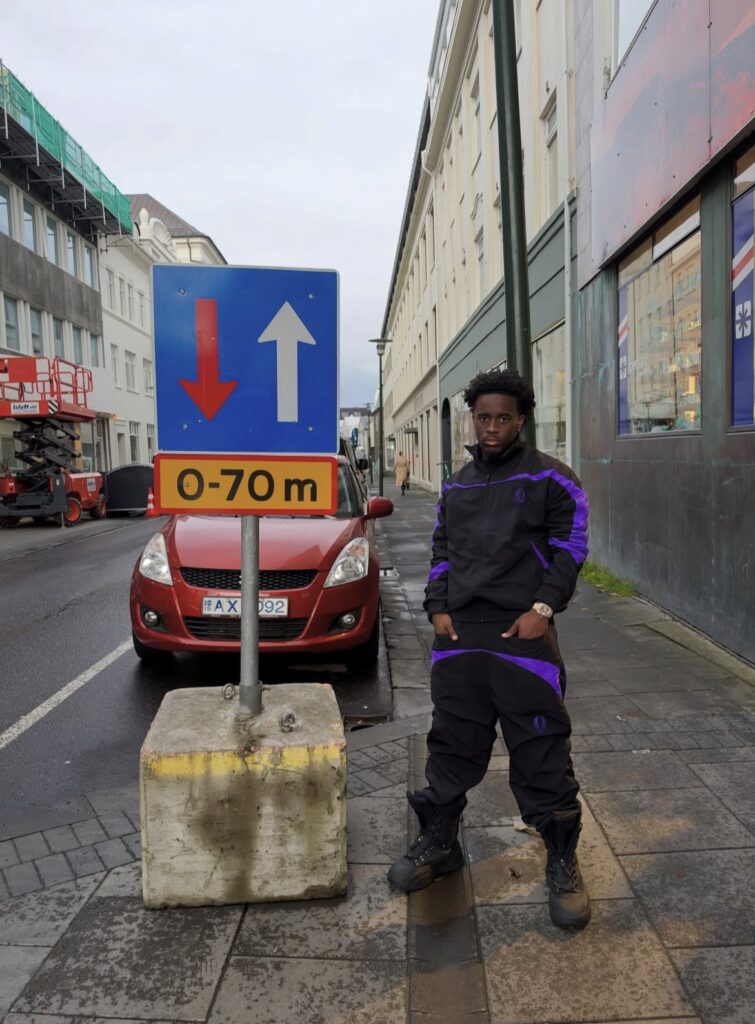
Photos: Kai Cenat’s Instagram


