Paris Fashion Week: Rick Owens Fall/Winter 2026 Menswear
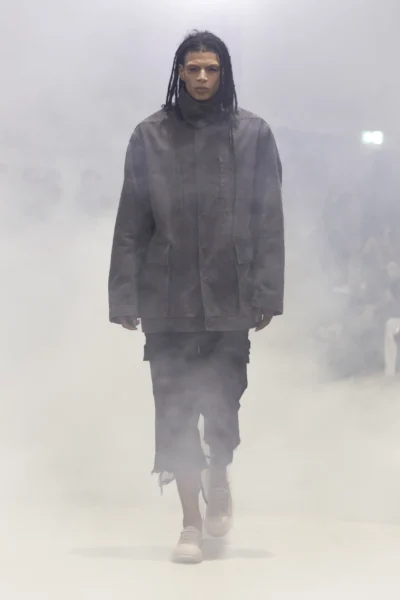
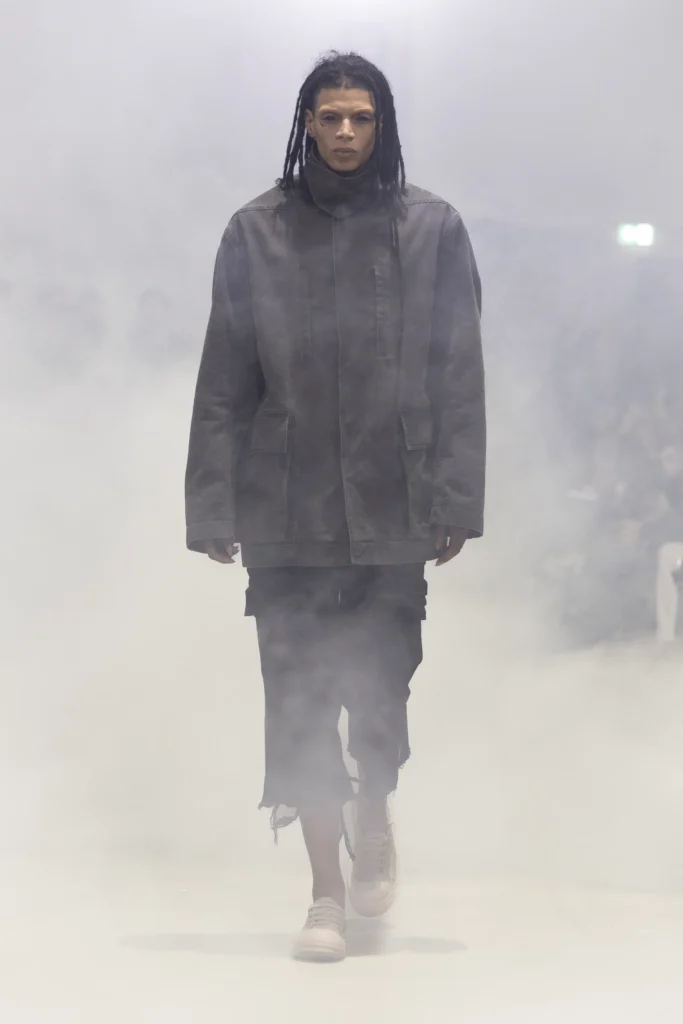
Paris – Rick Owens presented his Fall/Winter 2026 menswear collection in Paris with a show that confronted authority, fear, and control—then deliberately distorted them. “I was thinking a lot about police uniforms,” Owens said backstage. “And when you have a threat, you mock it. That is how you process it.”
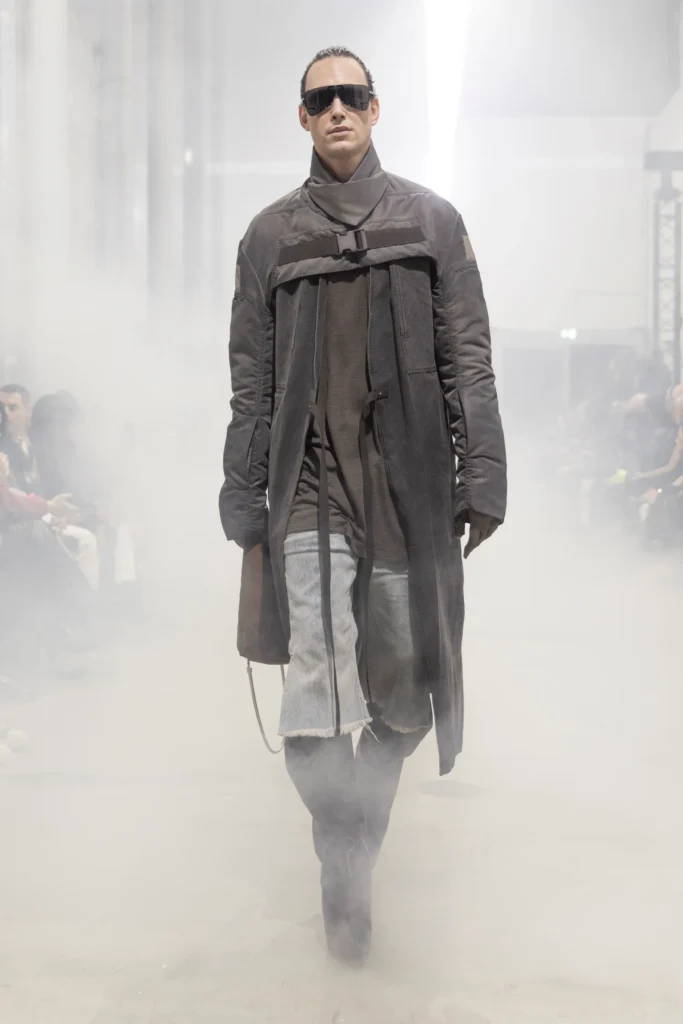
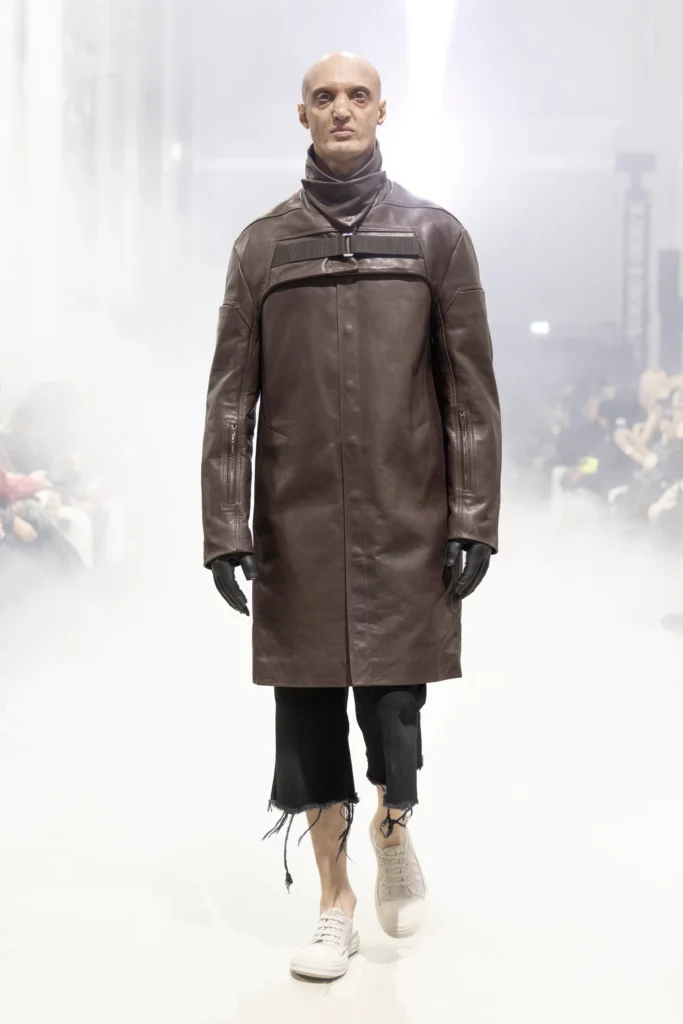
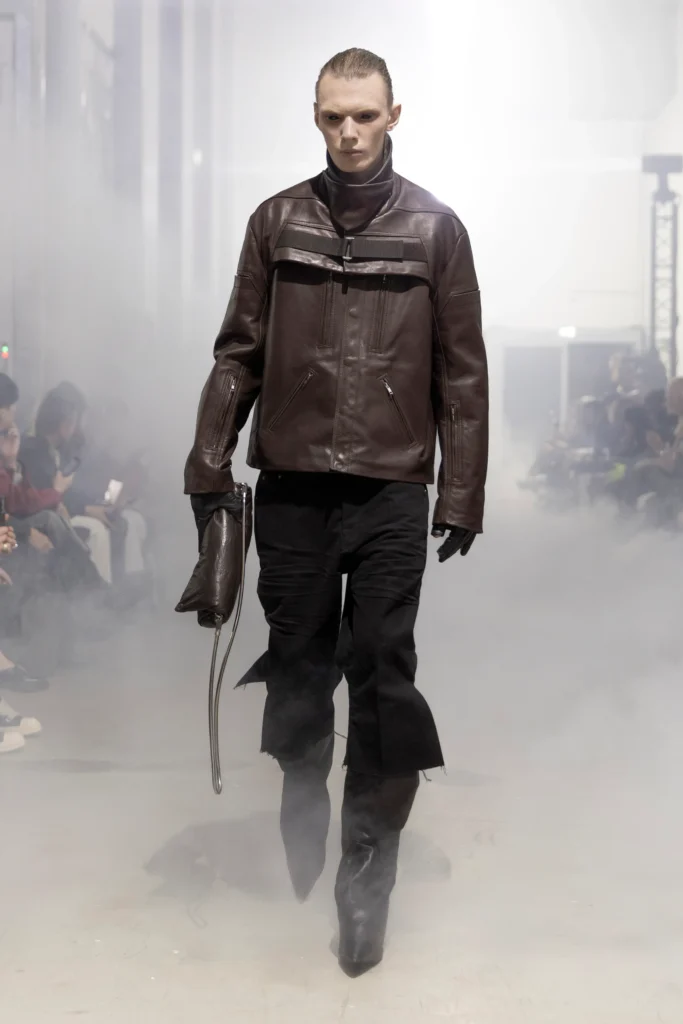
That tension—between intimidation and subversion—ran through the collection. Owens found himself fixated on a deceptively small detail while designing: epaulettes or no epaulettes? “The subject felt sensitive,” he explained. “And if it feels sensitive, that’s the direction to go in.” Ultimately, he rejected the insignia itself, opting instead for grommeted webbing patches on the shoulders—ghosts of authority without the badge.
Owens’ political awareness is personal as much as historical. His mother, Connie, was born in Puebla, Mexico, and he was raised in Porterville, California, a region that remained part of Mexico until 1848. Still, he resists the role of activist-designer. “I’m very wary of making proclamations,” he said. “I’m a fashion designer. I’m in Paris. Escapism is fine, but it’s not my thing. You have to at least be aware.”
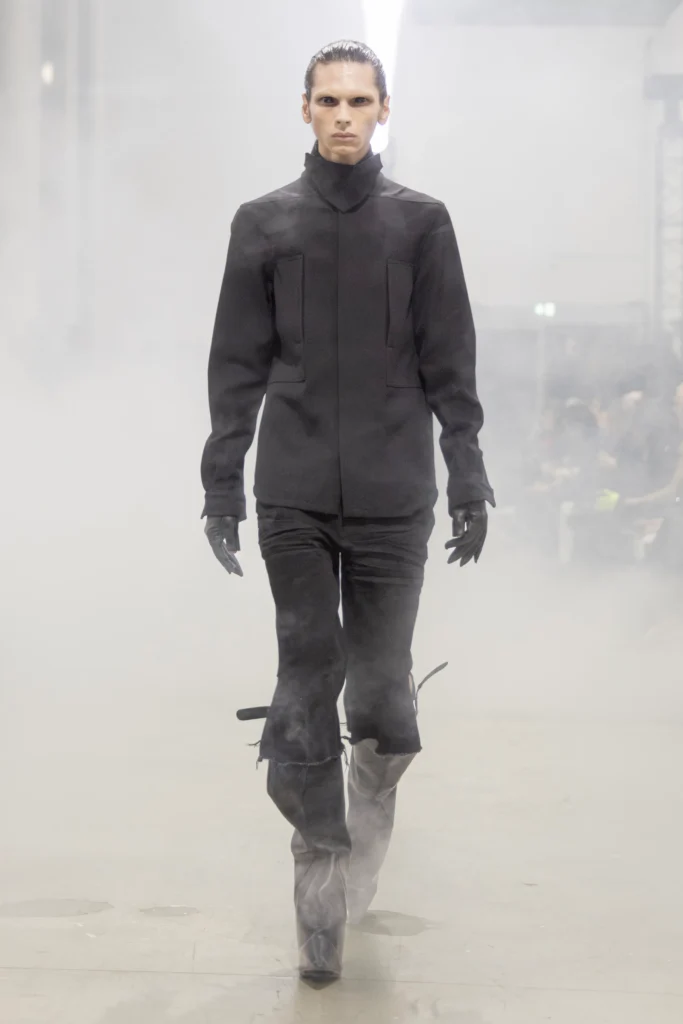
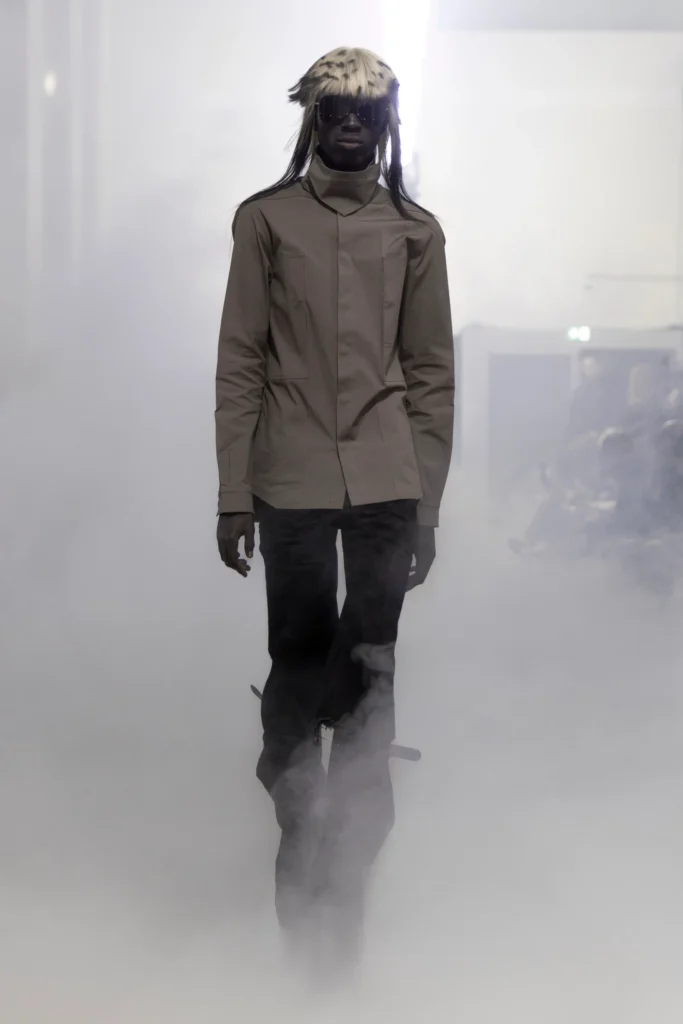
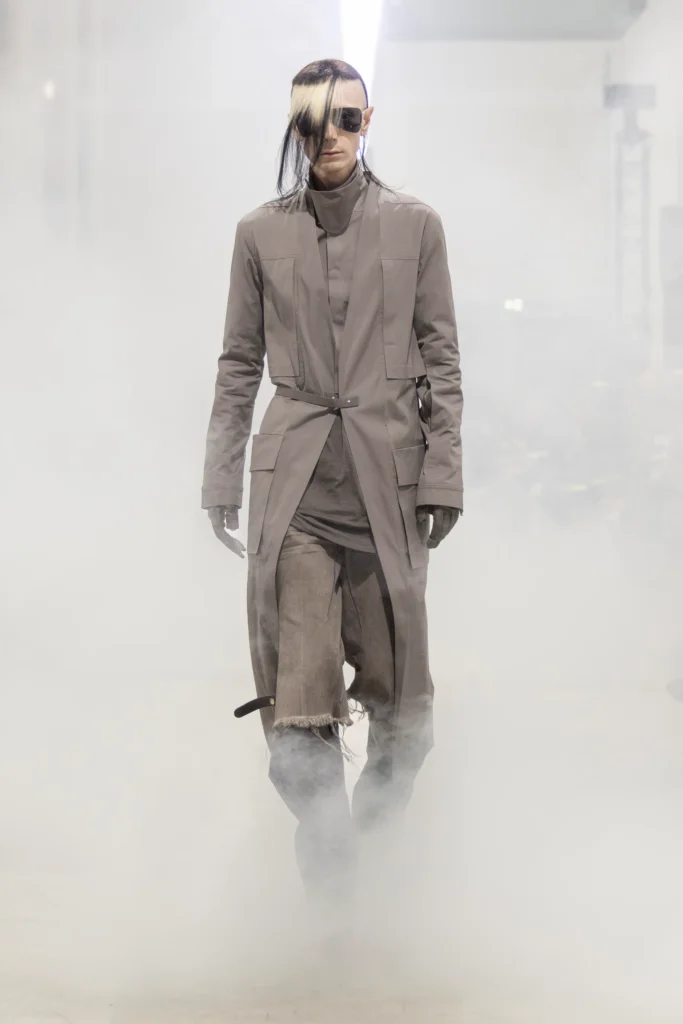
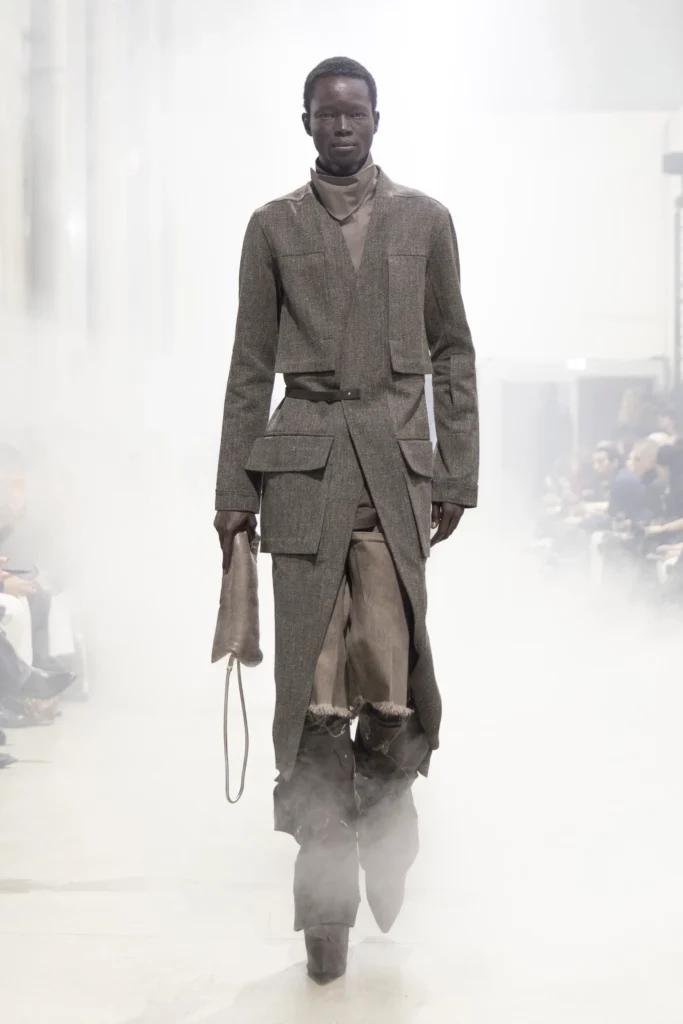
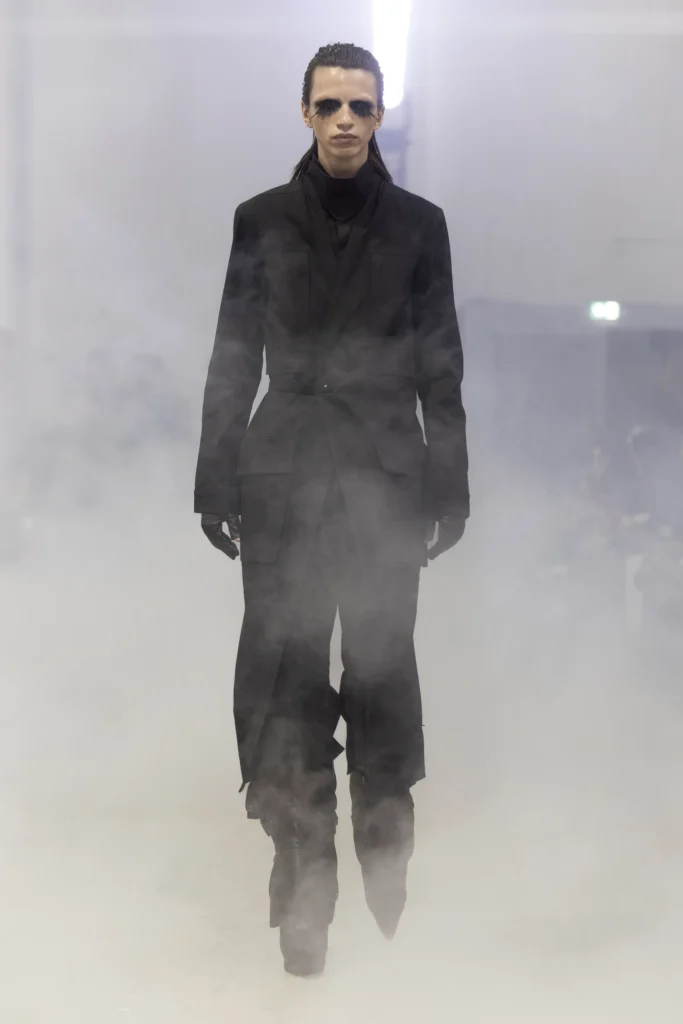
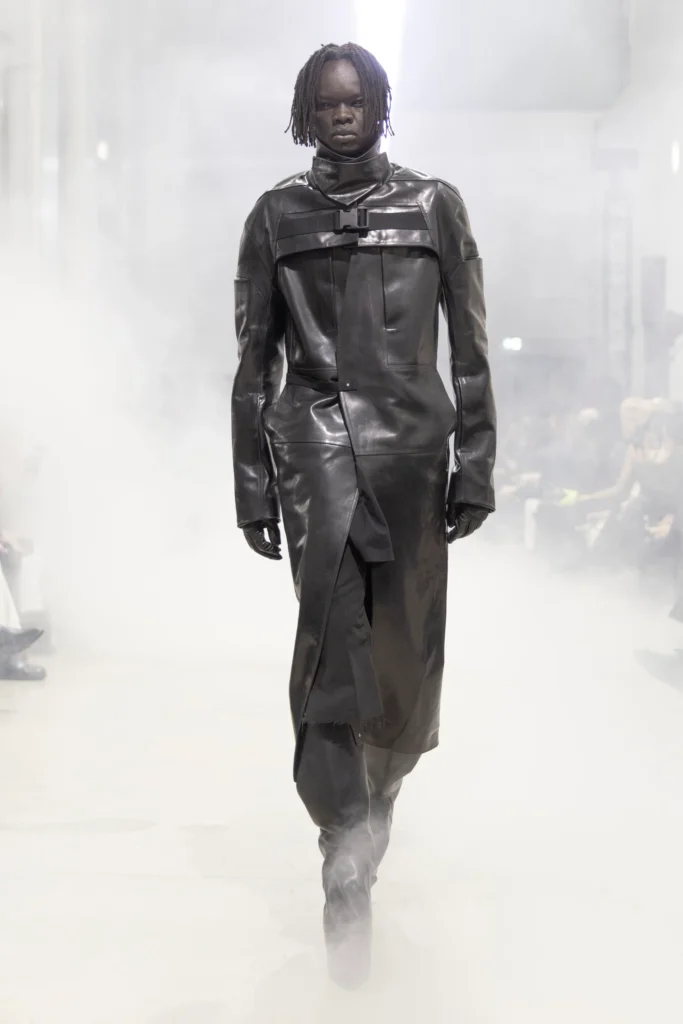
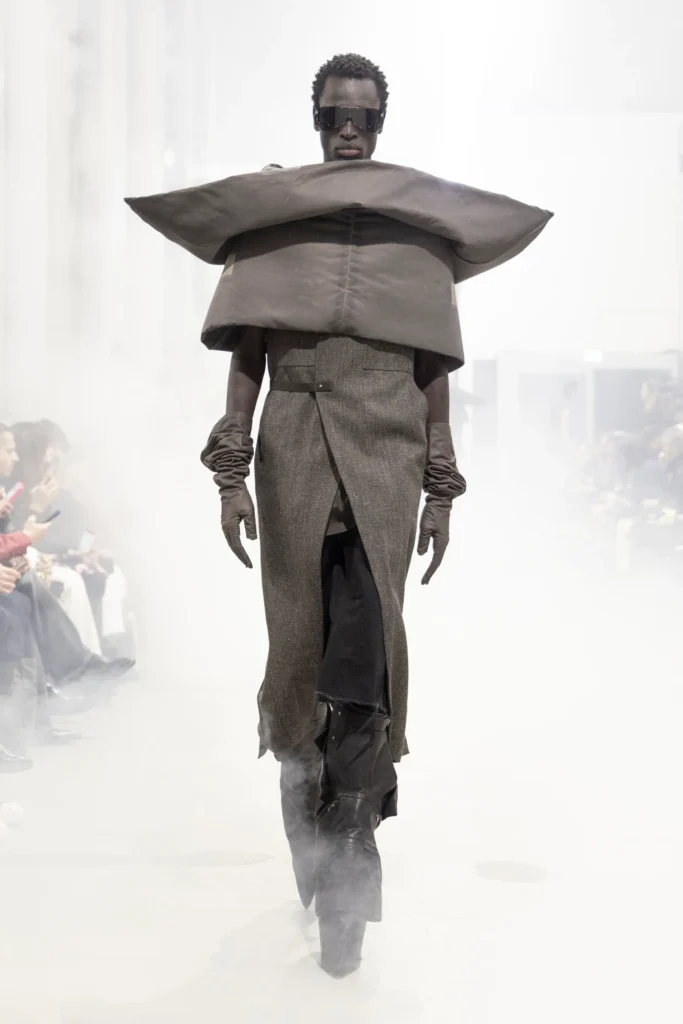
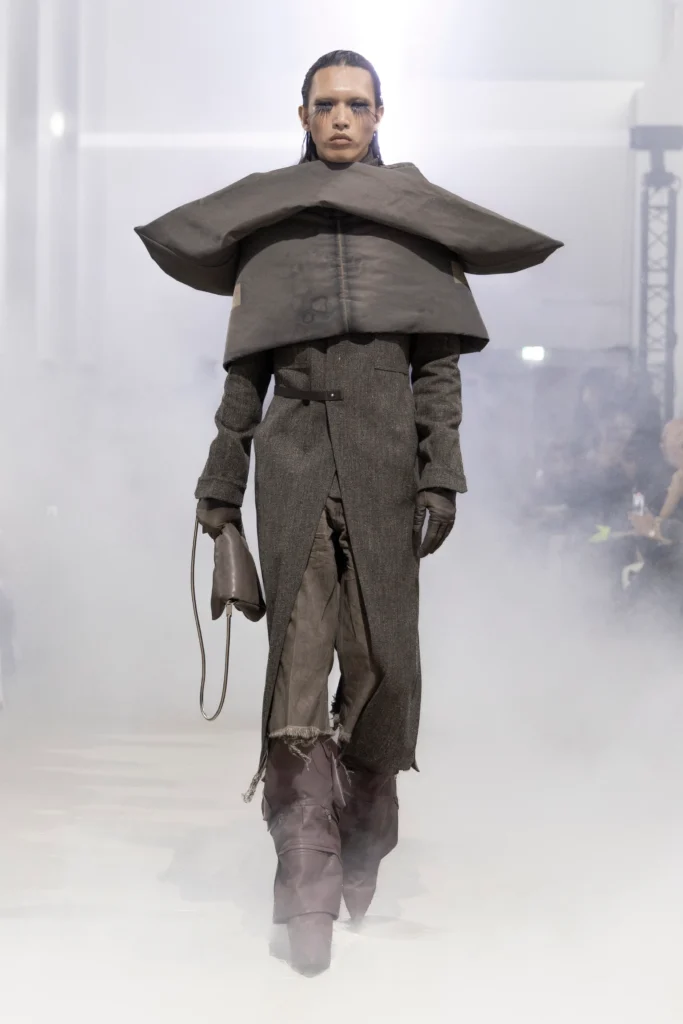
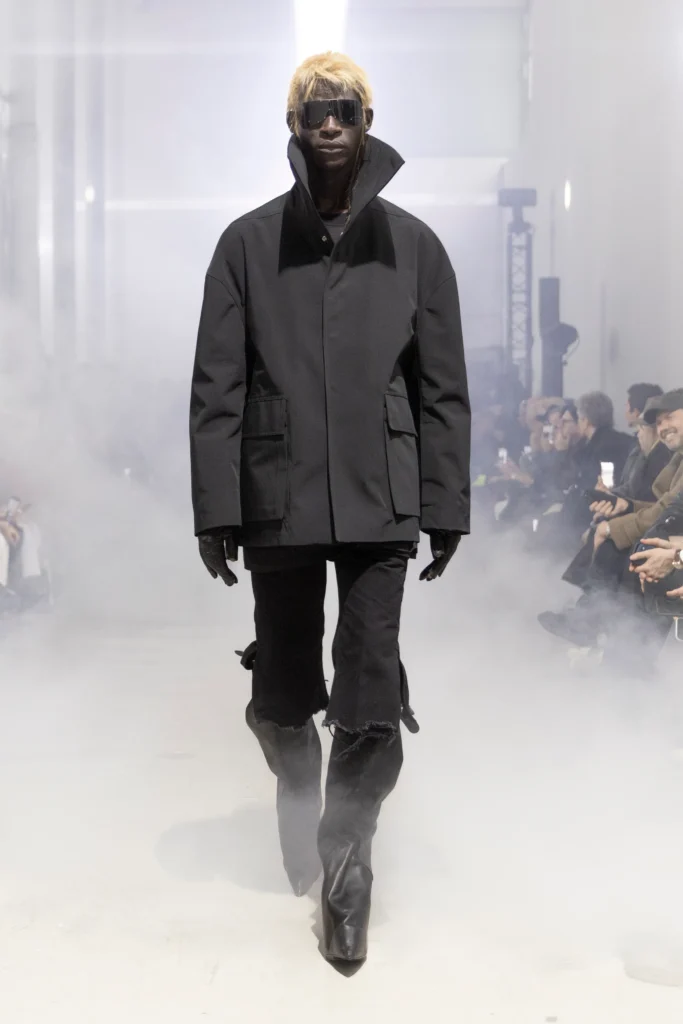
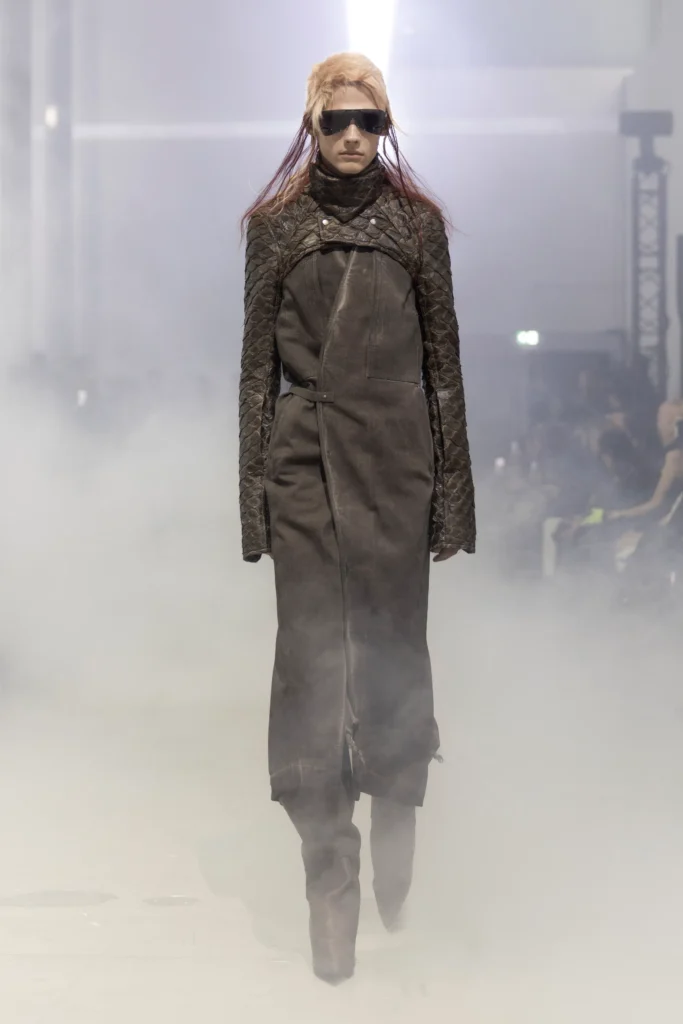
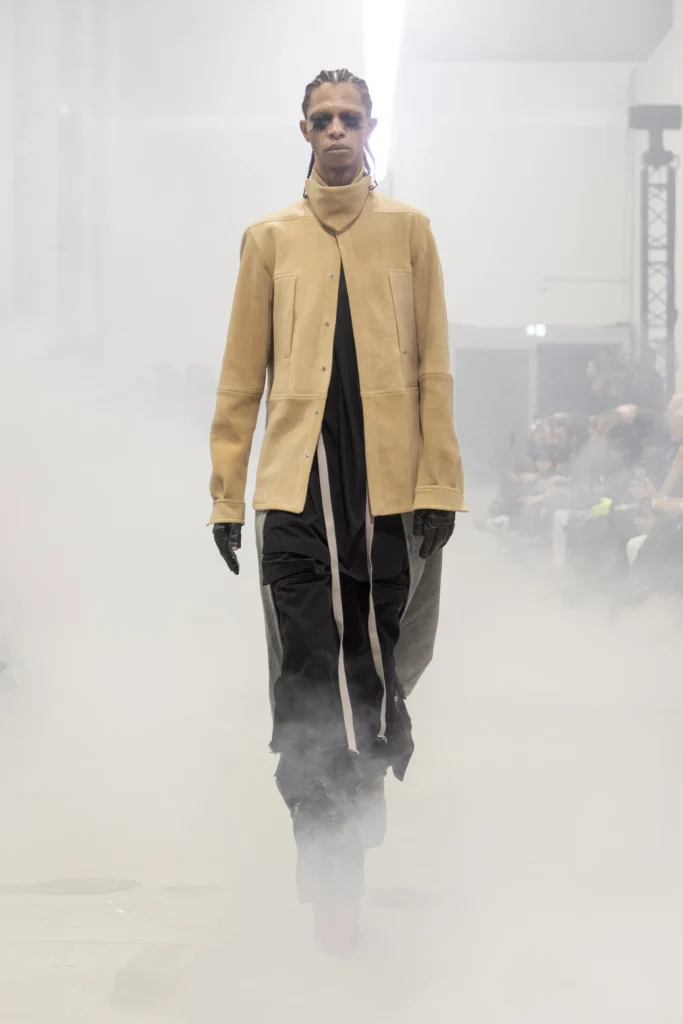
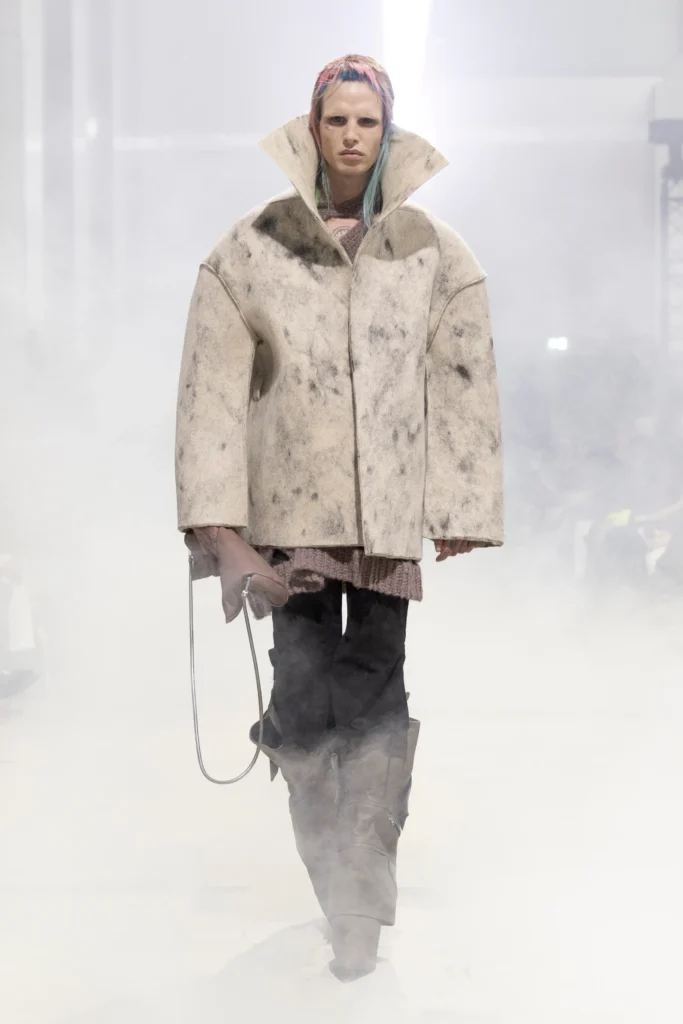
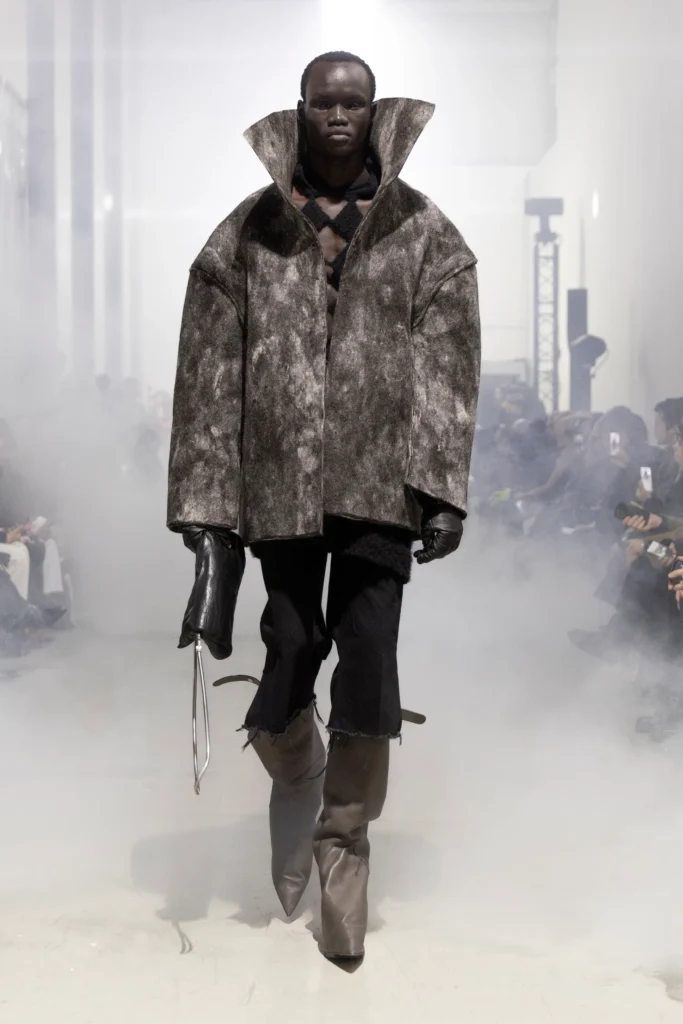
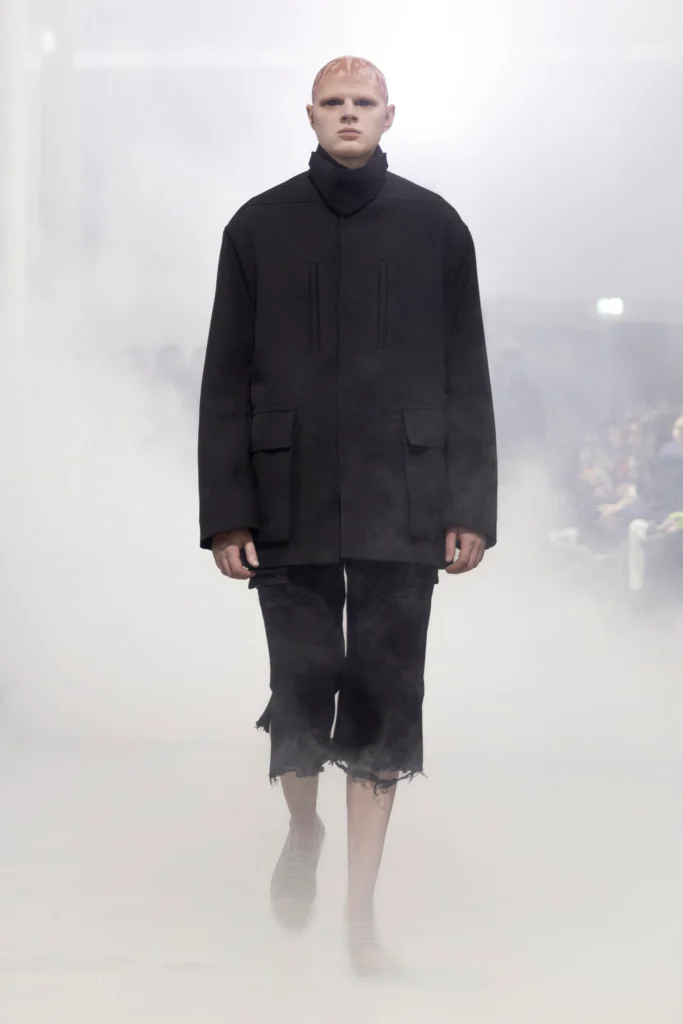
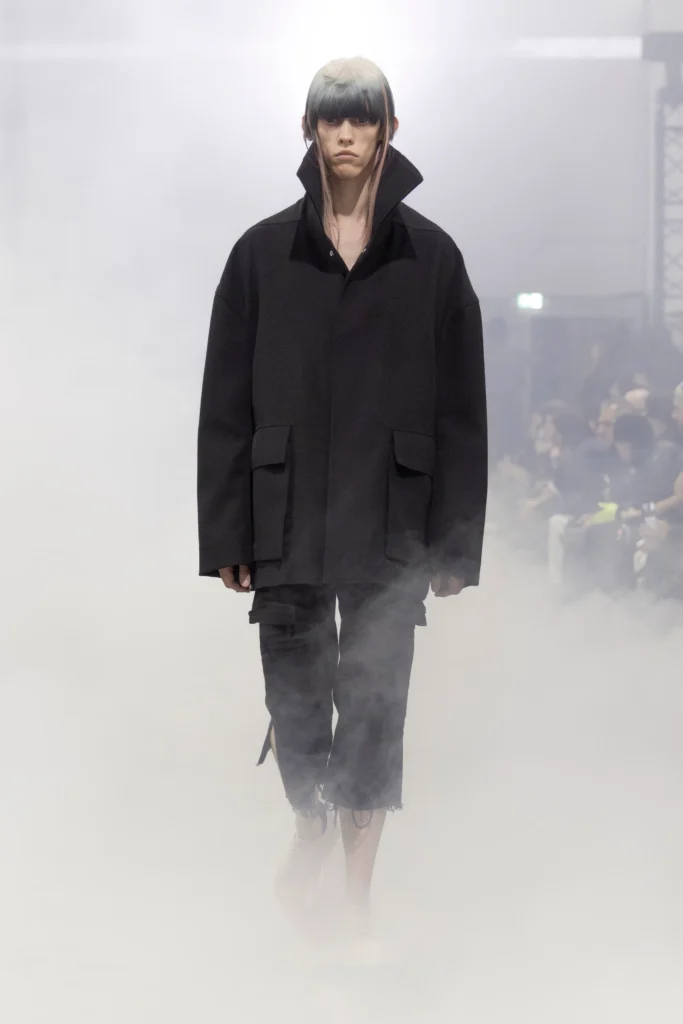
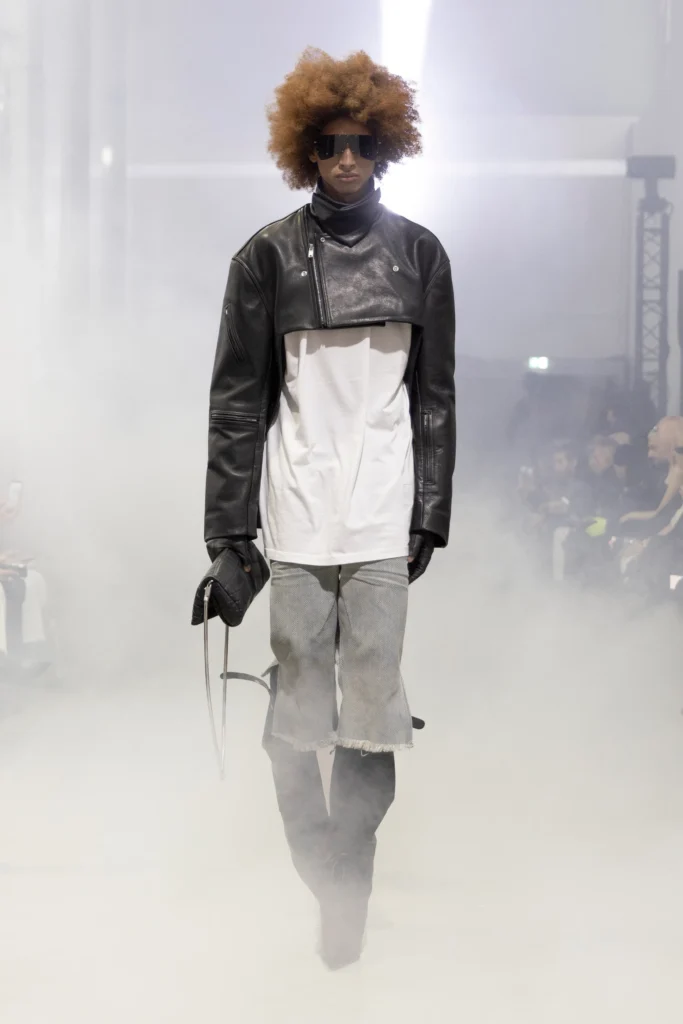
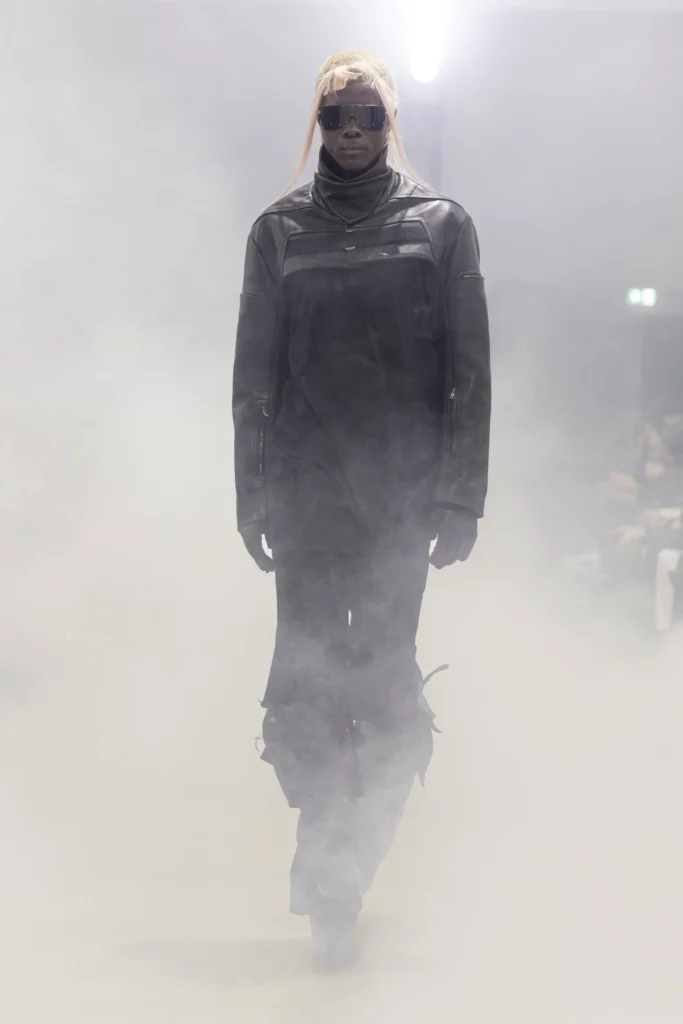
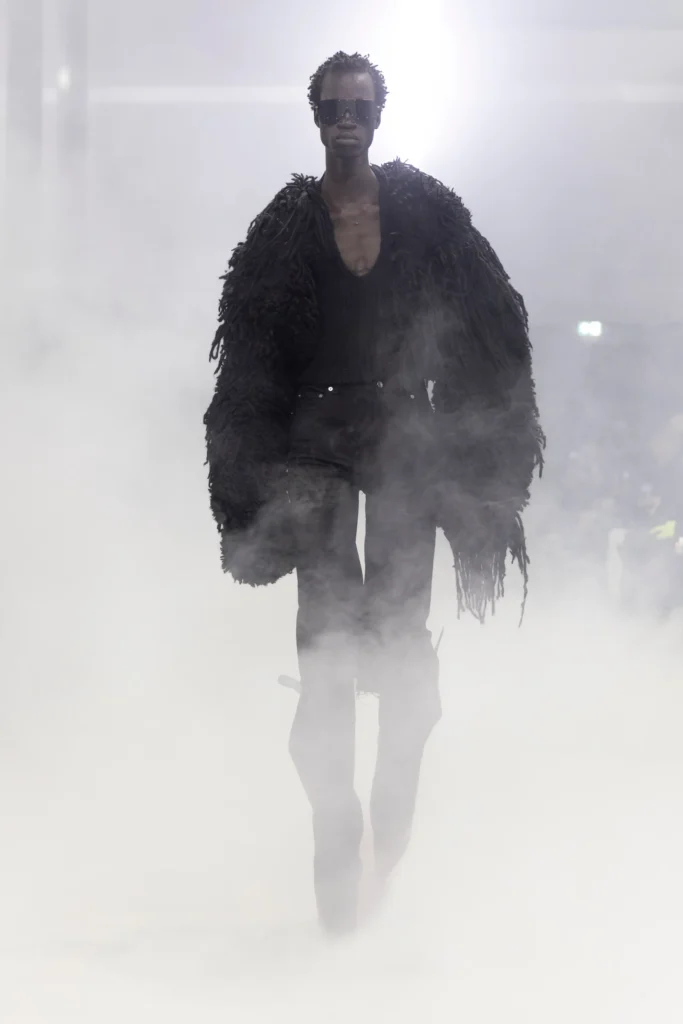
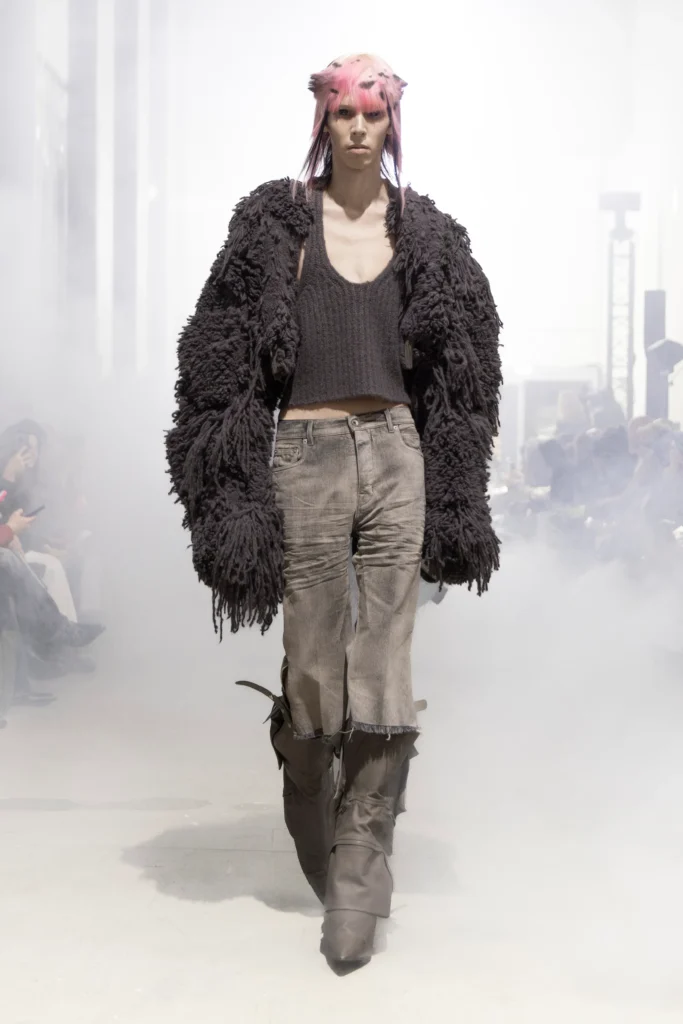
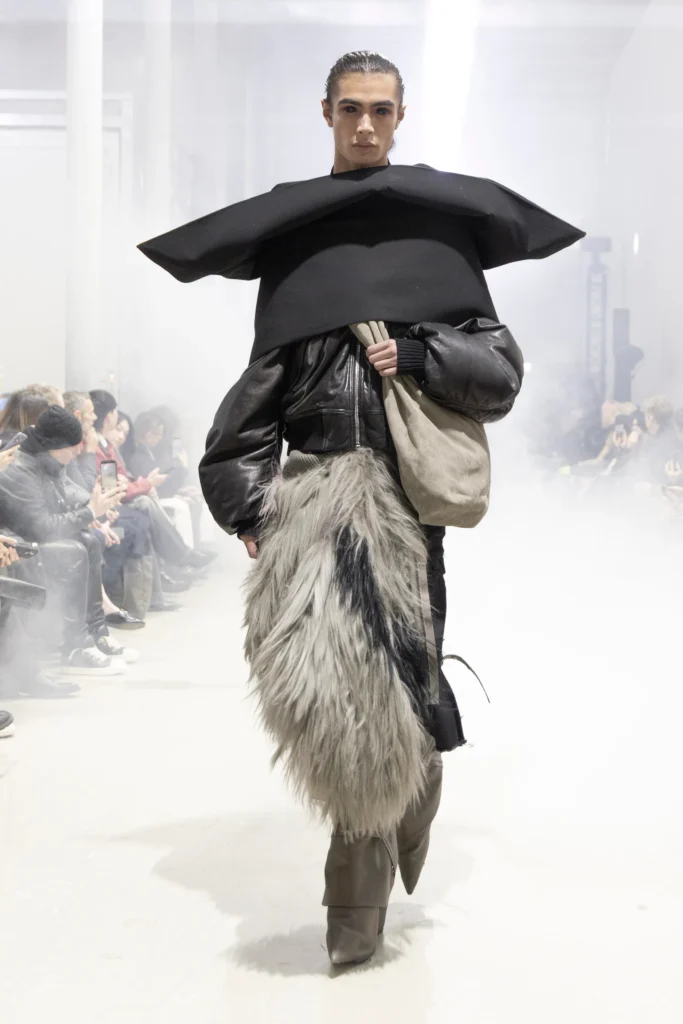
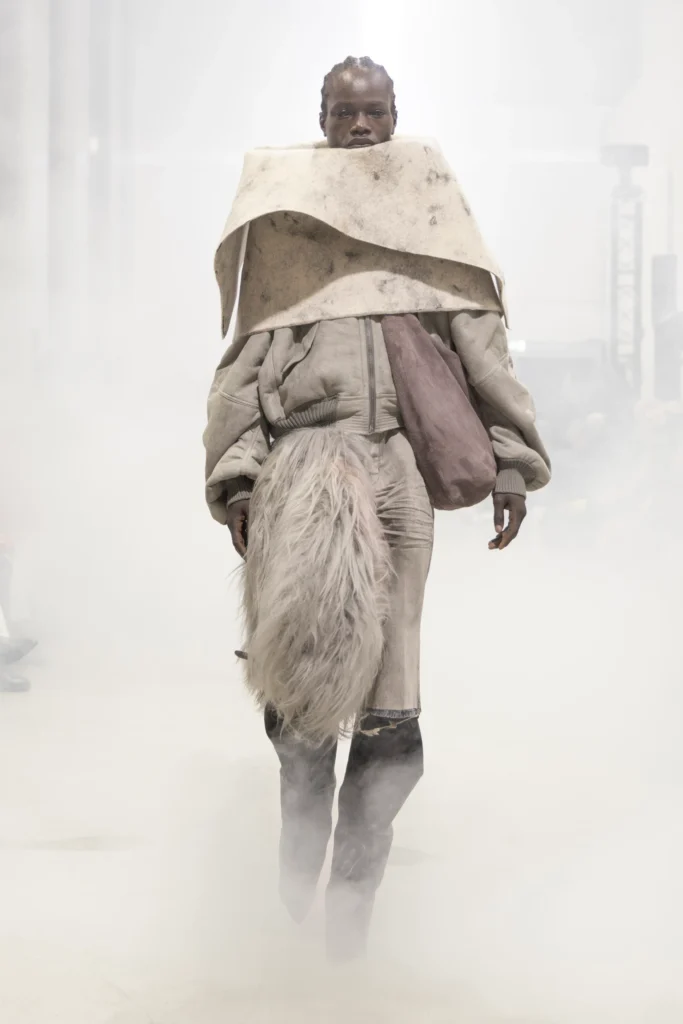
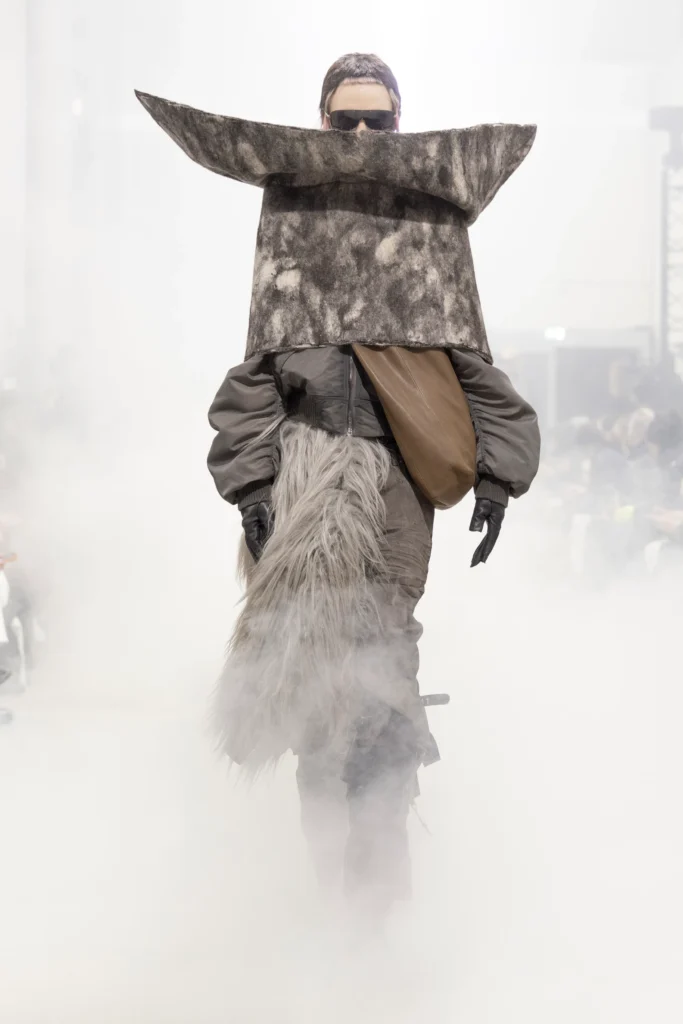
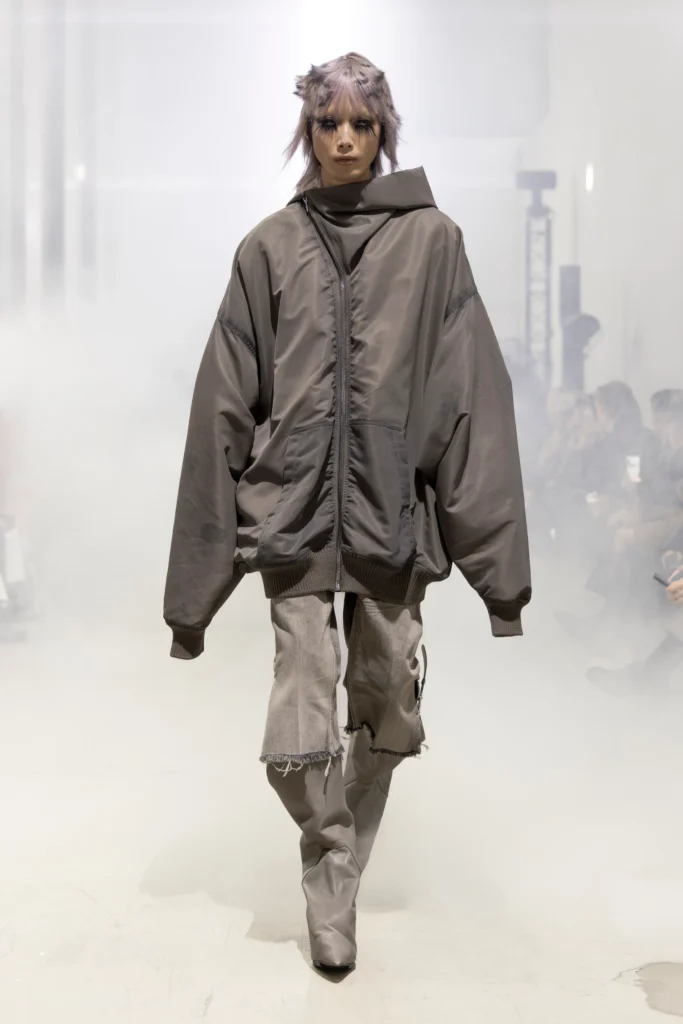
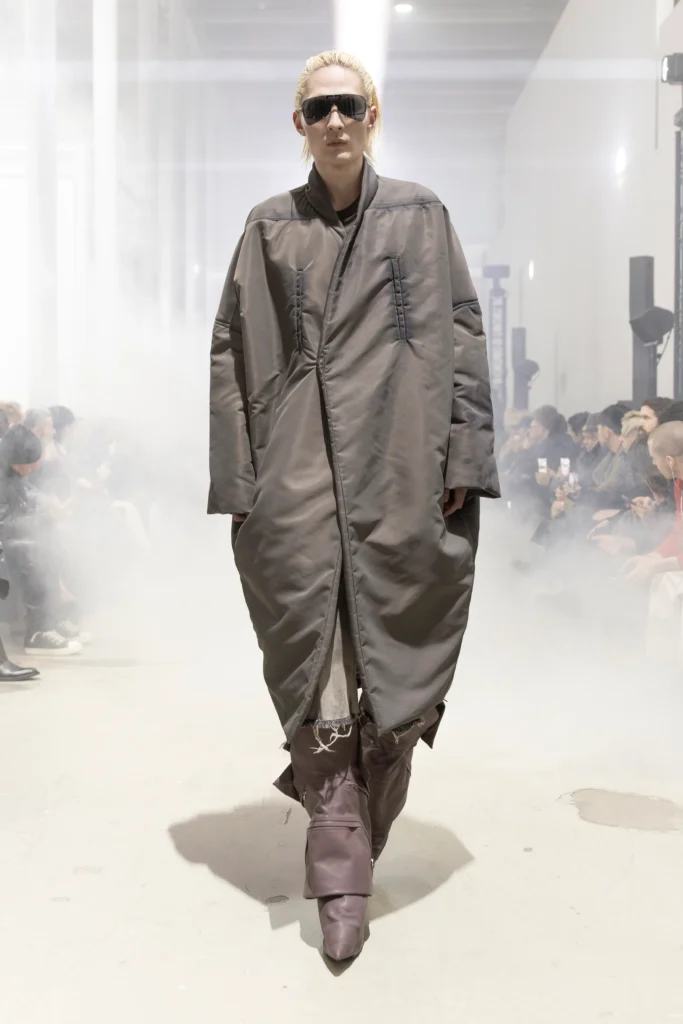
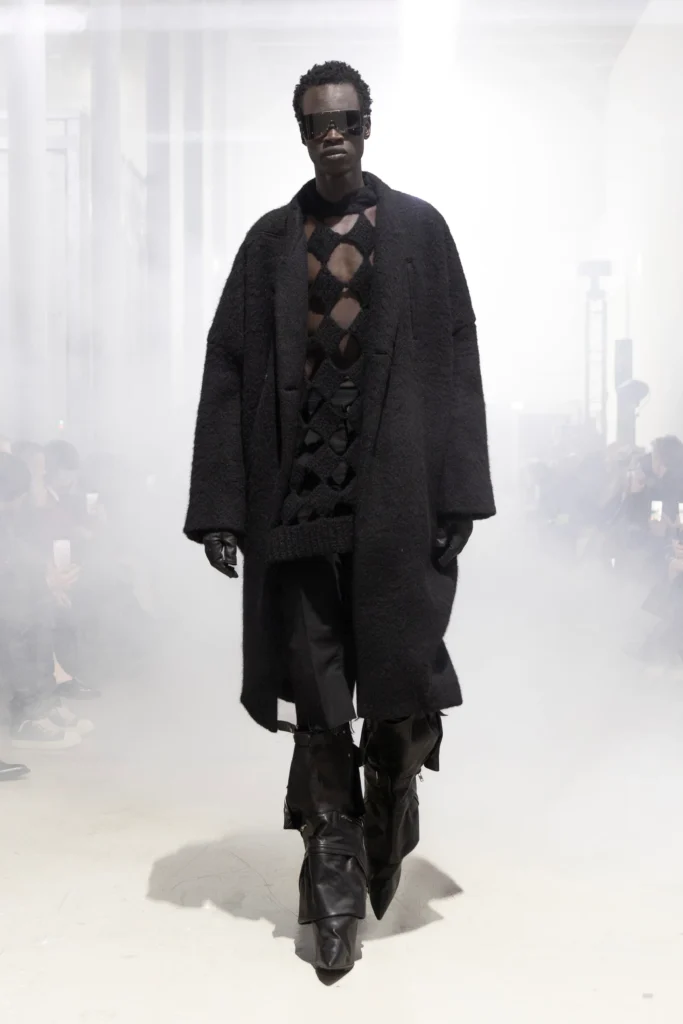
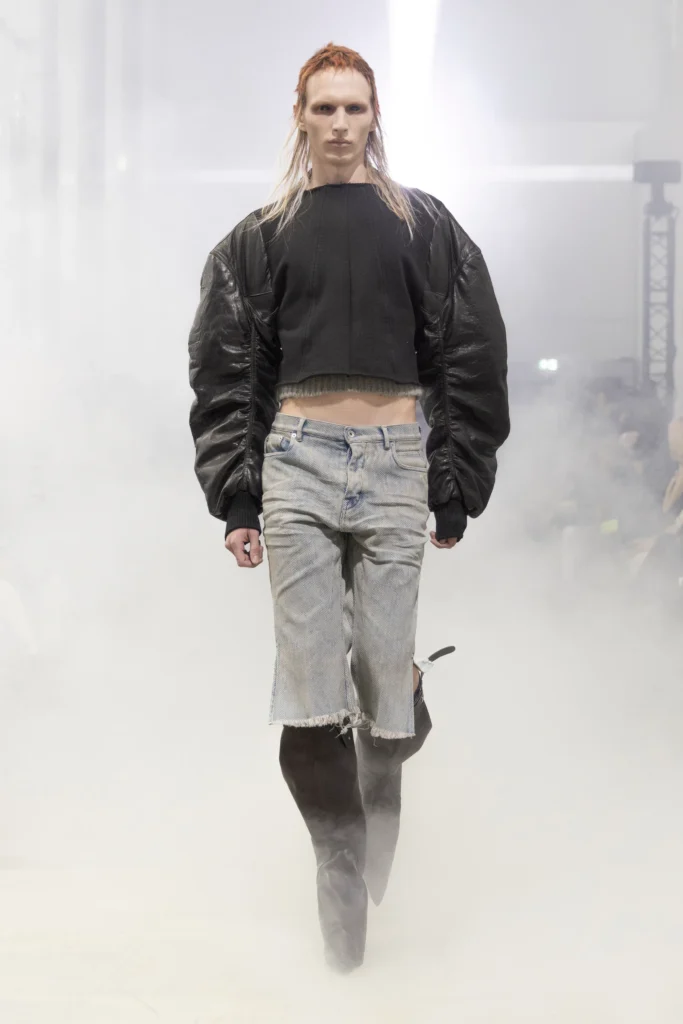
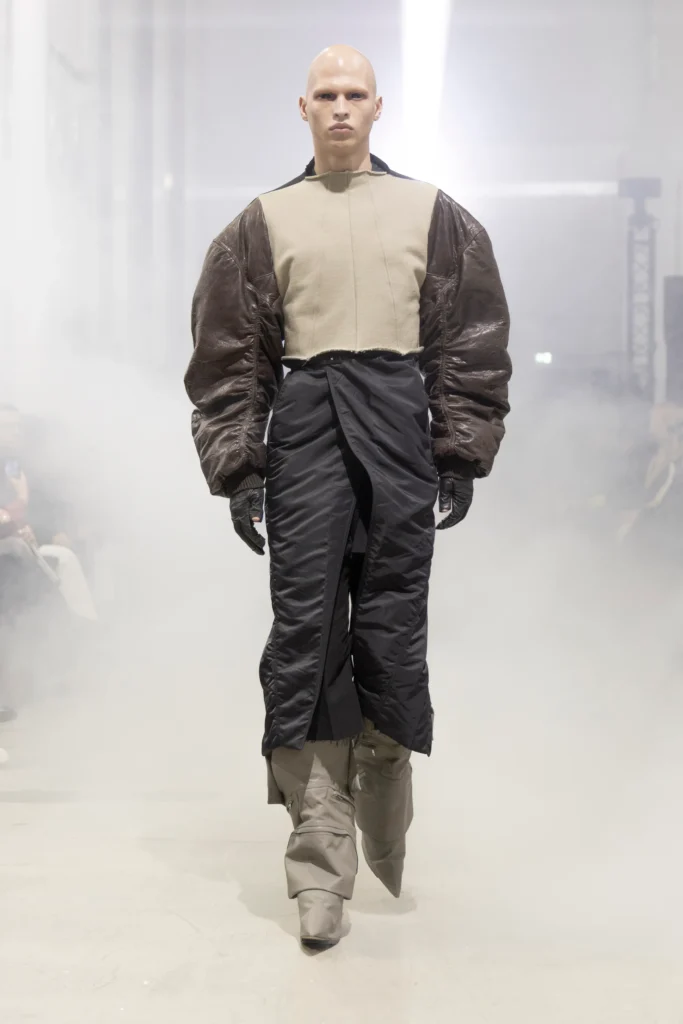
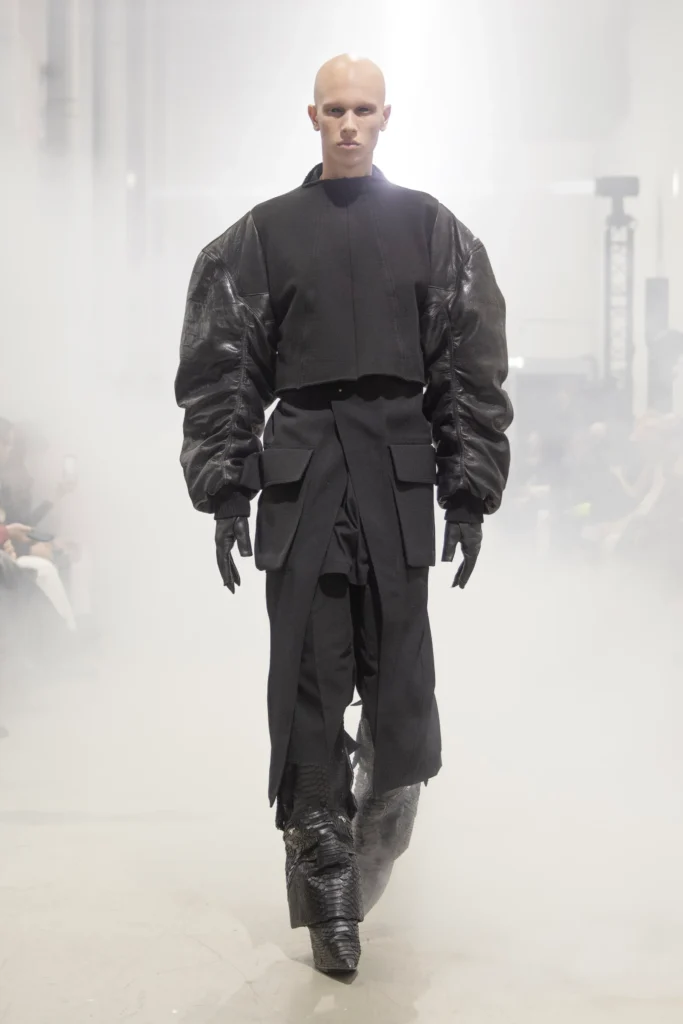
The silhouettes were stark and unforgiving: razor-thin trousers paired with cropped jackets, cloaklets, and tactical armor hybrids that added bulk and menace. Leather and Kevlar—fabric as control—featured prominently. Boots disrupted the line, while padded shoulder braces sprouted surreal, paper-boat-like extensions. It was exaggerated, absurd, and functional all at once.
Models emerged through sage-scented dry ice like blank-eyed apparitions, evoking tear gas and unrest. Shirts in wool, felt, fur, and canvas carried a sinister utilitarianism, while throat-snatching fastenings replaced traditional epaulettes with something more ambiguous. Were these figures law enforcers—or fugitives? Sheriffs or outlaws? Owens left the answer deliberately unresolved.
A lifelong commander-in-chief of his label, Owens continues to design alone. “I’ve never had a design room. I’ve never had other designers,” he said. Yet this season marked a deeper embrace of collaboration. Owens openly credited his contributors, listing their social handles and sources of production in the press notes.
Highlights included color-washed, cropped gothic cashmere coats by @straytukay, hand-knit cut-out check sweaters by @sarutanya, and floor-length masks—each constructed from over a mile of waxed cord—by @lucas___moretti. Marbled, stiffened wool jackets were handmade in Rajasthan using Himalayan wool, underscoring Owens’ expanding global dialogue.
“It’s fun engaging with people,” Owens said. “This is kind of my new system.”
In a season defined by unease, Rick Owens reaffirmed his authority not through dominance, but through awe—enforced quietly, relentlessly, and on his own terms.
Photos Credit: Courtesy of Owenscorp


